Full Article
about Garcibuey
Town known for its Roman ponds and recent artistic murals
Ocultar artículo Leer artículo completo
The church bell strikes noon, yet only two cars pass through Garcibuey's single street. At 689 metres above sea level, this Sierra de Francia outpost feels suspended between earth and sky, where granite houses with wooden balconies cling to mountainsides like barnacles on an ancient hull. The air carries a clarity that makes distant ridges appear closer than they are, while chestnut forests ripple down slopes in waves of green that turn bronze each autumn.
Garcibuey's altitude shapes everything. Morning fog pools in valleys below, leaving the village floating above a cotton-wool sea. Summer temperatures run five degrees cooler than Salamanca city, forty kilometres distant. Winter brings proper snow most years, occasionally cutting road access for a day or two. The AS-2 approach from Salamanca twists through 37 kilometres of switchbacks; those prone to motion sickness should sit upfront and focus on the horizon.
The village's 186 permanent residents live in stone houses their great-grandparents built. Granite blocks, hewn from local quarries, form walls sixty centimetres thick. These thermal masses keep interiors cool during August's thirty-degree afternoons and retain heat when January thermometers drop below freezing. Wooden balconies, painted tradional deep green or left to weather silver-grey, jut over narrow lanes just wide enough for a single vehicle. Modern double-glazing sits awkwardly within original stone frames, testament to residents' desire for twenty-first-century comfort without sacrificing architectural integrity.
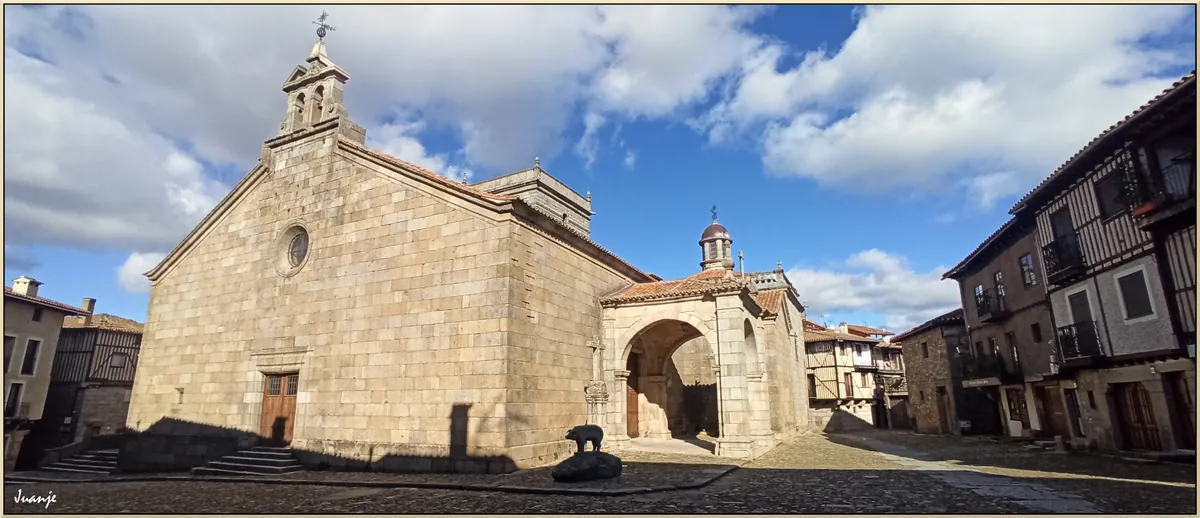
Religious architecture dominates Garcibuey's modest skyline. The parish church, rebuilt in 1742 after fire destroyed its predecessor, occupies the village's highest point. Its squat tower, more fortress than bell-tower, reflects centuries of border warfare between Christian kingdoms and Moorish forces. Inside, a polychrome wooden Virgin wears a cloak embroidered with silver thread donated by villagers during the 1920s. The church opens Saturdays at 6pm for vespers; at other times, ask at the house opposite – María keeps the key and will unlock for visitors who ask politely.
Walking trails radiate from Garcibuey like spokes from a wheel. The PR-SA 73, marked with yellow and white stripes, descends three kilometres through chestnut coppice to the abandoned Molino de la Coca. This nineteenth-century watermill, its wheel long vanished, sits beside a stream where otters have been spotted at dawn. The return journey, climbing 200 metres back to village altitude, takes fit walkers forty minutes. Less energetic souls follow the flat pista forestal eastwards towards neighbouring Valero, where bar Casa Paco serves Estrella Galicia for €1.50 and doesn't mind muddy boots.
October transforms Garcibuey's surroundings into a forager's paradise. Boletus edulis, the prized porcini, emerges beneath chestnut trees after autumn rains. Local families guard productive spots jealously; outsiders wandering with baskets attract suspicious glances. The village pharmacy sells a €4 guide to edible fungi, though staff emphasise it exists purely for academic interest. Better to photograph mushrooms than pick them, unless accompanied by someone whose grandparents taught them which species kill within hours.
Spring brings different treasures. Between April and May, wild asparagus shoots push through rocky soil along abandoned agricultural terraces. Village women, heads protected from sun by traditional pañuelos, harvest these delicacies at dawn. The local bar, open weekends only during low season, serves them revueltos – scrambled with village eggs and jamón from pigs that snuffled through these same chestnut forests until autumn.
Accommodation options remain limited. Casa Rural El Castañar offers three ensuite rooms from €70 nightly, breakfast included. Proprietor Manuel speaks fluent French but only phrasebook English; communication involves creative gesturing and Google Translate. The alternative lies ten kilometres down-valley in Miranda del Castañar, where Hotel Condes de Miranda occupies a converted seventeenth-century palace. Its restaurant serves cocido, the regional chickpea stew, on Thursdays throughout winter. Book ahead – locals drive up from Salamanca for lunch.
Garcibuey's fiesta patronale, honouring the Virgen de la Asunción, transforms this quiet settlement every August 15th. The population quadruples as former residents return from Madrid and Barcelona. Brass bands parade through streets barely three metres wide, their music echoing off stone walls. Temporary bars serve rebujito, a dangerously drinkable mixture of manzanilla sherry and Seven-Up, until 4am. Visitors seeking accommodation during fiesta week should book months ahead; many sleep in cars parked along the AS-2.
The village faces twenty-first-century challenges. Young people continue leaving for university cities, rarely returning. The primary school closed in 2019 when only three pupils remained. The nearest secondary institution lies forty-five minutes away in Béjar; daily bus transport costs €120 monthly. Mobile phone coverage remains patchy – Vodafone works near the church plaza, but Orange subscribers walk to the cemetery ridge for signal.
Yet Garcibuey endures. New residents arrive: a Dutch couple restoring ruins into holiday homes, a Madrid family running pottery workshops in August. They join villagers who've never considered leaving, whose grandparents lie in the cemetery where cypress trees bend before mountain winds. Together they preserve something increasingly rare – a mountain community where neighbours still share evening wine on doorsteps, where church bells mark time's passage, where stone walls remember centuries of human endeavour against an unforgiving landscape.
Visit in late September, when morning mist lifts to reveal golden chestnut foliage and temperatures hover around twenty degrees. Walk the forest tracks before lunch, photograph mushrooms instead of picking them, drink coffee so strong it stains the cup. Stay overnight if possible – stars here appear closer, brighter, unpolluted by city glare. Leave before dawn the next day, driving carefully down twisting roads as village lights recede in rear-view mirrors. Garcibuey will continue existing, suspended between earth and sky, long after your car reaches Salamanca's plain.