Full Article
about Madroñal
Cherry-growing village par excellence; landscape of fruit trees in bloom come spring.
Ocultar artículo Leer artículo completo
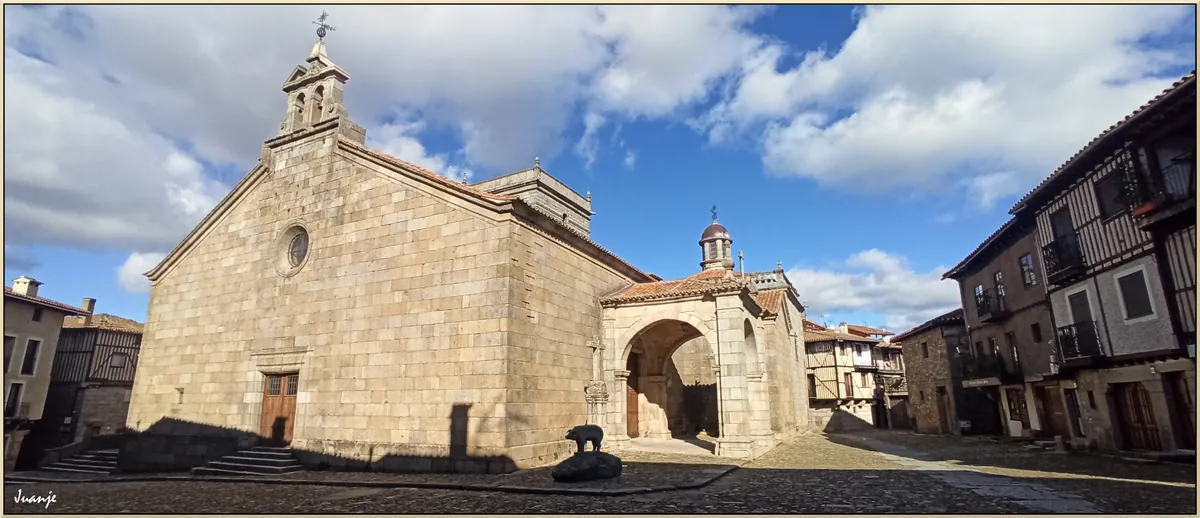
The church bell tolls eleven and nobody stirs. Half-timbered houses shutter their windows against the late-morning sun; a single spaniel stretches across the warm cobbles of Calle Real and refuses to move for anyone. At 680 m in the Sierra de Francia, Madroñal keeps its own timetable: harvest first, traffic never.
With 128 registered inhabitants, the village is smaller than most British secondary schools. What it lacks in numbers it makes up for in chestnut trees—castaños—whose copper leaves brush the terracotta roofs each autumn and carpet the lanes in a colour photographers try, and usually fail, to replicate on the flight home. The locals simply sweep them into piles and use them for mulch.
Stone, Wood and the Smell of Mushrooms
Every building here is an essay in two materials: granite quarried from nearby Villar de Ciervo and oak beams darkened by centuries of smoke. Peek through an open doorway and you may see a pajar—a granary raised on mushroom-shaped stilts to keep the mice out—still stacked with last year’s barley. The iron balcony rails have the same curled flourishes you notice in Cotswold villages, except these were hand-forged by itinerant smiths who worked the valley in exchange for food and lodging rather than cash.
Outside the village, the UNESCO-listed biosphere reserve begins immediately. Way-markers are rudimentary: a stripe of yellow paint on a boulder, sometimes a cairn of stones. Within twenty minutes you can drop from open dehesa—grazed holm-oak pasture—into sweet-chestnut coppice so dense the temperature falls five degrees. October brings the níscalo season; whole families appear at dawn with wicker baskets and opinons on last night’s rainfall. Picking is free on public land, but the best spots are jealously guarded. If you’re tempted to join in, remember: possession of more than 5 kg per person requires a permit from the Junta de Castilla y León, and Guardia Civil patrols do check.
Walking Routes without Waypoints
Maps are reliable only up to the date they were printed. A winter storm in 2022 washed away part of the Camino de La Alberca, so the 11 km ridge walk now involves a thigh-deep ford instead of a quaint stone bridge. Locals shrug: “Bring sandals, or go round.” The detour adds 40 minutes and delivers you to the mirador above La Bastida, where vultures wheel at eye-level and the view stretches south to the cork forests of Extremadura. Mobile signal vanishes halfway up, so tell someone where you’re going. The village bar is as good a place as any; Paco keeps a tatty exercise book behind the counter where hikers scribble route plans. He’ll lend you a walking pole in exchange for a photocopy of your passport.
Summer walks start early. By 11 a.m. the thermometre on the pharmacy wall usually shows 32 °C, and the only shade is inside the 16th-century church. Its single nave smells of beeswax and damp stone; the retablo depicts St Blaise clutching a model of the village that looks suspiciously more prosperous than the real thing. Drop a euro in the box and the sacristan will unlock the bell-tower. The ladder is vertical, the viewing platform no bigger than a pub table, but you can pick out the slate roof of your accommodation and plan the shortest route to lunch.
What Passes for Nightlife
Evenings revolve around the plaza’s one bar, which opens when the owner finishes whatever else she is doing—often after the evening news. Inside, a wood-burning stove smokes like an old train, and the menu is written on the back of a feed-sack: sopa castellana (garlic-laced bread soup), patatas revolconas (mashed with paprika and pork fat), and on weekends, jarretes—slow-cooked knuckle of Iberian pig so tender it slides off the bone when you merely frown at it. A half-ración costs €7 and defeats most appetites. Wine comes from a plastic tap behind the counter; ask for “el tinto del pueblo” and you’ll get a glass of young Tempranillo that costs €1.50 and tastes better than half the Rioja on British supermarket shelves.
If the bar is shuttered, buy supplies earlier. The tiny ultramarinos opens 9–11 a.m., Monday to Thursday, and stocks UHT milk, tinned tuna and rubbery queso de oveja that improves after a day in your rucksack. Salamanca’s hypermarkets lie 75 km away; the mountain road is twisty enough to turn fresh milk into butter before you reach the village, so plan accordingly.
Seasons that Dictate Everything
Spring brings sudden heat spikes; almond blossom in February can be followed by snow in March. The upside is empty trails and night skies so clear you’ll waste battery photographing constellations you last saw on a GCSE science poster. By May the jaramagos—wild asparagus—poke through the roadside scrub; locals collect them at dawn and charge €4 a bundle at Saturday’s unofficial pop-up market.
Autumn is the money season. Chestnut pickers arrive from Portugal, filling the only guest house and parking battered vans wherever flat ground exists. Prices rise marginally—coffee goes from €1.20 to €1.40—and the village feels busy, which is to say you might meet three people on a street instead of none. Winter is quieter still. When snow drifts across the mountain pass the road closes, sometimes for days. Electricity cuts are common; most houses have a chimenea and enough firewood stacked in the porch to last until Easter. If you book Casa Rural Generoso between December and February, bring candles and expect the Wi-Fi to die whenever it rains.
Getting There, Leaving Again
From the UK the simplest route is: fly to Madrid, pick up a hire car, head north-west on the A-50 to Béjar, then follow the SA-220 towards La Alberca. After 25 minutes, turn left at the ruined chestnut-drying shed—now a roadside shrine decorated with plastic flowers—and climb 6 km of switchbacks. The tarmac is smooth but narrow; meeting a tractor requires one driver to reverse. Buses reach neighbouring Mogarraz twice daily except Sunday, but the final 8 km to Madroñal relies on a taxi that must be booked 24 hours ahead and costs €18. Hitching works, though you may wait an hour for the first vehicle. Offer to pay; drivers refuse half the time.
Leave early for the airport. Fog pools in the valley and can delay your descent until midday. If that happens, console yourself with the knowledge that the village has already forgotten you were ever there. By the time the bell tolls twelve, the spaniel will have reclaimed the cobbles, the chestnut leaves will have shifted an inch closer to winter, and Madroñal will be doing what it does best—carrying on, quietly, without an audience.