Full Article
about Mogarraz
Museum village known for portraits of its residents on the façades; medieval mountain-frame architecture
Ocultar artículo Leer artículo completo
The first thing that strikes visitors to Mogarraz isn't the altitude (766 metres) or the medieval stonework—it's the sensation of being watched. From every whitewashed façade, black-and-white portraits gaze down: weathered farmers in flat caps, stern matriarchs in Sunday best, children who'd now be pensioners. These 800-odd faces, painted from 1960s photographs, transform an ordinary Sierra de Francia village into Spain's most unsettling outdoor gallery.
At dawn, before the tour coaches arrive, the effect is particularly disconcerting. The portraits catch the first light while the village below remains in shadow, creating an army of spectral observers. It's no wonder Easter visitors report the "ghost town" effect when public lighting is extinguished, leaving only these painted faces illuminated against the stone.
The Faces That Saved a Village
The portrait project began as a desperate measure. In 2012, local artist Florencio Maíllo proposed reproducing historic photographs on house walls to prevent Mogarraz from following hundreds of other Spanish villages into abandonment. The scheme worked—perhaps too well. Where 236 residents once struggled to sustain a school and shops, weekend crowds now choke the single through-road, forcing drivers to reverse half a kilometre to the summit car park.
Yet unlike many "revived" Spanish villages, Mogarraz refuses to sanitise itself. Peek down Calle del Cubo and you'll spot 17th-century timber frames propping up 21st-century satellite dishes. The Plaza Mayor's medieval roll of justice stands beside a cash machine installed in a former butcher's shop. This isn't a film set—it's a working community where pensioners still hang washing across the narrow lanes, forcing tourists to duck beneath dripping sheets.
The architecture tells its own story. Local craftsmen built these houses from whatever the Sierra de Francia provided: chestnut beams, oak lintels, adobe bricks sun-baked on-site. Many doorframes bear carved dates—1783, 1821, 1899—certifying centuries of continuous occupation. The effect is less "chocolate box" than "survival kit," a village engineered to withstand both brutal winters and economic collapse.
What Lies Beneath the Portraits
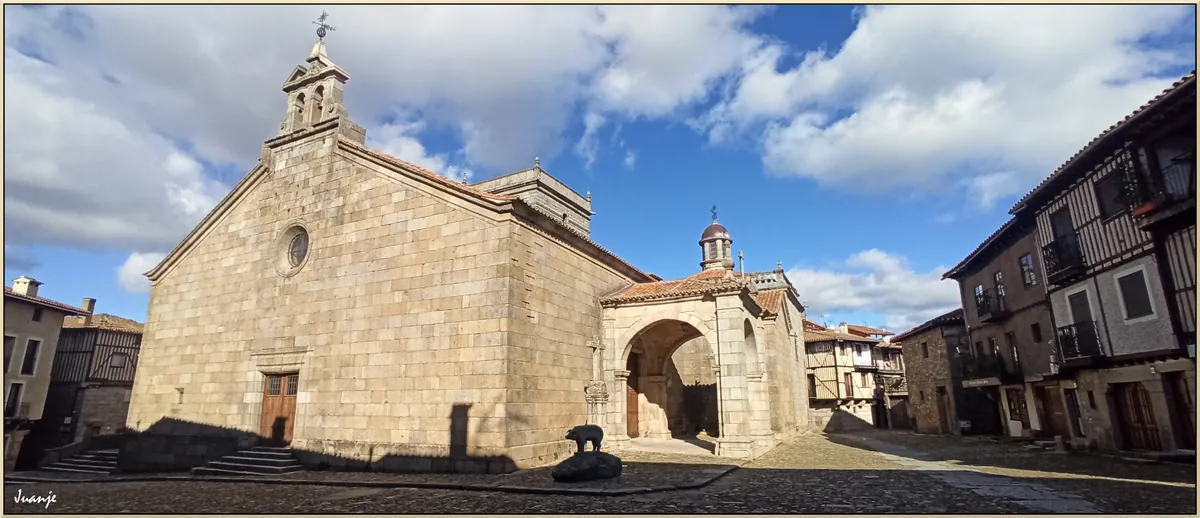
Behind the painted faces, Mogarraz harbours proper medieval darkness. The Church of Nuestra Señora de las Nieves squats at the village's highest point, its plain Castilian exterior belying an interior where 15th-century frescoes survive beneath layers of whitewash. During August's fiesta patronal, locals process the Virgin through streets so narrow her canopy brushes both walls simultaneously—a feat requiring choreography perfected over 500 years.
The real treasures require closer inspection. On Calle de la Iglesia, number 14 retains its original forge, complete with bellows last used to shoe mules bound for Portugal. Three doors down, an abandoned wine press occupies a cellar carved from solid rock—the granite troughs still stained purple from grapes pressed when Franco ruled. These aren't museum pieces but family heirlooms, preserved through poverty rather than pride.
For sustenance, the Mirasierra steakhouse occupies what was once the village prison. Iron rings set in the walls now support jamónes ibéricos rather than shackles, though the transformation isn't complete—ask politely and staff will show the original cells, now storing wine barrels. Their speciality, guiso de cabrito (kid stew), arrives in portions sized for agricultural labourers. Vegetarians face slim pickings: even the chips are fried in pork fat for authenticity.
Walking Into the Clouds
Mogarraz functions as a launch point for the Sierra de Francia's walking network, though "network" flatters what are essentially centuries-old mule tracks. The 9-kilometre Caminos del Agua circuit starts behind the church, following irrigation channels through sweet-chestnut woods to abandoned mills where moss grows thick on grinding stones. Signage remains rudimentary—download the route offline or risk joining the annual tally of British walkers rescued after dark.
The sierra's microclimate delivers surprises. While Salamanca bakes at 35°C, Mogarraz often sits in cloud at 18°C. This temperature inversion, caused by Atlantic air hitting the southern slopes, supports flora more typical of northern Spain: wild garlic, bracken, even the occasional bilberry. Winter visitors should prepare properly—the same clouds dump snow that cuts road access for days, transforming the portrait village into something resembling a Soviet gulag.
Proper walking boots aren't optional. The medieval lanes, polished smooth by centuries of clog-wearing locals, become treacherous when wet. One British visitor's TripAdvisor review recounts sliding 50 metres down Calle del Cubo "like a drunken penguin," emerging battered but laughing outside a house whose portrait subject—identified by laughing locals—was the village drunkard. The symmetry wasn't lost on anyone.
The Price of Authenticity
Visit midweek outside August and Mogarraz reverts to its natural state: half the shops shuttered, the bar serving coffee to three old men playing dominoes. This is when the portraits seem saddest—800 faces watching over streets where their descendants couldn't make a living. The village school closed in 2009; the nearest secondary education lies 45 minutes away down switchback roads that terrify British parents accustomed to gentle Home County commutes.
Weekend crowds bring their own problems. By 11 am Saturday, the summit car park overflows onto the main road, creating bottlenecks that strand residents in their own village. Some portraits now bear graffiti—initials carved into wet paint by visitors who've queued twenty minutes for the perfect Instagram shot. Local resentment simmers beneath courteous smiles; ask about property prices and you'll learn Londoners buying holiday homes have pushed values beyond what agricultural wages support.
The gastronomy reflects this tension. Bars serve excellent jamón ibérico at €18 a plate—three times the price of equivalent quality in Salamanca's unfashionable districts. The Rufete wine, light and fruity compared with Rioja's oak-heavy reds, costs €4 a glass despite being produced 12 kilometres away. "They charge what the market bears," shrugs one waitress, herself commuting from a neighbouring village where rents remain affordable.
Mogarraz demands visitors confront uncomfortable truths about rural Spain's survival. The portrait project saved the village but transformed it into something its inhabitants barely recognise. Those 800 painted faces represent both triumph and compromise—a community that sold its privacy to survive, now existing in permanent tension between authenticity and performance. Come prepared for that complexity, bring sensible shoes, and visit on a Tuesday in October when the portraits watch over empty streets and the village remembers what it used to be.