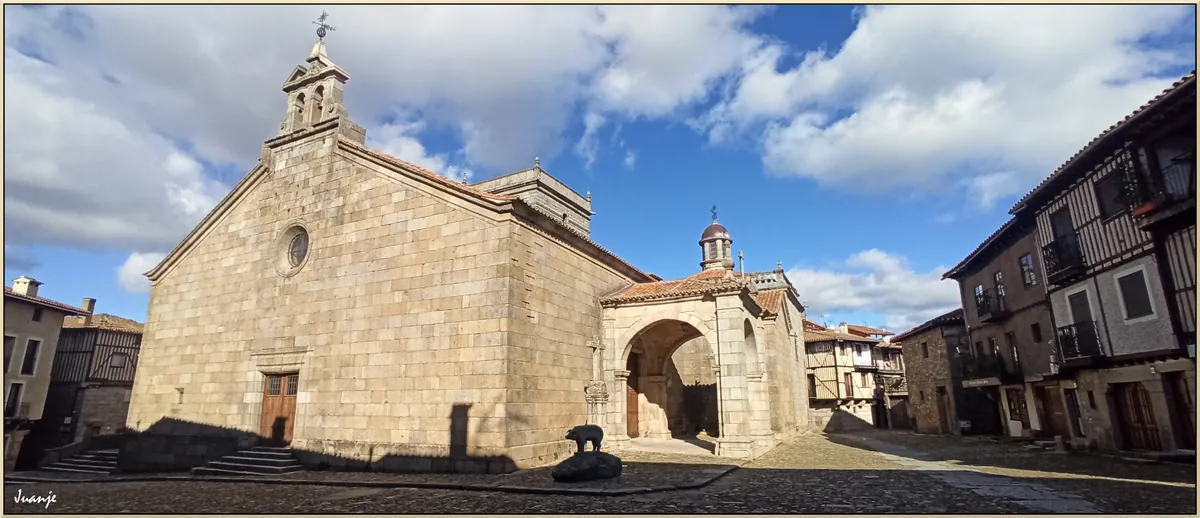
San Martín del Castañar - Flickr
Castilla y León · Cradle of Kingdoms

San Martín del Castañar

The church bell strikes noon, yet only two tables are occupied in the porticoed Plaza Mayor. One belongs to a pair of elderly men sharing a carafe ...

233 inhabitants · INE 2025
831m Altitude

Why Visit

Mountain Castle with cemetery Mirror Route

Best Time to Visit

autumn

Feast of the Visitación (August) agosto

Things to See & Do
in San Martín del Castañar

Heritage

  • Castle with cemetery
  • Bullring
  • Roman bridge

Activities

  • Mirror Route
  • Mushroom hunting
  • Castle tour

Festivals
& & Traditions

Fecha agosto

Fiestas de la Visitación (agosto)

Las fiestas locales son el momento perfecto para vivir la autenticidad de San Martín del Castañar.

Full Article
about San Martín del Castañar

Historic quarter with a castle and old bullring; a charming village ringed by chestnut forests.

Ocultar artículo Leer artículo completo

The church bell strikes noon, yet only two tables are occupied in the porticoed Plaza Mayor. One belongs to a pair of elderly men sharing a carafe of local cherry liqueur; the other to a British couple studying a Spanish-German menu as if it were ciphered code. By half past, the square is empty again. San Martín del Castañar has returned to its default soundtrack—boots on granite, swifts overhead, and the faint creak of chestnut beams older than the United Kingdom itself.

At 831 m above sea level on the Salamanca side of the Sierra de Francia, the village counts barely 270 souls on the register and perhaps a dozen overnight visitors on an average spring weekend. The houses are built from the same quartzite they stand on: thick-walled, low-doorway affairs painted oxide-red or left bare to show the mason’s chisel marks. Nothing here was designed for passing traffic; the streets are just wide enough for a mule and its owner, which means modern cars tuck themselves into every alcove like awkward guests.

What the Stone Says

A short, calf-stretching loop begins at the fifteenth-century castle—privately owned, so you admire it from the outside—and follows the remnants of the medieval wall downhill to the cemetery. Sections of the parapet disappear into vegetable gardens, re-emerge under a pergola of vines, then stop abruptly at somebody’s woodshed. The effect is less “ramparts” and more “archaeological conversation”, but that is the pleasure: history here is lived-in, not cordoned-off.

Below the wall, Calle Rúa Nueva threads past the Casa de la Escribanía, its wooden balcony sagging like an old spine. Pause and you’ll spot the rolled-up newspaper wedged between bars: proof that someone still collects the Correo every morning from the van that doubles as the mobile post office. The lane spills into the Plaza de la Constitución where a stone fountain runs continuously—potable water, insists a hand-painted tile—so fill your bottle before the next climb.

The late-Gothic church of San Martín de Tours squats at the high point, its tower useful for orientation because every cobbled alley eventually funnels back towards it. Inside, the whitewashed nave feels cooler by several degrees; look for the sixteenth-century panels of the high altar showing the town’s patron sharing his cloak with a beggar. The caretaker switches the lights on if he sees you hovering at the door; a euro in the box keeps the bulbs from going off again too soon.

Walking the Cork-Oak Skyline

Chestnut and oak forest presses in from three sides, giving the village the air of a clearing in a much older wood. Two way-marked paths start behind the football pitch (a gravel rectangle with rusting goalposts). The easier, 45-minute shuffle climbs to the Mirador del Castañar, a natural sandstone platform that delivers a full south-facing sweep: hamlets scattered like dice on a green baize, buzzards planing at eye level, and, on very clear days, the distant flash of the Almendra reservoir, 40 km away.

The second route, a 9 km figure-of-eight, drops into the Valle de Maíces before looping back through a stand of cork-oak. The bark looks singed because harvesters stripped it last summer; the trunks will stay rust-red until the cork regrows. Mid-October is prime time: the underfoot hiss of chestnut husks and the smell of woodsmoke drifting up from someone’s kitchen. Allow three hours if you keep stopping to photograph mushrooms; Spanish weekenders do it in two.

Proper hiking boots are overkill outside winter, but trainers won’t save you from granite scree. A stick helps, and so does downloading the route offline—Vodafone picks up a signal on the ridge, EE rarely does. If the sky bruises over, head back; thunderstorms gather fast here and the stone alleys turn into water chutes within minutes.

What You’ll Eat, and When

The two bars open opposite ends of the Plaza Mayor. Neither serves breakfast later than 11 a.m.; both close on Tuesday afternoon. That matters more than it sounds because the nearest cash machine is 11 km away in La Alberca and neither establishment accepts cards for bills under €15. Bring notes, preferably small ones.

The daily set menu hovers around €12–14 and follows mountain logic: a plate of judiones (buttery white beans from nearby La Granja), followed by chuletón—a beef rib for two the size of a small umbrella. Vegetarians can request pimientos de Padrón or a judía verde, but expect puzzled looks. Dessert is usually cuajada, a tangy sheep-milk curd drizzled with local honey. Finish with the cherry-and-honey liqueur called miel de cereza; served over ice it converts even those who claim to dislike spirits. The house measure is generous—one is pleasant, two makes the descent to the car park interesting.

If you need something child-friendlier, Restaurante El Campito, down by the river bridge, will grill plain chicken and chips on request. Its terrace sits under plane trees so old their roots have cracked the retaining wall; engineers visit every spring, shrug, and declare the wall safe for one more year.

Where to Sleep (and Why You Should)

San Martín works as a lunch stop on the Madrid–Porto dash, but staying the night gives you the hush that descends after the day-trippers leave. The main choice is the three-room Abadía de San Martín, a converted presbytery opposite the church. Owners José and Pilar speak enough English to check you in and recommend a walking route; breakfast includes fresh orange juice and sponge cake made by Pilar’s sister. Doubles from €70, closed January.

The alternative is La Casa del Pescador, an isolated cottage 2 km down a dirt track. It has no Wi-Fi, limited phone signal, and solar-powered showers that run tepid if everyone washes at once. What you get instead is a night sky so dark you can read by starlight. Bring supplies; the village shops shut at 8 p.m. and, on Tuesday, do not open at all.

Getting There, Getting Out

From Madrid, the fastest route is the A-50 to Béjar, then the SA-215 mountain road—narrow, fully paved, and dramatic enough that coach drivers sound their horns at every blind bend. The drive takes 2 h 15 min without stops; add 30 min if you’re behind a produce lorry. In winter, carry snow chains: the final 6 km climb through pine forest can ice over.

Public transport is sketchy. One weekday bus leaves Salamanca at 14:30, arriving at 16:15; it turns around at dawn next day. The timetable is a polite fiction—check the day before at salamancabus.es or risk spending an unplanned night. Car hire from Madrid or Valladolid airport is simpler and usually cheaper for two or more people.

The Honest Verdict

San Martín del Castañar is not undiscovered; Spanish families flood in on Sundays, picnic in the square, and leave crisp packets in the recycling bins. But mid-week, or after the last Salamanca bus has wheezed away, you can sit on the church steps and hear nothing man-made bar the occasional moped echoing up from the valley. That silence, plus the scent of chestnut wood smouldering in open grates, is what you came for. Just remember to bring cash, a phrasebook, and enough curiosity to walk the same alley twice. The village rewards repetition: stone that looked grey at noon glows honey at dusk, and the sierra changes colour faster than British weather can turn.

Key Facts

Region
Castilla y León
District
Sierra de Francia
INE Code
37286
Coast
No
Mountain
Yes
Season
autumn

Livability & Services

Key data for living or remote work

2024
Connectivity5G available
HealthcareHospital 29 km away
EducationElementary school
Housing~5€/m² rent · Affordable
CoastBeach nearby
Sources: INE, CNMC, Ministry of Health, AEMET

Official Data

Institutional records and open data (when available).

  • LA VILLA
    bic Conjunto Histã“Rico ~0.1 km
  • CASTILLO DE SAN MARTIN DEL CASTAÑAR
    bic Castillos ~0.2 km
  • IGLESIA PARROQUIAL
    bic Monumento ~0.1 km

Planning Your Visit?

Discover more villages in the Sierra de Francia.

View full region →

More villages in Sierra de Francia

Traveler Reviews