Full Article
about Santibáñez de la Sierra
Mountain village that produces wine and cherries; gateway to the valley
Hide article Read full article
Santibáñez de la Sierra, en la Sierra de Salamanca
Santibáñez de la Sierra se entiende por su posición. El pueblo está construido en la ladera sur de la Sierra de Francia, en la provincia de Salamanca, a unos 600 metros sobre el nivel del mar. La topografía es la clave: las calles se adaptan a la pendiente y las casas se agrupan en la falda del monte, rodeadas por laderas donde aún dominan el castaño y la encina.
Con poco más de un centenar de vecinos, el ritmo es el de un pueblo de montaña. Las calles son cortas y las casas están apiñadas, construidas con la piedra y el adobe de la zona. No hay un diseño preconcebido; el trazado es el resultado de siglos de construcción práctica para resguardarse del clima y aprovechar el terreno.
La iglesia y la estructura del pueblo
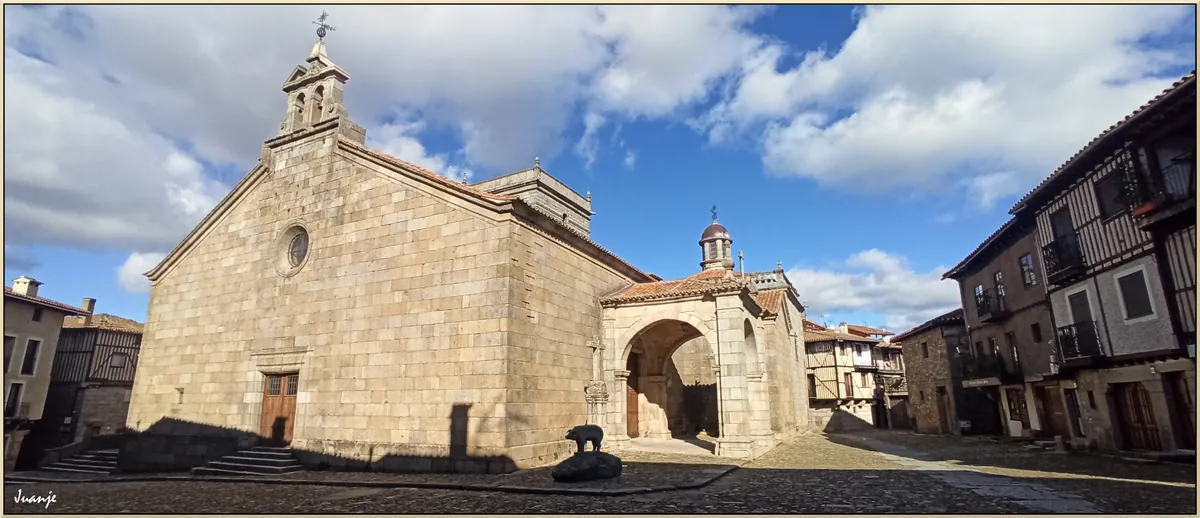
En el centro se levanta la iglesia parroquial de San Juan Bautista, junto a una plaza pequeña. El edificio actual es principalmente del siglo XVI, con reformas posteriores que son habituales en los templos de esta comarca. Su construcción es sencilla y sólida, de mampostería, con una portada sobria y una torre que sirve de referencia visual desde casi cualquier punto del pueblo.
La iglesia no es un monumento aislado. Actúa como eje del trazado urbano. De ella parten callejas estrechas, flanqueadas por las viviendas más antiguas, con muros de piedra, balcones de madera y puertas en recodo. Algunas conservan las chimeneas cónicas tradicionales, un elemento distintivo de la arquitectura popular en esta zona de Salamanca.
Recorrer el pueblo no lleva mucho tiempo, pero conviene hacerlo despacio. Los detalles aparecen poco a poco: la textura de las fachadas, los pequeños corrales interiores, los cambios de nivel que han determinado la forma de las construcciones. La cuesta está presente en todas partes.
Bosques, caminos y vida cotidiana
Tras las últimas casas, el paisaje se convierte enseguida en bosque. Castañares cubren buena parte de las laderas circundantes, mezclados con zonas de robledal y matorral bajo. En otoño, el color cambia por completo y es frecuente ver a vecinos recogiendo castañas o atendiendo a sus pequeñas huertas.
Una red de caminos sale de Santibáñez hacia otros pueblos cercanos de la Sierra de Francia. Muchos de estos trazados son antiguas vías de labor o para el ganado. Algunos se mantienen claros; otros se pierden y reaparecen entre la maleza, algo característico de esta comarca. Caminarlos da una idea de cómo se conectaban históricamente estos pueblos, antes de que las carreteras modernas modificaran los desplazamientos.
Los arroyos que bajan de los montes cercanos forman pequeños valles donde aún se ven prados con animales pastando. No es un paisaje espectacular, sino representativo de la Sierra de Francia en su conjunto: terreno trabajado durante siglos, junto a áreas donde el bosque ha ido ganando terreno a lo que antes era cultivo.
Cómo visitar Santibáñez
Santibáñez de la Sierra es pequeño y tranquilo. Lo habitual es visitarlo combinándolo con otros pueblos de la sierra, no como destino único. Su interés está más en el conjunto que en hitos concretos.
El tiempo aquí se emplea bien paseando por sus calles y después saliendo hacia el campo circundante. Se trata más de observar que de buscar actividades organizadas. El pueblo da una visión clara de cómo perdura la vida rural en esta parte de Salamanca, condicionada por el terreno, las estaciones y unas formas de construir y vivir que llevan mucho tiempo asentadas.
Para llegar, hay que tomar la carretera que une La Alberca con Miranda del Castañar; Santibáñez tiene un desvío señalizado. No hay un horario para ver nada; el pueblo se recorre libremente. Conviene calzado cómodo por las cuestas y el firme irregular de algunos caminos.