Full Article
about Sequeros
Former administrative capital of the Sierra; natural lookout with stately architecture and historic theater
Hide article Read full article
A hillside village shaped by its setting
Sequeros sits on the western side of the Sierra de Francia, in the province of Salamanca, and it makes most sense when you first picture the terrain. The village lies at around 900 metres above sea level and spreads across a pronounced slope. That gradient explains the irregular layout of its streets and the way the houses step down the hillside.
With just over two hundred registered residents, Sequeros keeps a small scale that still reflects how life in the mountains has worked for generations. Agriculture remains part of the picture, alongside some livestock, and there is a close relationship with the surrounding woodland. The landscape is not a backdrop here but something that has shaped daily routines and the structure of the village itself.
Stone, timber and sloping streets
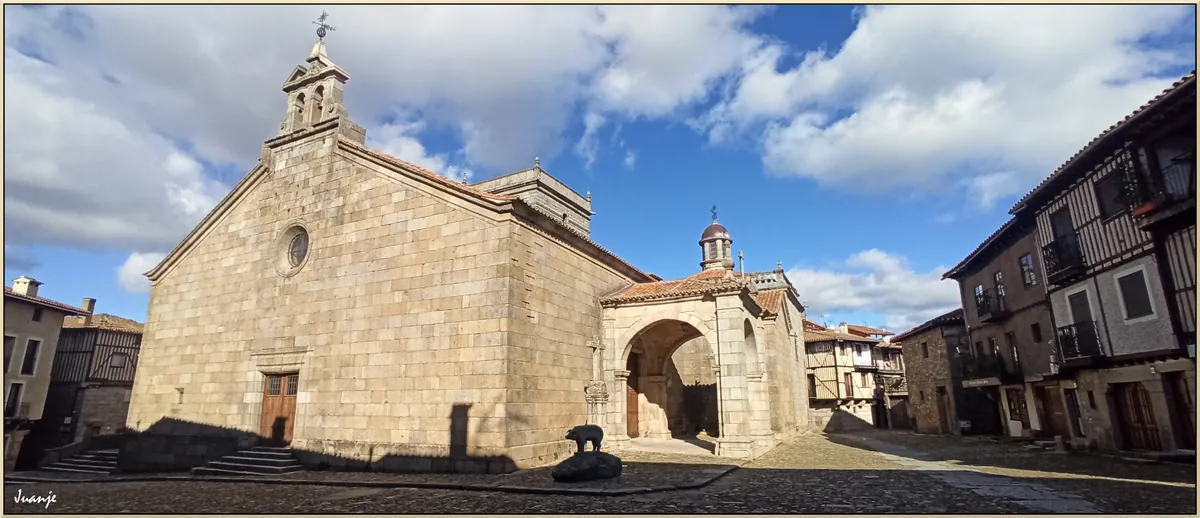
The old centre preserves much of the traditional architecture of the Sierra de Francia. You will see stone masonry walls, timber frames filled with adobe, and long balconies designed to catch the sun. There is no strict uniformity. Each house seems to respond to the slope and the available space, which creates narrow streets, sharp turns and small squares that appear almost by accident.
Some façades still display coats of arms and carved stone doorways. These details hint at a time when these mountain settlements had a degree of commercial activity, linked to routes that connected the plateau with the southern side of the range. Sequeros was not isolated from movement and exchange, even if today it feels quiet.
Public fountains dotted around the village also speak of an earlier way of life, before modern water supply systems. They mark places where daily routines once centred on collecting water, and they remain part of the built landscape.
San Pedro at the top
At the highest point of the village stands the parish church of San Pedro Apóstol. Its origins are old, although the building seen today reflects several alterations over time. The bell gable is a defining feature when the village is viewed from below, giving Sequeros a recognisable outline against the hillside.
Inside, there are usually altarpieces in the Baroque tradition, though the interior is not the main reason to come here. The position of the church matters just as much. From the surrounding area, the view opens out across the valley and towards the mountains of the Sierra de Francia. That vantage point helps place Sequeros within its wider setting and makes clear how the village fits into the terrain.
A small bridge and a change of atmosphere
Just outside the main cluster of houses, a small stone bridge crosses the Sequeros stream. It is the sort of rural structure that is difficult to date precisely, although it is likely to be several centuries old and once formed part of the routes linking nearby villages.
Reaching the stream means leaving the built-up area and walking through riverside vegetation. The shift in atmosphere is noticeable. Water and tree shade create a cooler, quieter environment, especially in summer, and the contrast with the sunlit slopes of the village above is quite marked.
Chestnut and oak woodland
The immediate surroundings of Sequeros are covered with woodland, particularly oak and, above all, chestnut trees. The chestnut groves are a defining feature of this part of the Sierra de Francia. In autumn, the landscape changes colour as the leaves turn red and ochre, altering the character of the hillsides.
Several paths start from the village and connect with longer routes across the sierra. Some are relatively short walks, while others involve significant changes in elevation, which is typical for this region. The terrain rarely stays flat for long.
Mushroom foraging also appears in season, although it requires both knowledge and respect for local regulations. It is part of how people interact with the woodland, but it is not something to approach casually.
Festivals and local rhythms
The festive calendar in Sequeros still carries weight among residents. Traditional celebrations continue to play an important role in the social life of the village. The patron saint festivities dedicated to San Roque usually take place in August and bring together much of the activity of the summer.
Religious events form part of the programme, alongside gatherings that draw both locals and those who return to the village during the holiday period. These moments briefly change the pace of a place that is otherwise quiet for much of the year.
A practical note for visiting
Sequeros is easy to explore on foot, although the slopes are constant and sometimes steep. It makes sense to leave the car near the entrance to the village and continue along the streets of the old centre on foot. The layout rewards a slow pace.
Anyone interested in traditional architecture will find plenty to notice in the timber frames and in the way houses lean on one another to adapt to the hillside. It is also worth setting aside time to follow one of the paths that lead out towards the nearby chestnut groves, where the relationship between the village and its landscape becomes clearest.