Full Article
about Sotoserrano
Town with Mediterranean climate, known for its cherries and the Alagón meander.
Ocultar artículo Leer artículo completo
The church bell strikes noon, yet the only movement on Sotoserrano's main street is a farmer loading chestnuts into a Land Rover. Five hundred souls live here, stretched along the Alagón River at 508 metres, where the high plateau of Castilla y León begins its tumble towards Extremadura. No souvenir stalls, no tour buses, just stone walls warming in the sun and the smell of wood smoke drifting from chimneys.
This is the Sierra de Francia in microcosm. Oak and chestnut forests press against the village from three sides; the fourth drops to the river where herons patrol the shallows. The roads that reach here—first the A-66 from Madrid, then a wriggling LP-412—filter out anyone expecting flip-flop convenience. What arrives is a place that still keeps the hours of its orchards: work at dawn, siesta when the sun climbs, beer and conversation when it sinks.
A village that faces the mountains, not the motorway
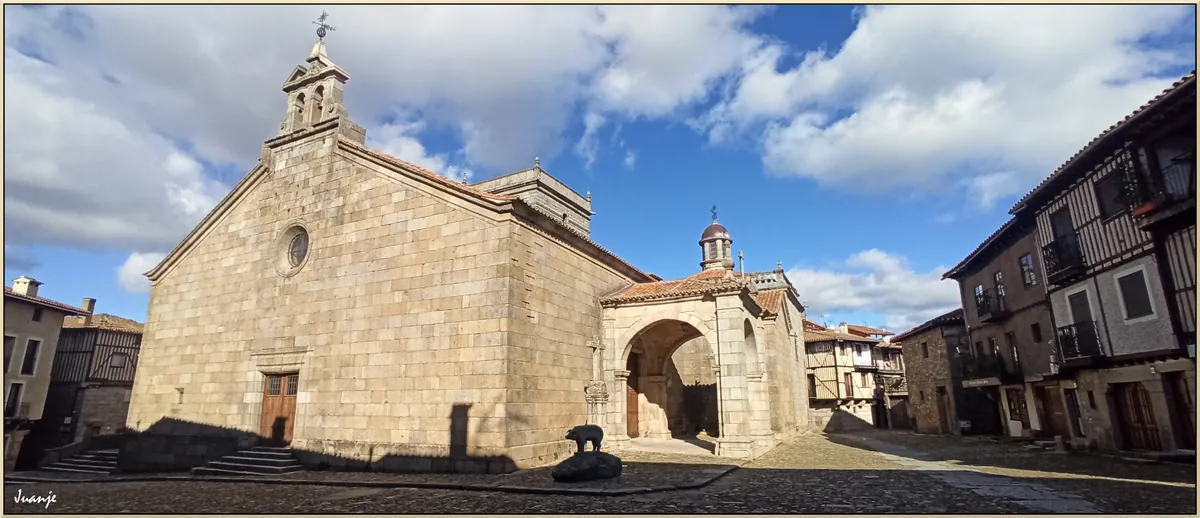
Stone houses shoulder together as if for warmth. Their balconies are deep enough to store onions; roof tiles the colour of burnt toast overhang thick walls designed for winter. Walk ten minutes in any direction and the architecture dissolves into landscape: terraces of tomatoes and peppers, then chestnut groves that turn copper every October. The transition is so gentle you hardly notice you've left the streets until your boots crunch on mast.
The river path starts behind the football pitch, follows the Alagón for three kilometres, and ends at a natural pool deep enough for a swim when the flow is low. Mid-week in May you'll share it with dragonflies; mid-August with families from Salamanca who know the secret. No lifeguard, no ice-cream van, just granite boulders warmed smooth and water that smells of moss.
For bigger country, Las Batuecas-Sierra de Francia Natural Park begins where the tarmac ends. Thirty-two thousand hectares of quartzite ridges, griffon vultures and villages that appear on no postcards. From Sotoserrano the trailhead at El Cabaco is a twenty-minute drive, then a six-hour circuit through Holm oak and strawberry tree to a mirador that lets you see all the way to Portugal on a clear day. Start early; the only shade is what the vultures cast.
What lands on the table
Lunch is served at 14:00 sharp or not at all. The mesón beside the church keeps a handwritten menu: judiones beans stewed with chorizo, pork shoulder slow-cooked in paprika, and the local chestnuts boiled, roasted or candied depending on the month. Expect to pay €12 for three courses, bread and a quarter-litre of house red that tastes better than it should. Vegetarians survive on tortilla and the excellent goat cheese drizzled with honey; vegans should stock up in Béjar before arriving.
Evening eating is trickier. Two bars open at 20:00 but the kitchen often clocks off by 21:30. The chuletón—a rib-eye the thickness of a hardback—appears only at weekends and needs ordering in advance. Cash is king; the card machine is "broken" with the reliability of a British rail replacement bus.
Seasons and their small print
April brings orchid blooms along the river and daytime temperatures in the low twenties. Wild asparagus appears in the markets; villagers walk with carrier bags and a knife. By July the thermometer nudges 35 °C at midday, yet nights drop to 16 °C—perfect for sleeping under a single cotton sheet. August fills every house with returning grandchildren; the pool gets rowdy and the only parking space is the one you walk to.
October is the month of greatest colour and greatest danger. Chestnut collectors wear helmets against falling spines; wild boar rut in the valleys and can charge if surprised. The first frost usually arrives around All Saints' Day, turning mornings white while afternoons remain warm enough for shirtsleeves. Winter proper is short but sharp: snow three or four times, roads salted by a single plough, bars that close for the season on 15 December and reopen for Three Kings. January evenings smell of bonfires for San Antón; locals grill pork skewers in the square and pass around bottles of orujo strong enough to stun a mule.
Getting here, staying here
Madrid-Barajas to Sotoserrano is 220 km of motorway followed by 20 km that would make a Welsh mountain pass feel smug. Allow two and a half hours in summer, three in winter, longer if the fog sits on the Béjar basin. Car hire is essential; buses reach La Alberca twice daily but then you're stuck. Petrol stations thin out after Peñaranda—fill the tank and the spare jerrycan if you're renting something thirsty.
Accommodation is limited. Three village houses have been restored into self-catering casas rurales: thick walls, wood-burning stoves, Wi-Fi that gasps when it rains. Expect €90 a night for a two-bedroom house, towels extra. The nearest hotel is a seventeenth-century monastery in Las Batuecas, ten kilometres away, where monks once grew saffron and the rooms now cost €140 including breakfast and Gregorian chant at vespers. Campers should head for the municipal site at El Cabaco; level pitches, cold showers, €6 a night and no reservation possible.
The quiet that some call boredom
Even in high season you can walk the length of the village at dusk and count fewer than twenty people. Shops shut without warning, the bakery sells out by 10 a.m., and the evening's entertainment is a choice between dominoes in the bar or bats hunting under the streetlights. Teenagers escape to Salamanca at the first opportunity; visitors used to seaside promenades may find the silence unsettling after day three.
Yet that same quiet is the point. Sotoserrano offers what the Costas lost two decades ago: a place where the landscape sets the timetable, where a conversation with the barman can turn into an invitation to help slaughter the family pig, where the night sky is still dark enough to read the Milky Way. Bring walking boots, a phrasebook and patience. Leave before you need daily cappuccinos, or stay long enough to grow your own.