Full Article
about Pineda de la Sierra
Mountain village declared a historic site; Sierra architecture and former ski resort
Hide article Read full article
A village that moves at its own pace
Pineda de la Sierra has a way of slowing things down without making a fuss about it. The feeling is a bit like stepping into a grandparent’s house, where time loosens its grip and nobody is watching the clock. This small village in the Sierra de la Demanda, just over an hour by car from Burgos, has fewer than a hundred residents and follows its own rhythm. Winters stretch out, the surrounding hills shape daily life, and any sense of hurry tends to fade into the background.
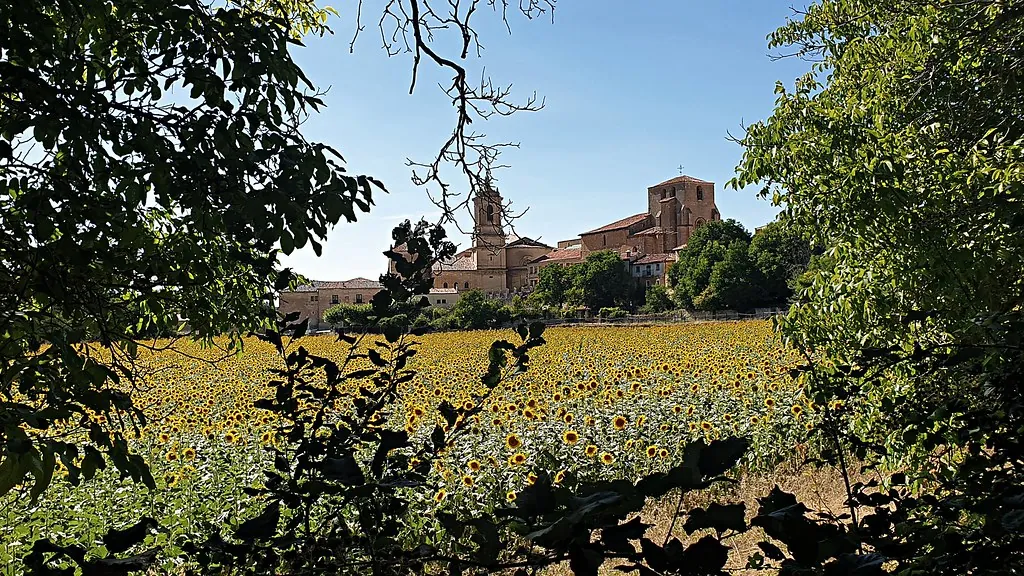
A walk through the streets quickly shows what the place is built from. Stone and wood define most of the houses, with red-tiled roofs that are typical of this part of the mountains. Everything feels well kept rather than decorative. The buildings reflect a practical way of living in a highland setting: wooden balconies, enclosed yards attached to the home, and spaces designed for storing firewood or whatever the land provided. It is not architecture meant to impress. It works more like a sturdy tool, straightforward and built to last.
At the centre stands the church of San Esteban Protomártir. It is not a grand landmark, yet it holds its place. In a village this size, there is always a natural meeting point, and here that role falls to the church and the square around it. On important days, when the bells ring out, the sound carries easily and the whole village knows about it.
The mountains just beyond the last house
Tourism in Pineda de la Sierra is closely tied to what surrounds it. The edge of the village gives way quickly to open countryside. A few minutes on foot is enough to reach the pine forest. Scots pine dominates much of the area, with beech woods appearing in certain spots, and small streams that show themselves after steady rain.
The sensation of walking here can be striking, especially in summer. The trees block out much of the sun, and the air feels cooler, almost like stepping indoors on a hot August day. Noise fades as well, replaced by the quiet of the forest.
Paths run through the trees and climb towards more open ground. From higher points, broad views of the Sierra de la Demanda come into view. On clear days, some of the taller peaks in the range stand out, with several reaching close to two thousand metres. The landscape does not feel polished or staged. It has a rough, practical character, more like a well-used outdoor jacket than something designed to be admired from a distance.
For those who enjoy walking, there are marked routes of different lengths. Some are gentle outings, others demand more effort. Early starts can change the experience again. At that hour, it is not unusual to come across roe deer or hear the movement of birds in the trees.
When winter reshapes the landscape
Winter brings a noticeable shift. Trails that are easy to follow in summer become something else once snow covers the ground. The area suits activities such as walking with snowshoes or trying some cross-country skiing. Movement slows down and the surroundings feel quieter still.
Weather plays a decisive role during this season. When a storm arrives, it makes itself felt. Mountain roads can become difficult, so it is wise to check conditions before heading up. Plans do not disappear, but they often need adjusting, much like a seaside trip on a windy day.
Food shaped by the climate
The cooking in Pineda de la Sierra follows the logic of its setting. Cold weather calls for warm, filling dishes that restore energy after time outdoors. Meals often feature judías pintas with cured meats, game stews when the season allows, and mushrooms in autumn if the forest has been generous.
These are the kinds of dishes associated with winter at home: a large pot on a slow heat, and time to sit and talk around the table. The focus is less on variety and more on substance, with recipes that have a clear purpose.
Exploring the wider Sierra de la Demanda
Moving around the Sierra de la Demanda by car is straightforward, and the scenery changes within a short distance. Small villages are scattered through the valleys, along with reservoirs and stretches of woodland that invite further walks or a simple pause to take in the surroundings.
Pineda de la Sierra works well as a base for this kind of exploration. It shares something with a mountain refuge, a place to return to before heading out again into the surrounding landscape.
Is it worth the trip?
The answer depends on expectations. Anyone looking for a busy destination with constant activity or streets lined with open shops will not find that here.
Those drawn to walking, to the quiet of the mountains, and to villages that continue at their own steady pace may find Pineda de la Sierra fits. The appeal is understated. Little happens in the conventional sense, and that is precisely where its character lies.