Full Article
about Adrada De Haza
Ocultar artículo Leer artículo completo
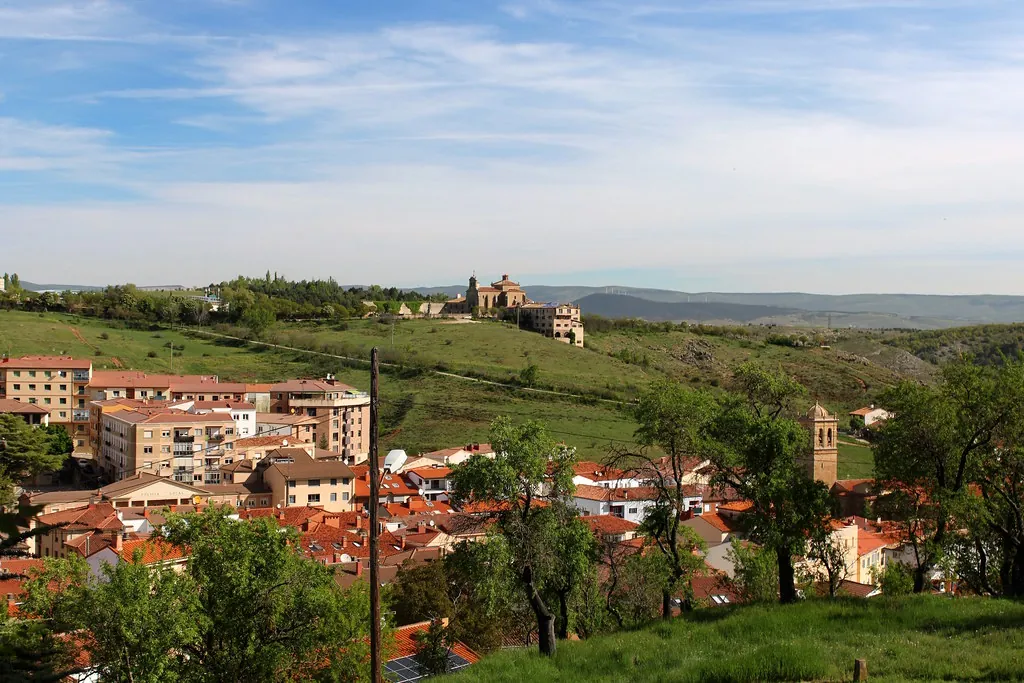
At 940 metres above sea level, Adrada de Haza is high enough for the air to feel thinner and the night sky closer. The village sits on a shallow ridge above the Riaza valley, 35 minutes south of Burgos city, where the Meseta’s endless cereal plains suddenly wrinkle into modest hills and the first serious vineyards begin. Stone houses the colour of wheat face south, angled to catch every shard of winter sun; their back walls have no windows at all, a silent admission that Castilian winters here can knife straight through glass.
The altitude matters. In April you can still wake to frost on the windscreen while the vines below the village are already bleeding sap. Come July the afternoons bake, but step into shade and the breeze rolling up the valley keeps T-shirts wearable. British visitors who know Ribera del Duero only from airport transfers to Segovia are startled by how cool midnight feels—socks-and-jumper weather even in August.
A landscape measured in seasons, not miles
There is no dramatic gorge, no cathedral, no Instagram-ready plaza. Instead the timetable of farming writes the diary. February brings pruning smoke that drifts across the lanes like bonfire night without the fireworks. Late March turns the fields a sharp, almost violent green that would make an Irish hillside look muted. By mid-September the same terraces glow copper and claret, and the harvest tractors nose along the narrow roads at walking pace, headlights on even at noon so motorists see them through the dust.
Walking is the simplest way to read the calendar. A four-kilometre loop leaves the village past the cemetery, drops to the valley floor, then climbs back through walnut groves to the mirador. The council has nailed discreet QR panels to fence posts: scan one and a two-minute English audio explains why the soil changes from chalk to red clay in the space of a single field, or how the walnut trees were planted in the 1950s to shelter newly grafted tempranillo. The technology feels almost futuristic in a place that still measures rainfall by the depth in an old oil drum outside the bar.
Wine without the theatre
Ribera del Duero’s big names—Vega Sicilia, Pingus—lie half an hour west, and the coach parties stick to the wine cathedrals around Peñafiel. Adrada de Haza’s cellars are smaller, often family affairs where the tasting room is someone’s garage and the dog refuses to move off the pallet of last year’s labels. Bodega Valdepérez opens two afternoons a week; ring ahead and someone’s aunt will pour three vintages, apologise that the glassware is mismatched, and charge eight euros for the bottle you choose to take away. They do not sell tote bags, postcards, or anything that could remotely be called merchandise.
The village’s own co-op, built in 1962, still receives grapes from 120 smallholders. Stand outside at 08:00 during harvest and you’ll see 4×4 pickups reversing onto the weighbridge, crates of garnacha and albillo sliding straight into the de-stemmer. The smell is part fruit juice, part yeasty bakery, part cold concrete. There is no charge for watching; ask politely and the foreman will let you climb the metal stairs for a five-minute view of the presses.
Where to eat, sleep, and draw cash—preferably in that order
La Casa de Haza is the only hostelry, six rooms above a dining room that seats thirty. The building was once the priest’s house; floorboards creak like a BBC period drama and the Wi-Fi gives up beyond the second landing. Rooms are €70 mid-week, breakfast included. Dinner is served 21:00–22:30, which suits British stomachs used to early-bird specials about as well as a siesta suits a Monday morning. Adjust, or drive the 18 minutes to Aranda de Duero where Mesón de la Villa serves lechazo from 20:00—still late, but negotiable.
The menu in La Casa does not translate terms for tourists. Sopa castellana arrives as a deep bowl of chicken stock thickened with bread and paprika, a soft poached egg bobbing in the middle; it tastes like childhood soup if your childhood happened in Sheffield and your mother believed in garlic. The lamb is milk-fed, roasted whole in a wood-fired clay oven, carved at the table with a spoon to demonstrate tenderness. A half-kilo portion for two costs €38; they will do a single plate, but you’ll be talked into the full portion once the owner’s wife appears with the serving dish.
Vegetarians get roasted piquillo peppers stuffed with goat’s cheese, followed by torrija—the Spanish answer to bread-and-butter pudding, soaked in wine must and cinnamon. Flag dietary requirements when you book; the kitchen shops daily and does not stock tofu on spec.
Sunday mass and other traffic jams
There is no ATM. The nearest cash machine stands outside the filling station on the Aranda road, ten kilometres away, and it closes at 22:00 because the garage shutters roll down. Both village bars accept cards reluctantly; one adds a euro surcharge under five euros, the other claims the terminal is broken until the bill exceeds twenty. Bring notes, preferably small ones—the bakery cannot change a fifty for a €1.20 loaf.
On Sunday morning the single through-road becomes a car park for the 11:00 mass. Locals double-park beside the church, hazards flashing, and collect their vehicles immediately after communion. Arrive at 10:55 and you will be waved past the plaza by a man in a hi-vis vest who may or may not be official; try to leave at 11:45 and you wait while every Seat Leon reverses out in strict order of arrival. The service itself is sung a cappella by a congregation averaging seventy; the acoustics turn every hymn into something halfway between plainsong and a Liam Gallagher drone, unexpectedly moving even if your Spanish stalls at ordering coffee.
Winter warning, spring reward
January and February can be glorious—cobalt skies, snow on the distant Sierra de la Demanda, wood smoke scenting the air—but the village folds in on itself. Both bars reduce hours to Friday-through-Sunday, La Casa shuts completely, and the co-op smells less of grapes than of disinfectant. Unless you crave solitude and carry chains for the hire car, wait for bud-break in late March.
April brings almond blossom and daytime temperatures in the mid-teens; night frosts still crisp the windscreen, but British walkers in fleece and shorts look less eccentric than the Spanish farmers still in quilted coats. May is ideal for cycling the Via Verde de la Sierra, a disused railway track that starts 25 minutes away in Aranda and unrolls 60 kilometres through tunnels and iron viaducts—no traffic, a gentle two per cent gradient, and picnic tables every ten kilometres. Bike hire is €18 a day from CicloAranda; they lend helmets without being asked and include a pump the size of a rolling pin.
Leaving without the souvenir
There is no shop selling tea towels, no fridge-magnet of the church. The closest thing to a souvenir is the wine you bought in someone’s garage, labelled with a date that will remind you of the smell of grape must and the sound of tractors at dawn. Pack it carefully in the middle of your suitcase, between the jumpers you didn’t need at lunchtime but pulled on after sunset. Back home, when January rain drums against British windows, the bottle uncorks a draught of Castilian altitude—cool nights, hot middays, and the quiet that falls over Adrada de Haza once the harvest is in and the dogs have stopped barking at strangers.