Full Article
about Aguas Candidas
Ocultar artículo Leer artículo completo
The church bell tolls at noon, but nobody hurries. A woman lifts sheets from the communal wash trough, water dripping onto stone worn smooth by centuries of Monday mornings. Two elderly men pause their card game to watch a delivery van navigate the narrow lane, its wing mirrors folded flat against the whitewashed walls. This is Aguas Cándidas, where time moves at the speed of water finding its way downhill.
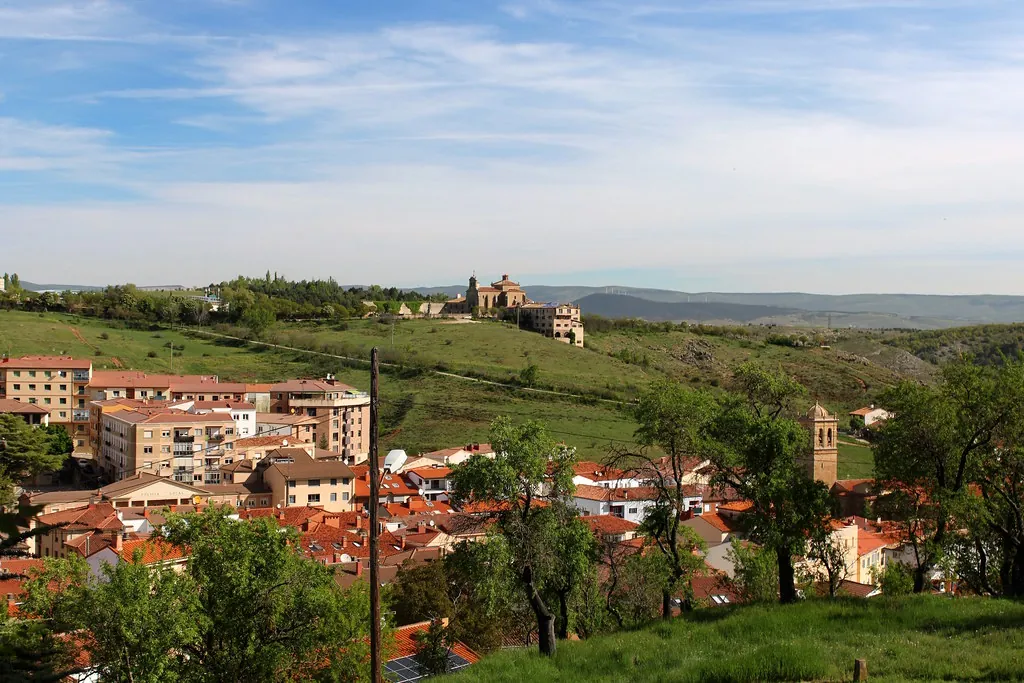
Forty-five kilometres southwest of Burgos, the village squats in a shallow valley carved by streams that gave it both name and purpose. Aguas Cándidas – literally "white waters" – refers to the chalky springs that bubble up through the limestone, feeding vegetable plots and public fountains alike. The water here isn't merely scenic; it's the village's circulatory system, channelled through stone aqueducts and iron pipes that clatter against cottage walls like exposed veins.
The Architecture of Making Do
There's no postcard-perfect plaza, no carefully restored medieval quarter. Instead, the village presents a working catalogue of rural Castilian building methods, some successful, others less so. Granite doorframes lean slightly out of true. Timber balconies sag under terracotta pots of geraniums. A 16th-century house with carved heraldic stones sits beside a 1970s concrete garage, both equally weather-beaten. This organic approach to development – build what you need, patch what breaks – feels refreshingly honest compared to Spain's more manicured heritage sites.
The parish church of San Juan Bautista sits marginally above the settlement, its squat tower visible from anywhere in the valley. Constructed between the 15th and 18th centuries, it shows the architectural equivalent of speaking three languages in one sentence: Romanesque foundations, Gothic arches, and a Baroque altarpiece that local craftsmen never quite finished gilding. The interior smells of beeswax and damp stone, with wooden pews polished to a chestnut gleam by generations of Sunday best.
Walking the Waterways
Aguas Cándidas makes no pretence of being a hiking destination, yet the network of farm tracks radiating from the village offers some of the province's most pleasant low-level walking. Three main routes follow the watercourses, each marked by nothing more sophisticated than regular use. The shortest, a two-kilometre loop along the Arroyo de las Moreras, passes through riverside poplars where nightingales sing in spring. Longer tracks connect to neighbouring villages – Villanueva de Carazo to the north, Barrios de Colina across the watershed – following the traditional paths that locals still use to check remote vegetable plots.
The surrounding countryside operates on an agricultural calendar that British visitors might recognise from half-remembered childhood books. Wheat turns from green to gold between June and July. Sunflowers face east in morning formation, swivelling west by teatime. Autumn brings mushrooms to the scrub oak slopes, though picking rights belong to village families who've harvested the same spots for generations. Winter strips the landscape to ochre and grey, when the chalk streams appear almost turquoise against frost-browned fields.
What Passes for Entertainment
Evenings centre on the Bar Centro, really the only option unless you fancy drinking alone in the bus shelter. The television plays bullfighting or football, depending on the season. Locals nurse small beers for hours, discussing rainfall statistics with the intensity that Yorkshiremen reserve for cricket. Visitors are welcomed but not fussed over – order a caña and you'll likely find someone keen to explain why the village water makes better bread than anywhere else in Castilla y León.
Food follows the Burgos template: robust, pork-heavy, designed for people who've spent daylight hours behind mules or tractors. The local morcilla – blood sausage studded with rice rather than oatmeal – appears in everything from scrambled eggs to bean stews. Lamb comes as lechazo, milk-fed animals roasted whole in wood-fired ovens until the skin crackles like well-done crackling. Vegetarians can manage, but should probably alert any restaurant in advance rather than hoping for spontaneous inspiration.
The village's fiesta patronale unfolds during the last weekend of August, when the population quadruples as former residents return from Burgos, Madrid, even London. Three days of processions, brass bands and sustained day-drinking culminate in a Saturday night disco held in the sports centre, its sound system powerful enough to rattle windows in the next valley. Accommodation becomes impossible to find within a twenty-kilometre radius; unless you're specifically seeking the full Spanish fiesta experience, this might be a weekend to avoid.
Getting There, Staying Put
Public transport reaches Aguas Cándidas, but only just. One bus daily connects to Burgos on weekdays, departing at 7:15 am and returning at 2:30 pm – timings that assume you're visiting relatives rather than exploring. Car hire becomes essential, though the final approach via the BU-901 requires nerves of steel when meeting oncoming tractors on blind bends. The road climbs through pine plantations before dropping into the valley, revealing the village suddenly like a dropped handkerchief.
Accommodation options remain limited to three guesthouses, all converted village houses with varying degrees of comfort. Casa Rural La Fuente offers the most reliable hot water system; Posada de San Juan has the best mattresses but faces the church bell (it chimes every quarter hour). Prices hover around €60-€80 per night, including breakfast of strong coffee and churros bought frozen then reheated. Don't expect minibars or room service; do expect spotless linen and helpful advice about walking routes.
Spring visits bring wildflowers and temperatures perfect for walking – think North York Moors in May, but with added storks nesting on church towers. Summer grows fiercely hot by midday, though evenings cool sufficiently for outdoor dining. Autumn paints the surrounding hillsides in burnt siennas and rusts, while winter brings sharp frosts and the possibility of being snowed in for a day or two. The village sits at 920 metres above sea level; weather that starts as rain in Burgos often arrives here as sleet.
Aguas Cándidas won't change your life. It offers no Instagram moments, no life-altering revelations, no stories to bore dinner guests with for years to come. What it provides instead is something increasingly rare: a place where daily life continues regardless of visitor numbers, where water still dictates the rhythm of existence, and where the greatest luxury is simply being left alone to watch it all unfold.