Full Article
about Alfoz De Santa Gadea
Ocultar artículo Leer artículo completo
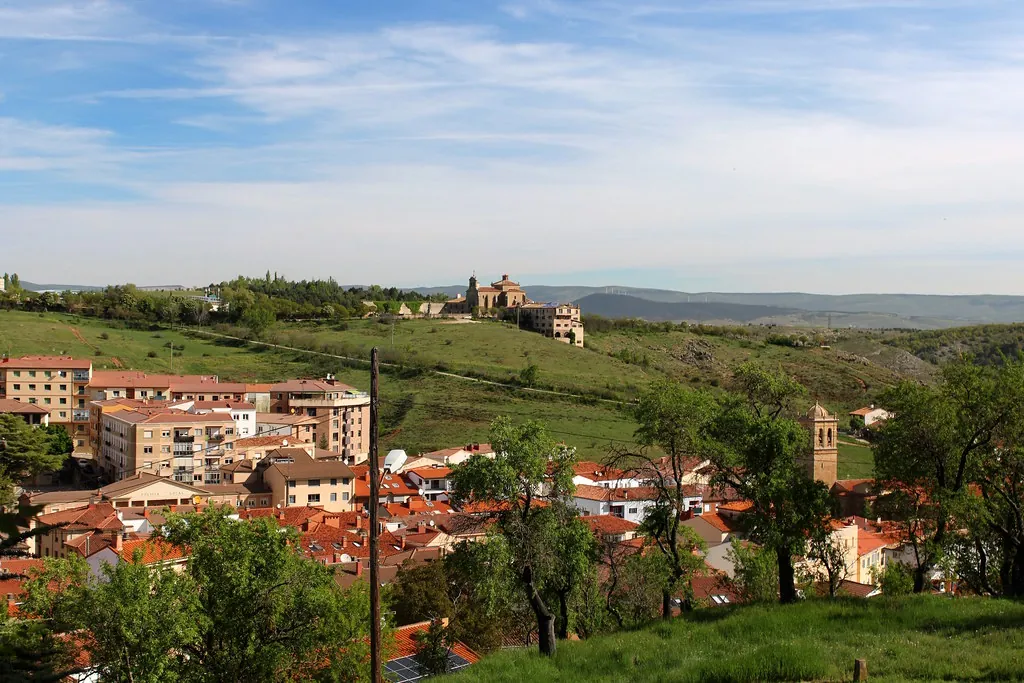
The stone church tower in Santa Gadea village catches morning light at an angle that makes the limestone glow honey-gold. It's neither dramatic nor ancient enough for guidebook superlatives, yet this modest 17th-century belfry marks the spot where Spain's central plateau begins its final roll toward the Cantabrian Mountains. Stand beside it and you'll see wheat fields give way to oak scrub, while the horizon gains proper hills for the first time since leaving Burgos.
This is Alfoz de Santa Gadea, a municipality scattered across 85 square kilometres of northern Burgos province. The name itself—"alfoz" being a medieval term for a district of villages—hints at what's on offer: not a single destination but a loose constellation of hamlets where the loudest sound is usually grain dryers whirring in late July. Population across all settlements hovers around 5000, though on weekday afternoons you'd swear it was half that.
Driving between ghosts of grain towns
You'll need wheels. The villages sit 3–6 kilometres apart along minor roads that spider north from the N-I motorway. Bercedo, the largest settlement, holds perhaps 200 residents. Its church of San Pedro retains a Romanesque doorway salvaged from an earlier building, though the interior was scrubbed clean during 18th-century refurbishments. Next door, the bar opens at 7 am for coffee and serves decent tortilla at lunch, but closes by 9 pm even on Saturdays.
Lándraves offers a different rhythm. Stone houses here cluster so tightly that alleyways remain in shadow until noon. Someone has planted geraniums in repurposed feed troughs; the effect is surprisingly cheerful against granite walls that once housed share-cropping families. Look up and you'll spot carved date stones—1694, 1721, 1847—each marking a rebuild after fire, war, or simply prosperity returning with a good harvest.
Between villages, the landscape performs a slow striptease of agricultural history. Terraces step uphill where medieval farmers pushed wheat into marginal ground. Abandoned threshing floors—circular stone platforms—sit beside modern silos, both redundant in the age of combine harvesters. You'll pass half-collapsed stone granaries on stilts, their wooden balconies sagging like tired eyelids. These hórreos once kept rats from grain; now they shelter nesting storks.
When the trail is the destination
Walking options are straightforward rather than spectacular. A 12-kilometre loop links Santa Gadea, Quintanilla and Bercedo along farm tracks and the old drove road that once funnelled sheep toward winter pastures. Waymarking is sporadic—cairns and the occasional yellow arrow—so download the municipality's rudimentary map first. Gradient rarely exceeds 150 metres, making it feasible for anyone capable of a Lake District valley walk.
Spring brings the best rewards. Between April and mid-May, wheat shows emerald against red soil, while poppies splash scarlet along field margins. Birdlife is limited but constant: corn buntings chirr from telephone wires, hoopoes probe verges for grubs. Stop at the era above Quintanilla and you'll see why locals call this the "last plateau"—the land simply runs out of flat, tilting abruptly toward the River Nela's gorge.
Autumn shifts the palette to ochre and rust. After harvest, stubble fields attract flocks of skylarks; mornings smell of woodsmoke and damp earth. This is mushroom territory, though regulations are strict. Picking níscalos (golden chanterelles) requires a €15 day permit from the regional office in Briviesca, and rangers do patrol. Without Spanish language skills, you're better off admiring fungi through a camera lens.
Eating what's left when the tourists don't come
Food follows the calendar. In late winter, morcilla from nearby Briviesca appears in every bar—blood sausage studded with rice and spiced just enough to cut through richness. Spring brings espárragos gathered from railway embankments, served simply boiled with alioli. Summer means pipérada, a pepper and tomato stew that tastes of sun, while October heralds game: partridge stewed with bay, wild boar marinated in cheap Rioja.
Don't expect restaurants. The municipality has two proper dining spots, both in Bercedo. Asador Berceo grills chops over vine shoots for €14 a portion; arrive before 3 pm or the lamb will be gone. Casa Curro opens only at weekends and serves a fixed menu—soup, roast, pudding, wine—for €18. Otherwise, you're reliant on bar tapas: tortilla, chorizo al vino, maybe setas if the landlord's brother found mushrooms.
Accommodation is similarly limited. El Rincón de Gadea offers six rooms above the only bakery in Santa Gadea village. British guests praise the breakfasts: proper coffee, fresh churros on Sunday, and homemade jam from the owner's fig trees. Doubles run €65 including breakfast; book ahead for May and September when Spanish walkers arrive. The alternative is staying in Briviesca, 25 minutes south, where the three-star Hotel Pedrosa has pools and parking for €80.
The practical bit your sat-nav won't tell you
Fly into Santander and you're 90 minutes away via the A-67 and N-I. Bilbao adds another 30 minutes but offers more UK flights. Car hire is non-negotiable—public transport reaches Briviesca twice daily from Burgos, but onward buses to Alfoz ceased in 2018. Petrol stations close at 8 pm; fill up in Briviesca before heading north.
Weather surprises people. At 900 metres, nights stay cool even in August. Bring a fleece for 10 pm terraces. October to April sees genuine mountain weather: snow isn't rare, and the road from Trespaderne can ice over. Summer afternoons hit 32°C but humidity stays low—perfect for walking if you start early.
Mobile signal is patchy between villages. Vodafone covers the main road; Orange disappears entirely beyond Quintanilla. Download offline maps. Medical coverage is basic—a 24-hour health centre in Bercedo with a single GP on rotation. For anything serious, it's 35 minutes to Hospital San Pedro in Briviesca.
The verdict
Alfoz de Santa Gadea won't change your life. It offers no epiphanies, no Instagram moments to make followers weep with envy. What it does provide is a glimpse of rural Spain before rural Spain became a theme park. On a Tuesday morning in June, you might walk for three hours and meet one farmer on a quad bike, two elderly women collecting wild thyme, and a dog that escorts you between villages before trotting home. That, for some of us, is precisely enough.