Full Article
about Arenillas De Riopisuerga
Ocultar artículo Leer artículo completo
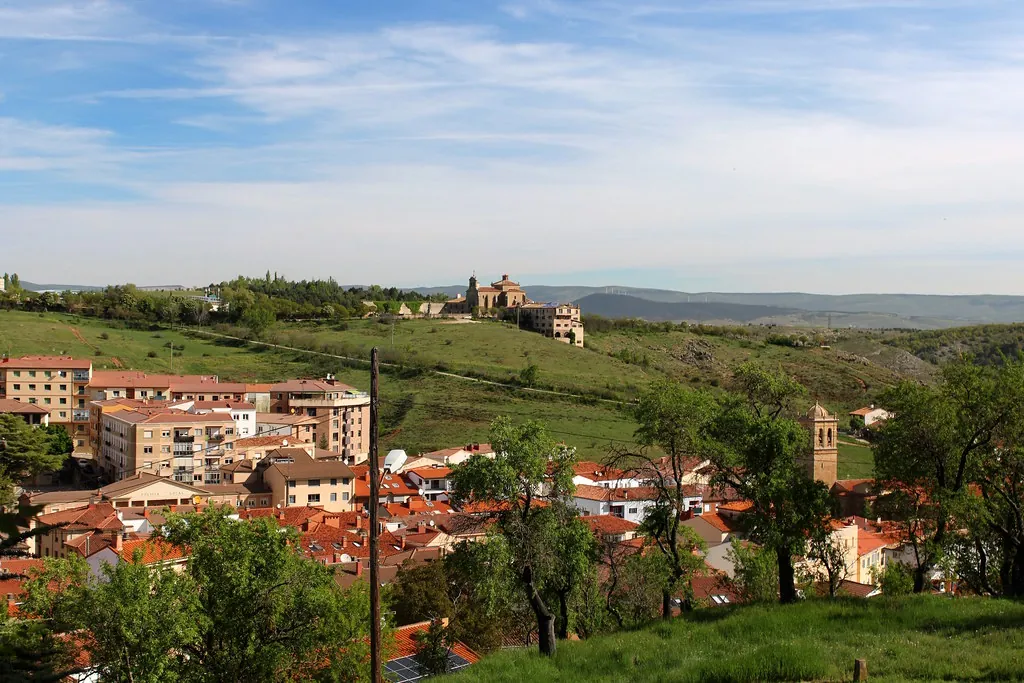
The church bell strikes seven and the only other sound is the swish of a broom on stone. A woman in an apron sweeps last night’s dust from her doorstep, glancing up as the first lorry of the day rumbles past the wheat silos. Arenillas de Riopisuerga is awake, but only just. By half past seven the bakery on Calle Real has sold out of crusty baguettes; by eight the bar is already on its second pot of coffee. This is rural Burgos at its most matter-of-fact—no banners, no selfie points, just 500 souls and a horizon that keeps going until it meets the Cordillera Cantábrica 80 km away.
Stone, adobe and the slow creep of time
Most houses wear the same two materials: ochre sandstone quarried from local hills and adobe bricks the colour of dry tobacco. The mix gives the village a uniform, sun-bleached coat that turns honey-gold at dusk. Rooflines sag like well-used sofas, and the occasional Modernista balcony—tacked on in 1923—leans at angles that would give a Brighton surveyor nightmares. Planning departments here have always favoured practicality over aesthetics; if a wall stays up, it stays. Yet the overall effect is oddly harmonious, the sort of place where satellite dishes look brazenly futuristic.
The parish church of San Andrés anchors the western edge of the single plaza. It is not grand. A Romanesque nave was lengthened in the sixteenth century, then again in the eighteenth after a fire started by a stray rocket during a fiesta. Inside, the air smells of candle wax and damp stone. A retablo painted in brick red and flaking gold occupies the central apse; the left-hand altar carries a doll-sized Virgin whose wardrobe is changed according to the liturgical calendar. Donations for new robes sit in an ashtray from a long-defunct Castilian tabacalera. Entry is free, though the sacristan may appear if he hears the door creak—tip him a euro and he’ll point out the charred roof beam still blackened from 1782.
Walking the grid
Arenillas is laid out on a strict grid, rare in this part of Spain where medieval lanes usually rabbit-warren their way around a hill. The engineers who planned the 1950s agrarian reform wanted straight lines for tractors, and the village reflects the same pragmatism. It takes twelve minutes to walk from the cemetery in the north to the last wheat silo in the south; east to west needs nine, assuming you pause to read the ceramic tiles that list every man who fought in the 1936 militia. The only traffic light is a flashing amber on the N-241, installed after a Danish cyclist misjudged the harvest convoy in 2017.
Leave the tarmac in any direction and you drop immediately into agrarian theatre. In April the fields are emerald; by late June they have turned the colour of a fox’s coat. Paths are simply the compacted wheel-ruts left by combine harvesters—sturdy boots essential after rain when clay clings like wet cement. A circular 7 km loop heads south to the abandoned hamlet of San Felices, where storks nest on the school roof and a stone cross dated 1674 lists the names of plague victims. Return via the river meadows of the Pisuerga and you may see a hobby hawking dragonflies above the irrigation ditch. Binoculars are worth packing; hides don’t exist, but the wheat offers plenty of cover if you don’t mind standing still.
Caldereta and other Monday specials
There is no Michelin-listed restaurant for 40 km, yet you will eat well. The only public dining room is the bar Sociedad Deportiva, open from 6 a.m. until the last customer leaves—often after midnight. Monday is caldereta day: lamb shoulder, tomato, bay and a splash of Rioja Alta, simmered for three hours and served in a bowl the size of a football. Bread is charged by the piece (30 céntimos) and wine comes in a 250 ml porrón; ask for a glass and the landlord will know you’re foreign before you open your mouth. A three-course menú del día mid-week costs €11 and includes pudding; options are usually rice pudding or rice pudding, but the cinnamon is freshly grated.
For self-caterers the mobile fruit lorry arrives Thursday morning: peaches the size of cricket balls, lettuces still wearing their birthplace’s soil. The nearest supermarket is in Melgar de Fernamental, 11 km north; if you haven’t hired a car, Señor Armando runs a taxi for a flat €18 return, waiting time included, but you must book before 9 p.m. the night before.
When the village reassembles
Fiestas may look low-key to outsiders, yet they matter fiercely. The main celebration honours the Virgen de la Asunción on 15 August. Emigrants who now fit kitchens in Barcelona or pick strawberries in Kent fly back, and house prices in the sole letting agency double for ten days. Morning mass is followed by a churro-and-chocolate breakfast; by noon the plaza smells of sardines grilling over bay-trimmed fires. A foam machine is trucked in for toddlers, while teenagers neck cheap vodka behind the sports centre. At midnight fireworks crack above the wheat, and for five minutes the village feels metropolitan. Accommodation is impossible unless you reserve in March; day visitors should plan to leave by 1 a.m. when the last bus to Burgos departs.
Semana Santa is quieter: a single procession on Good Friday, hooded penitents in purple robes, drums echoing off adobe walls like distant thunder. Britain’s health-and-safety brigade would shut it down in minutes—bare feet, chains, the occasional real crown of thorns—but the atmosphere is solemn rather than macabre. Bring a cushion; the cobbles are unforgiving.
Getting here, getting out
Arenillas sits 34 km north-east of Burgos on the N-120. ALSA runs one daily coach from Madrid’s Estación Sur at 08:30, reaching the village at 13:05; the return leaves 15:10 and arrives back in the capital 19:45. A single ticket is €23.65 if booked online, €26 on the day. Hiring a car is simpler: take the A-1 to kilometre 243, then follow the CL-634 for twelve minutes. Petrol stations are scarce—fill up at Aranda de Duero if you’re heading north.
There is no hotel. The ayuntamiento lists three privately owned flats, two of them above shuttered shops. Expect Wi-Fi that copes with email but buckles at Netflix, and bathrooms where the hot-water tank sings like a kettle. Prices hover around €55 a night with a two-night minimum; the key-holder has day surgery on Tuesdays, so check-in before noon. Campers are tolerated on the recreation ground if you ask at the bar first; donations to the football pitch fund are appreciated but not enforced.
Worth it?
Arenillas de Riopisuerga will never make a bucket list. It offers no Gothic spires, no boutique riads, no craft-beer taps. What it does give is a yardstick against which to measure the pace of your own life: bread sold out by half seven, streets you can cross blindfolded, skies big enough to reset your compass. Stay a night and you may find the real souvenir is a recognition of how little you need to buy, how much you gain by looking sideways rather than up. And if the wheat turns gold while you’re there, you’ll understand why locals talk about colour the way sailors talk about tides—something that happens to them, not simply around them.