Full Article
about Arija
Ocultar artículo Leer artículo completo
The road drops out of the Cantabrian hills and suddenly there's water where the map insists there shouldn't be. Six thousand hectares of it, held back by a concrete wall built in 1954, turning what was once a river valley into northern Castilla y León's largest accidental mirage. This is Arija – population 500, give or take – a village that woke up one morning to find itself lakeside property without moving an inch.
The Reservoir That Ate the Valley
The Ebro reservoir dominates everything here. Not in a dramatic, fjord-like way, but with the quiet authority of something that simply wasn't supposed to exist. Morning mist hangs over the water like cigarette smoke, and on still evenings the surrounding oak forests double themselves in reflection. It's beautiful, certainly, but it's also slightly unsettling – a landscape that feels temporary despite being nearly seventy years old.
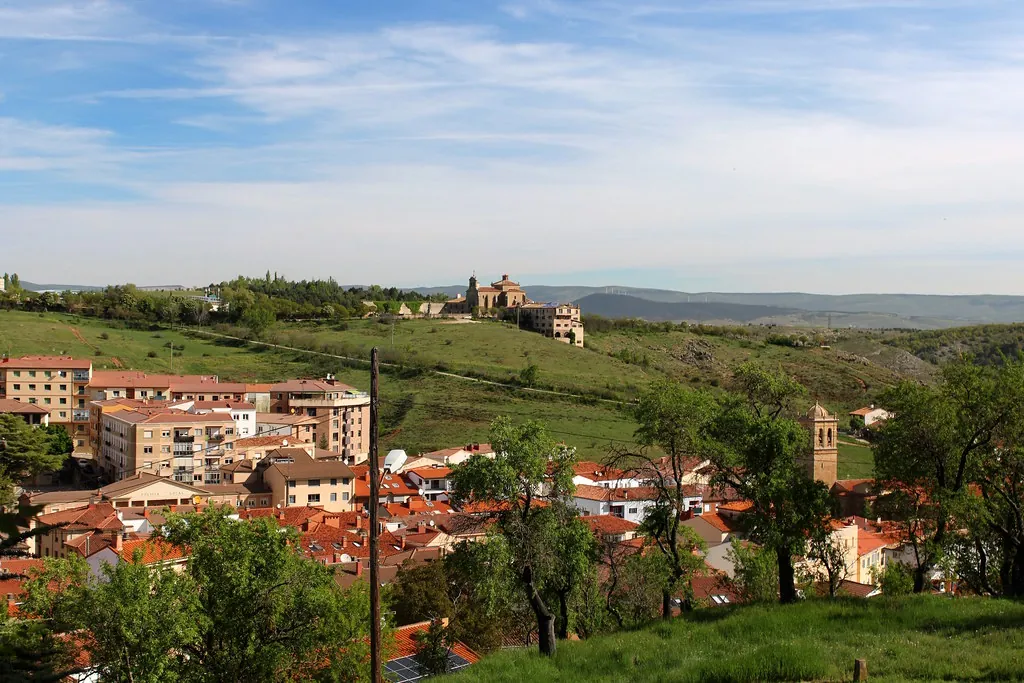
The village clusters above the original river level, its stone houses arranged in the haphazard way that suggests they grew rather than were built. Traditional Burgos architecture – grey stone, timber balconies, roofs that sit heavy on the walls – mixes uneasily with newer constructions that tried, and failed, to match the vernacular. There's no centre to speak of, just a main road that becomes a high street for two hundred metres, home to the hotel, two bars, and a shop that may or may not be open depending on factors known only to its proprietor.
The reservoir changed more than just the geography. Winters grew milder, summers cooler, and the local economy shifted from wheat and sheep to whatever might tempt visitors to a village that hadn't previously warranted a second glance. Fishing became religion – the Ebro's waters hold pike, black bass and carp that grow fat on the reservoir's nutrients. On summer weekends, Spanish number plates from Burgos, Bilbao and Valladolid line the approach road, their owners clutching rods that cost more than most villagers earn in a month.
What You Actually Do Here
Activity centres on the water, though calling it a 'beach' will mark you out as hopelessly foreign. The Playa de Arija is actually a campsite – well-maintained, popular with Spanish families, and possessing the only reliable phone signal for miles. Kayaks and paddle boards rent for €15-20 an hour from a hut that operates on distinctly Spanish hours: open when someone's there, closed when they're not. The water's clean, warmed slightly by its shallow edges, and on weekdays in May or September you might have it to yourself.
Walking tracks radiate from the village like spokes, though they're poorly marked and the maps available from the hotel stretch credulity. The Sendero de la Dehesa climbs through oak and ash to viewpoints across the reservoir – three hours circular if you don't get lost, which you probably will. Bring water and download offline maps; GPS signal disappears in the valleys and the local habit of redirecting paths through private land adds adventure nobody really wants.
The fishing requires permits bought online in advance – the Guardia Civil do check, and fines start at €200. Even if you're not fishing, early mornings are worth setting an alarm for. Mist rises off the water, herons stalk the shallows, and the only sound is the occasional car crossing the dam. It's peaceful in the way that makes you check your phone for signal, just in case civilisation might be needed.
Eating and Drinking (Within Reason)
Food is traditional Castilian – substantial, meat-heavy, and served in portions that assume you're either a farmer or very optimistic about human stomach capacity. The hotel restaurant does a decent chuletón (T-bone for two, €35) that's properly cooked if you specify al punto rather than the default jugoso which arrives essentially raw. Morcilla de Burgos – the local blood sausage studded with rice – appears everywhere; it's milder than British black pudding and works surprisingly well with morning coffee.
The two bars compete primarily on price rather than quality. Both serve raciones of cheese from Valdeón – a blue that's spent time curing in mountain caves, milder than Cabrales but still capable of clearing sinuses at twenty paces. Local wine comes from Ribera del Duero and costs €2.50 a glass, though most regulars drink sidra brought across the regional border from Asturias. Watching the pour – bottle held high, glass held low – provides evening entertainment that costs considerably less than Netflix.
Vegetarians should manage expectations, and vegans should probably self-cater. The village shop stocks basics plus an inexplicable selection of tinned seafood, but closes 2-5pm and all day Sunday. Plan accordingly – the nearest supermarket is twenty-five minutes away in Aguilar de Campoo, and that's assuming you didn't hire the sort of car that considers hills optional.
The Practical Bits Nobody Mentions
Getting here requires either commitment or accident. Santander's airport lies seventy-five minutes north – Ryanair's Friday evening flight from Stansted times nicely with Spanish dinner if you fancy living dangerously. Bilbao adds thirty minutes but offers more options and better car hire. After that, it's the A67 and CL-630 through country that feels increasingly like you've taken a wrong turn, right up until the reservoir appears and proves you haven't.
You need a car. Full stop. The daily bus from Burgos takes two hours, stops everywhere, and drops you on the main road with a forty-minute walk to the village. Taxis from Aguilar de Campoo cost €35-40 and must be booked – there's no rank, just Manolo who might answer his phone if he's not fishing. Once here, everything's walkable, though 'everything' consists primarily of water, trees, and those two bars.
Accommodation means either the hotel – six rooms above the bar, €65-80 including breakfast, earplugs provided for Saturday nights – or the lakeside campsite with wooden bungalows from €60. Book weekends in advance; Spanish families treat the reservoir like their personal holiday camp from June through August. The campsite restaurant does decent pizza and opens daily, which in Arija counts as cosmopolitan dining.
Should You Bother?
Arija won't change your life. It's not pretty enough for postcards, not remote enough for bragging rights, and the reservoir – while impressive – lacks the drama of natural lakes. What it offers is space to breathe, water to paddle across, and bars where nobody asks where you're from because they're too busy discussing yesterday's fishing. Come for two days, three if you've brought books and like early nights. Stay longer and you'll find yourself learning the names of the local dogs, which is either charming or worrying depending on perspective.
The village works best as a pause between elsewhere – Santander's ferries and the Picos de Europa lie north, Burgos' cathedral and Rioja's vineyards south. Treat it as Spain's equivalent of a motorway services with better views and worse coffee. Just remember: the map shows a village, but what you're visiting is a lake with houses attached. Plan accordingly, bring cash, and don't mention the beach.