Full Article
about Ausines Los
Ocultar artículo Leer artículo completo
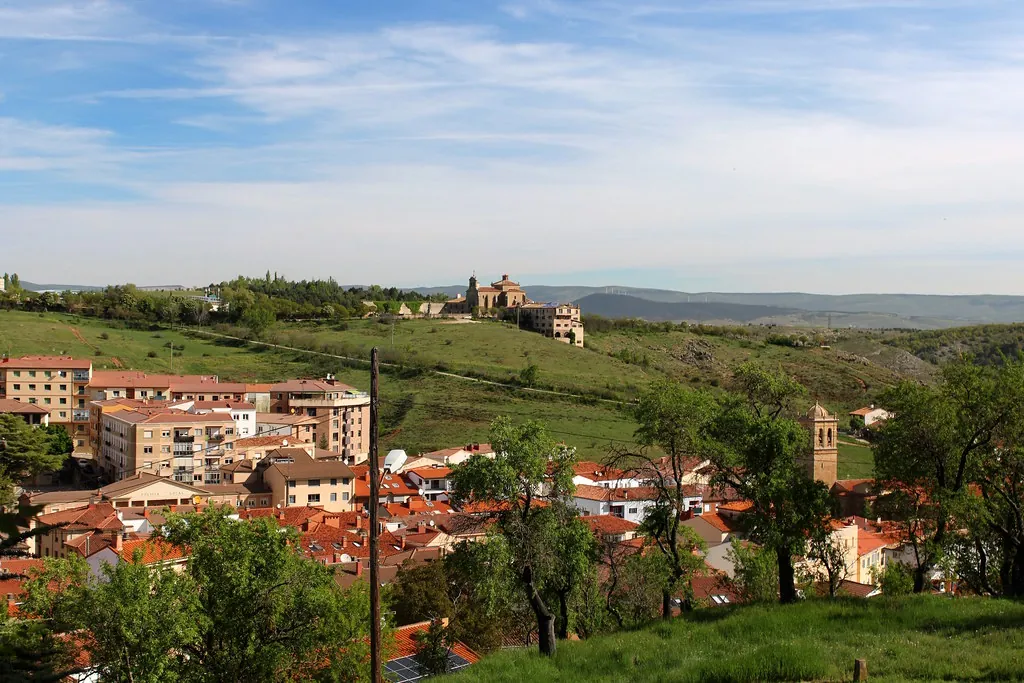
The thermometer on the hire-car dashboard reads 7 °C at eleven in the morning, yet the sun is burning through the windscreen. At 945 m above sea level, Los Ausines sits high enough for UV to feel fierce and for every patch of shade to carry a knife-edge chill. This is the Castilian meseta stripped of postcard clichés: no orange trees, no tapas promenades, just stone houses the colour of weathered barley and cereal fields that roll to an horizon as straight as a spirit level.
Burgos city—cathedral, supermarkets, the last reliable cashpoint—lies 35 km north on the A-1. Leave the motorway at exit 230, swing onto the BU-120, and within eighteen kilometres tarmac narrows, phone signal drops to 3G, and the only traffic is a tractor hauling a trailer of freshly cut straw. The village appears suddenly: a tight knot of roofs, a church tower with a simple belfry, and silence so complete you can hear the electricity cables hum.
Stone, Straw and the Smell of Wet Earth
Los Ausinos is not one settlement but a loose federation of hamlets—Villagutiérrez, Ausines el Viejo, Revillagodos—scattered across 62 km² of farmland. The 2023 census puts the total population at 136; in winter it feels lower. Houses are built from local limestone, roofs tiled with reddish terracotta that turns almost black after rain. Many still carry the family wine-cellars, low doors chiselled into bedrock, a reminder that vines covered these slopes until phylloxera and cereal prices pushed farmers toward barley and wheat.
Architecture is modest, honest, mediaeval in places but never showy. The parish church of San Andrés in Villagutiérrez keeps its Romanesque baptismal font and an eighteenth-century retablo gilded with American silver. The door is usually locked; ask at number 14 and someone will fetch a key within five minutes. No ticket, no audio-guide, just the smell of beeswax and a moment to stand in a nave that has heard five centuries of Castilian silence.
Walking is the obvious occupation. A lattice of farm tracks links the hamlets; gradients are gentle but the altitude makes a 5 km loop feel like 8. From Villagutiérrez a signed path—signed here means the occasional concrete post—crosses fields to the ruined Celt-Iberian wall on El Castillejo hill (1,026 m). The gate is kept shut to stop sheep drifting; lift the loop of wire, close it again. Up top, the view stretches south across the Duero basin; on clear days the snow-dusted summits of the Sierra de Guadarrama glint 120 km away. Take a windproof; even in May the breeze can knife through denim.
How to Fill a Day Without Spending €20
Morning
Arrive by 10:30. Park on the entrance track—no metres, no traffic wardens. Walk the single street of Villagutiérrez, counting stone coats-of-arms above doorways: five in 200 m, one dated 1674. If the bakery-van horn sounds, queue with locals for a 60-cent loaf still warm from the tail-lift.
Mid-day
Drive 4 km to Ausines el Viejo for the Romanesque chapel of San Pelayo. The key hangs on a nail inside the bar; if the bar is shut, the owner lives opposite the pump station—knock loudly. Inside, twelfth-century fresco fragments survive above the altar, colours muted but recognisable: ochre, lapis, ox-blood red. Photography allowed; no flash, no charge.
Lunch
The only public eatery is Bar El Mesón in Villagutiérrez. Menu is short: sopa de ajo (garlic & paprika soup with poached egg), chuletón for two (1.2 kg of rib steak, €36), morcilla de Burgos, and queso de oveja curado. House tinto de la tierra is €1.80 a glass—rustic, full-bodied, it flatters the beef without overpowering it. Vegetarians should order the roasted piquillo peppers and accept that dessert is likely to be flan.
Afternoon
Work off protein on the 7 km circular track to Revillagodos and back. The path skirts harvested barley stubble; larks rise and fall like ticker tape. Mid-April brings carpets of purple viper’s bugloss; by late May the fields have turned to gold stubble. You will meet more stone huts than humans—old threshing circles, now picnic spots. Bring water; there are no fountains.
Evening
If you are staying overnight, light arrives late: sunset in midsummer is 22:05. The ridge west of the village makes a natural belvedere; take a jacket even in July—temperatures drop 12 °C within an hour of dusk. The sky is dark enough for the Milky Way once the last farmhouse light clicks off at 00:30.
Beds, Bars and the Lack of Both
Accommodation is thin. The municipality lists one rural house: Roblejimeno, a converted eighteenth-century farmhouse 3 km south, sleeps sixteen, has a fireplace you could roast a boar in, and costs around €240 per night for the whole place (minimum two nights, no single-night bookings). Otherwise, the nearest hotel is in Rubena, 22 km north: three-star, €65 double, serves breakfast from 07:30. Wild camping is tolerated if you ask at the ayuntamiento first and pack out everything—including loo paper.
Food shopping: zero. The village bar doubles as grocer, open 08:00–14:00 and 17:00–21:00, but stocks only tinned tuna, UHT milk, and the local version of Custard Creams. Buy provisions in Burgos before you head up: Mercadona on Avenida de Castilla y León has British-tea-compatible milk and even Marmite if you are feeling homesick.
When to Go, When to Stay Away
Spring (mid-April to mid-June) is the sweet spot: green wheat, wildflowers, daytime 18 °C, nights 6 °C. Autumn (September–early October) repeats the trick with stubble fields the colour of burnt toast and migratory storks overhead. Summer is hot—32 °C at noon—but the altitude keeps nights bearable. Winter is brutal: bright, yes, but highs of 5 °C, lows of –6 °C, and the BU-120 can ice over. Snow is rare but possible; carry blankets if travelling between December and February.
Fiestas happen in bursts. Each hamlet honours its patron during July–August: processions, brass bands that echo off stone walls, communal paella cooked in a pan the size of a satellite dish. Dates shift yearly; check the municipal Facebook page (Spanish only, posted two weeks ahead). The Romería to the ruined hermitage of Nuestra Señora de Boada is held the second Sunday in May—mass at 11:00, picnic at 12:30, home by 16:00. Visitors are welcome; bring your own chair and a willingness to share chorizo.
The Honest Verdict
Los Ausines will not change your life. It offers no souvenir shops, no sunrise yoga, no craft-beer taps. What it does give is space—geographic and mental—for the price of a tank of petrol. The silence is so complete you will hear your own pulse in your ears after dark. That can feel liberating or mildly terrifying, depending on your tolerance for zero nightlife and a phone that shows “E” for emergency calls only.
Come if you want to walk without way-markers every 50 m, eat beef that grazed within sight of your table, and remember what European countryside felt like before it was packaged for weekenders. Leave if you need flat whites, Uber, or someone to entertain you after 22:00. The meseta does not do entertainment; it does horizon.