Full Article
about Avellanosa De Muno
Ocultar artículo Leer artículo completo
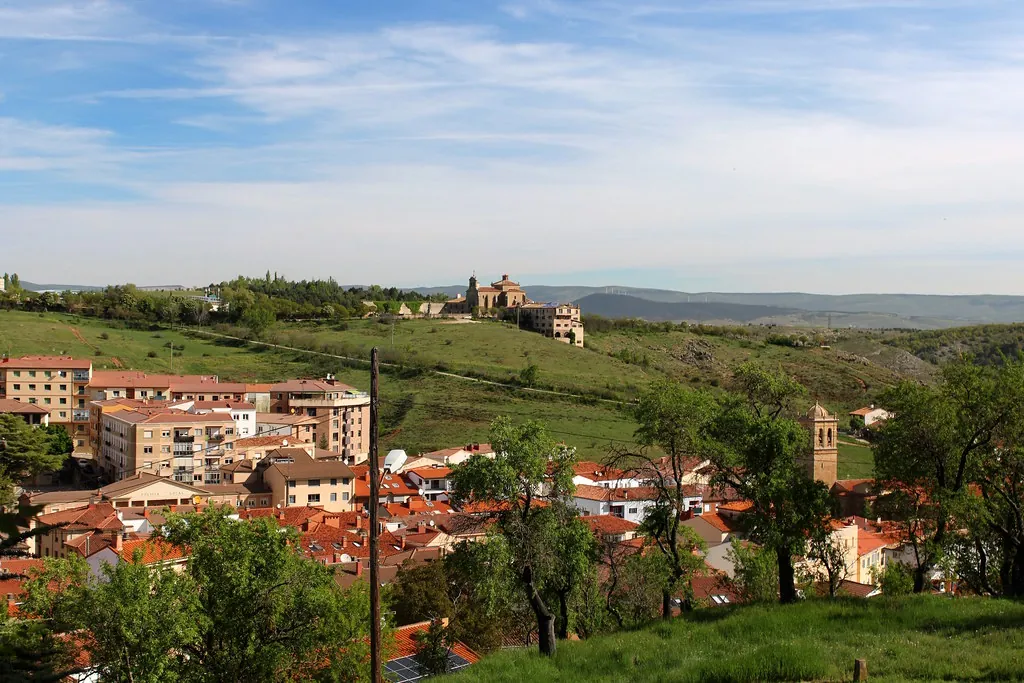
The church bell strikes nine and the only other sound is the sweep of a broom on stone. A woman in an apron pushes last night’s dust across the threshold of a house the colour of biscuit, then disappears inside. From the edge of the village the view is nothing but wheat, a yellow ocean that rolls to a horizon so straight it might have been drawn with a ruler. This is Avellanosa de Muñó, five thousand souls planted in the middle of the northern Meseta, 45 minutes south-east of Burgos city and a world away from the Costas.
Stone, Adobe and the Smell of Bread
No plazas mayor lined with orange trees here. The centre is a triangle of asphalt where three roads meet, flanked by a chemist, a bar with a cracked espresso machine and a grocer that still weighs tomatoes on brass scales. Houses are low, roofed with half-round terracotta tiles and built from whatever came to hand: ochre limestone, mud brick, the occasional chunk of Roman brick recycled from a long-vanished villa. Look down and you’ll notice metal grates set into the pavement—trapdoors to family bodegas hacked out of the rock underneath. On fermentation days the air carries a yeasty whiff of young red wine drifting up from these caves.
The parish church of San Andrés closes its heavy door more often than it opens it. When it does, step inside for a five-minute lesson in Castilian thrift: a Baroque retable paid for by 18th-century wheat money, a single Gothic arch left from an earlier version, walls washed white every decade to keep the damp at bay. No audioguides, no gift shop, just a printed A4 sheet in Spanish taped to the pulpit. Drop a euro in the box for the lights.
Walking the Grid of Dirt Tracks
Leave the village by any street and it turns within 200 metres into a camino rural, a sandy lane wide enough for a tractor and flanked by stone walls no higher than your hip. These paths link Avellanosa to its neighbours—Muñó de San Pedro, Mambrilla de Castrejón—forming a 12-kilometre loop that can be walked in three unhurried hours. The going is flat, but the plateau’s altitude (950 m) means sun in April can still burn and a March wind will knife straight through a fleece. Take water; the only bar on route opens when the owner feels like it.
Spring brings lapwings and the mechanical song of calandra larks. In July the wheat ripens to the colour of a £2 coin and the air shimmers with thresher dust. By mid-September the stubble is already drilled with next year’s crop and the horizon looks scrubbed clean. There are no dramatic sierras, just a landscape that repeats itself until repetition becomes the point.
Roast Lamb and the Thursday Bus
Serious eating happens at home, but you can get close at Asador Castellano in the neighbouring town of Aranda de Duero, 18 km away. Order lechazo—milk-fed lamb roasted in a wood-fired brick oven so tender the meat slides off the rib like a sleeve. A quarter portion feeds two; expect to pay €22 plus wine. Closer to base, Bar El Centro in the village serves a fixed-price menu for €12: garlic soup, migas (fried breadcrumbs with chorizo), flan strong enough to keep a spoon upright. House red comes from a plastic barrel and tastes better than it should.
Without a car you are dependent on the Thursday grocery bus that trundles in from Burgos at 11:00, pauses for a coffee and turns round at 13:30. Car-hire desks at Burgos Railway Station (Avis, Europcar) keep Spanish hours—closed for siesta between 14:00 and 16:00—so plan accordingly. A taxi from the city airport costs €70; pre-book because drivers don’t loiter.
When the Village Throws a Party
Festivities revolve around the wheat calendar. The main fiestas honour the Virgen del Rosario around the first weekend of October, when the harvest is banked and wallets are still flush. A brass band arrives on the back of a lorry, fireworks cost €6 a box and the village square smells of candied almonds and diesel. August 15th is the summer reunion: descendants who left for Madrid or Bilbao return with toddlers and estate cars, turning the triangular plaza into an informal reunion of second cousins. Both events are short—three days—and low-key. Accommodation doubles in price within a 30-km radius; book early or stay in Burgos and drive.
Winter is the quiet season. Daytime highs hover at 6 °C, nights drop to –5 °C and the wind scythes across the plateau. Many bars shut on Mondays, Tuesdays and whenever the owner fancies a trip to the city. Come then only if you crave absolute silence and skies so clear Orion feels like a ceiling fresco.
Starlight, Binoculars and the Sound of Nothing
Light pollution maps colour this corner of Castilla y León pitch black. Walk ten minutes beyond the last streetlamp, let your eyes adjust and the Milky Way appears like a smear of chalk on blackboard. Meteor showers in August and December need no special equipment—just a coat and possibly someone else’s company because the darkness can feel complete.
Back in the village the evening ritual is simple. Windows glow behind thick curtains, televisions mutter to themselves and the occasional dog barks at its own echo. By half past ten the place is asleep, leaving only the wheat whispering against the windbreak of poplars. Avellanosa de Muñó offers no photo-ready viewpoints, no artisan gelato, no boutique hotels. What it does offer is a chance to stand in the geographical middle of northern Spain and realise how much space there still is between the motorways. Bring walking shoes, an appetite for lamb and patience for small-town hours; the wheat will do the rest.