Full Article
about Bahabon De Esgueva
Ocultar artículo Leer artículo completo
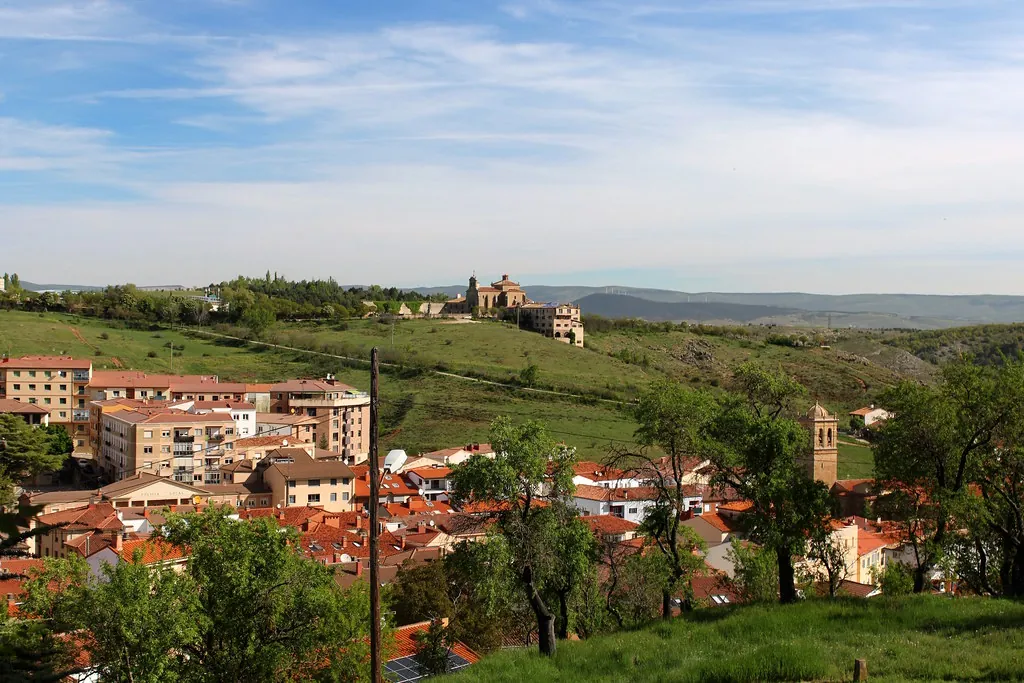
The wheat stops swaying before you do. Stand at the edge of Bahabón de Esgueva on a July afternoon and the only movement comes from the Esgueva river glinting below and the church bell that still marks the hours. Halfway between Burgos and Valladolid, this single-street village has no souvenir shops, no guided tours, and—on most weekdays—no one under sixty in sight. That, rather paradoxically, is why people drive the extra twenty minutes off the A-62.
Stone, Adobe and Silence
Houses here were built for work, not for show. Granite bases support walls of sun-baked adobe, wooden gates hang from hand-forged hinges, and every roof sprouts the same terracotta chimney pot. Nothing is restored to showroom condition; walls lean, paint flakes, and the effect is oddly refreshing after the colour-matched façades of more marketable towns. A five-minute stroll from the river bridge to the cemetery gate is enough to see the lot. The only labelled building is the parish church, whose modest tower appears on every local postcard—both designs of them.
Step inside and the temperature drops ten degrees. The nave is nineteenth-century brick enlarging a fifteenth-century core; look for the Romanesque capital reused as a holy-water font and the wooden Christ whose polychrome has been rubbed away by centuries of harvest-processions. Mass is sung at 11:00 on Sundays; visitors are welcome to stand at the back, though the priest will notice if you try to leave before the final blessing.
Paths that Expect You to Know Where You're Going
Farm tracks, not footpaths, fan out from the top of the village. One follows the river south for 4 km to the deserted hamlet of Nava de Esgueva; another strikes west across sunflower fields to Melgar de Fernamental, 7 km away. Neither is way-marked beyond the occasional paint splash on a fence post, so download the free IGN map before you set out. Spring brings green wheat and bee-eaters overhead; by late June the landscape turns gold and the only shade is under the poplars that line the dry irrigation ditches. Stout shoes are advisable: the surface alternates between packed clay and fist-sized stones that roll underfoot.
Serious walkers link Bahabón with the linear Cañón de Esgueva route starting 12 km north in Villadiego. That 17 km trail descends through limestone cliffs to the village, but you will need to pre-arrange a taxi back unless you fancy a 34 km day. Birders do better staying local: tawny pipits nest in the stubble, and at dusk both red-necked nightjars and stone-curlews call from the fallow fields east of the railway line.
Wine Cellars You Walk Into Like a Cave
Scramble ten metres up the sandy bank behind the last houses and you reach a line of horizontal doors set into the slope. These are the bodegas subterráneas, family wine cellars dug when every household produced its own red. Most are locked—look for the padlock hasp hammered into the stone—but one or two stand open on fiesta days, revealing a short tunnel that widens into a barrel-shaped chamber. The temperature holds steady at 12 °C summer and winter, perfect for keeping wine and, latterly, sides of cured pork. Peer in and you will still smell the tang of last year's tempranillo soaked into the clay walls.
When the Village Remembers How to Party
For fifty weekends of the year Bahabón sleeps. Then, round about the third weekend of July, the place doubles in size. The fiestas patronales begin with a Saturday evening mass followed by a paella cooked in a pan the diameter of a tractor tyre; tickets cost €6 and sell out by 21:00. Sunday brings a procession behind the statue of the Virgen del Rosario, brass band included, and ends with fireworks launched from the football field. The bar—normally closed on Mondays—stays open until the wine runs out, usually about 03:00.
A quieter gathering happens on 15 May for San Isidro. Locals walk two kilometres to the Ermita de San Isidro, a sixteenth-century shrine no bigger than a Devon bus shelter, where the priest blesses the fields and everyone shares cocido (chickpea stew) from plastic bowls. You are invited if you bring your own spoon.
Eating: Bring an Appetite and a Map
Bahabón itself has no restaurant. The single bar, Casa Juani, opens at 07:00 for coffee and churros, closes at 14:00, and may reopen at 20:00 if Juani feels like it. The menu is whatever is on the hotplate: migas (fried breadcrumbs with chorizo), eggs from the backyard hens, and torreznos—crisp strips of pork belly that taste better than they photograph. A full lunch runs to about €11 including wine.
For a sit-down meal you drive 12 km north to Melgar de Fernamental, where Asador Oso offers lechazo (roast suckling lamb) at €22 per portion, enough for two if you order vegetables on the side. Closer, at Villadiego, Cafetería el Puerto does a three-course menú del día for €14, but only if you arrive before 15:00; kitchen hours are not negotiable. Vegetarians should order the judiones (giant butter beans) stewed with saffron and hope the chef leaves out the bits of jamón.
Getting There, Staying There
The village sits 45 minutes south of Burgos on the CL-620, a straight road that cuts through endless grain fields. There is no train station; the nearest bus stop is in Melgar, 12 km away, served twice daily from Burgos except Sundays. A car is therefore essential, and you will need it anyway to reach the supermarket—Bahabón's last grocery closed in 2018.
Accommodation within the village is limited to one casa rural sleeping six (€90 per night, two-night minimum). Otherwise the pickings are slim: Casa Rural Valle Esgueva, 8 km towards Burgos, has four doubles from €65 and enough English on the website to make booking painless. Campers are tolerated on the river meadow provided tents are out of sight of the road and you ask at the ayuntamiento (town hall) first. Expect no facilities beyond the stone bench under the poplars.
What the Brochures Won't Tell You
Summer afternoons are furnace-hot; thermometers nudge 38 °C and shade is scarce. Bring water if you plan to wander—there are no fountains outside the plaza. In October the stubble is burned off, filling the sky with smoke that smells like a giant barbecue and drifts across the road in zero-visibility sheets. Winter is another country: night temperatures drop to –8 °C, the river freezes over, and the one road in can ice up. Visit in late April or early October for 24 °C days and cold beer nights.
The village is safe, aggressively so: doors stay unlocked and cars keep keys in the ignition. The greatest hazard is boredom after 22:00 when even the dogs stop barking. Bring a book, or better, bring a Spanish phrase-book—English is spoken by exactly one retired teacher who may or may not invite you in for anise.
Bahabón de Esgueva will never make anyone's "must-see" list, and that is precisely its appeal. Come for the wheat horizons, the smell of bread from Juani's kitchen, the sound of your own footsteps echoing off adobe walls. Stay an hour, stay a night, but do not expect to be entertained. Entertainment here is something you generate yourself, preferably after a glass of the local red that never saw a label.