Full Article
about Barrio De Muno
Ocultar artículo Leer artículo completo
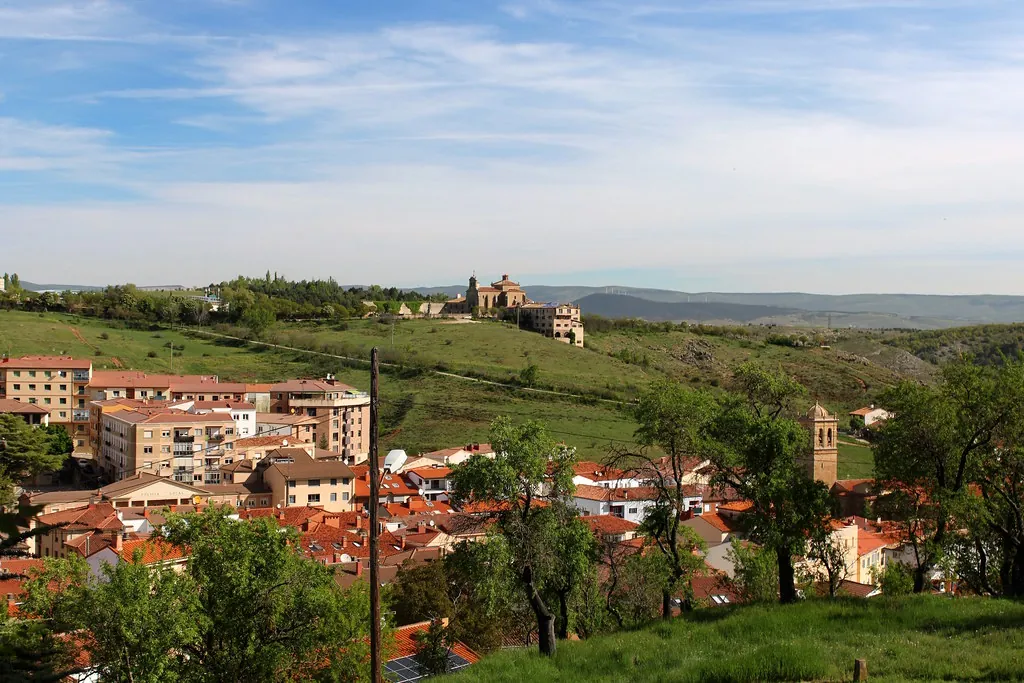
The wheat fields start just beyond the last house. No gradual transition, no polite buffer zone—just stone walls giving way directly to earth that has fed Castilians since before their language existed. Barrio de Muñó sits at 840 metres above sea level on Spain's northern meseta, high enough that the air carries a sharpness missing down in Burgos, thirty kilometres to the north-west. At this altitude, mornings arrive with frost even in April, and summer midday heat dissipates quickly once the sun drops behind the grain silos.
This is farming country stripped of romance. The landscape rolls rather than soars, broken only by the occasional stone barn or the concrete tower of an irrigation pivot. Visitors expecting dramatic peaks or wooded valleys will find neither. Instead, the village offers something increasingly rare: a working agricultural settlement that tourism hasn't rewritten. The tractor dealership on the outskirts does more daily trade than any souvenir shop could manage, and the locals—about 500 permanent residents, swelling to perhaps 700 when summer returnees arrive—still measure distance in the time it takes to harvest a field rather than kilometres driven.
Stone, Adobe and the Memory of Wheat
The village centre clusters around the fifteenth-century church of San Pedro Apóstol, its sandstone walls the colour of dry biscuits. Step inside and the temperature drops ten degrees; the interior holds the cool, slightly musty breath of centuries. No baroque excess here—just a single nave, thick walls pierced by narrow windows, and a retablo that local craftsmen carved when this region's wealth came from merino wool rather than cereals. Sunday mass at 11:30 still draws a decent crowd, though the priest now covers three parishes and arrives by car rather than mule.
Wander the streets immediately surrounding the plaza and you'll spot the tell-tale signs of past prosperity. Heraldic shields crown several doorways—one shows a boar's head above crossed wheat sheaves, another displays the five-pointed star of a family who made their money in transhumance. The houses themselves speak of pragmatism: ground floors in limestone blocks quarried from nearby ridges, upper storeys in adobe brick that insulates against both winter cold and summer heat. Many retain the original wooden balconies, deep enough to store grain or hang jamón during the annual matanza.
The agricultural buildings scattered throughout the residential area reveal how closely work and home life once intertwined. Corrals with feeding troughs carved from single limestone blocks sit directly across from modern garages, and several houses still maintain their horreos—narrow granaries raised on stilts to deter rodents. One, dated 1789, now serves as a toolshed; the farmer who owns it keeps the key hanging from a nail driven into a beam so old that the wood has petrified around the iron.
Walking the Lines of the Land
Barrio de Muñó offers walking without waymarks. A network of farm tracks radiates outward, following the boundaries of wheat and barley fields that shift colour with the agricultural calendar: acid-green shoots in March, waist-high gold by late June, then the dull brown of stubble after the combine harvesters pass through. The going underfoot remains easy—this is plateau country, after all—but the lack of shade makes summer walking a morning-only proposition. Bring water; the nearest fuente stands three kilometres out on the road to Revillarruz, and locals regard the act of carrying water as basic common sense rather than expedition preparation.
For those who prefer their wildlife without the exertion of mountain hikes, the surrounding steppe delivers. Calandra larks perform their clumsy display flights above the fields from February onwards, while little bustards—grey, quail-sized birds that locals call"saca-rabos"—can be spotted with patience and decent binoculars. The birds favour fallow plots where weeds provide cover; ask permission before crossing private land—most farmers respond positively to courtesy, though they'll probably want to know what on earth you're doing staring at birds through glass.
Cycling works better than walking for covering ground. The CV-227 that links Barrio de Muñó with the N-234 carries minimal traffic outside harvest time, and the gradients rarely exceed three percent. Rent bikes in Burgos before heading out—there's no hire facility in the village, and the local shop stocks more tractor parts than cycling accessories. A circular route south through Revillarruz, then east to Villanueva de Teba and back via the GR-86 long-distance path, makes a pleasant 35-kilometre half-day that passes three villages and zero traffic lights.
Eating on the Meseta
The village itself offers limited sustenance. One bar opens at 7:00 for coffee and churros, closes at 14:00, then reopens at 20:00 for beer and conversation. They serve basic raciones—morcilla de Burgos, chorizo from nearby Aranda, cheese made with milk from local Manchega sheep—but don't expect a menu. If you arrive outside these hours, you'll go hungry unless you've planned ahead.
Better options lie within a twenty-minute drive. In Pedrosa de Río Úrbel, eight kilometres north, Asador El Cordero cooks lechazo in wood-fired ovens exactly as they have since 1962—expect to pay €22 for a quarter portion, enough for one hungry adult. They open only weekends and require booking; phone numbers here still have six digits, and the proprietor answers with the single word "Diga." Alternatively, drive fifteen minutes east to Castrojeriz, where the medieval main street hosts three restaurants competing for the pilgrim trade on the Camino de Santiago. Mesón de Castro serves a perfectly decent menú del día for €14, including wine that arrives in a glass bottle sealed with aluminium foil rather than a cork—practical rather than pretentious, much like the village itself.
When the Wheat Turns Gold
Timing matters. Spring brings the most comfortable weather—daytime temperatures hover around 18°C in April, with cool nights that smell of damp earth and growing crops. The surrounding fields glow an almost unnatural green, and the village's few guest rooms (two, to be precise, both in private houses) charge €35-40 including breakfast. Book ahead during Easter week; city families return for processions that have changed little since their grandparents' generation carried the same statues through these streets.
Summer delivers heat that builds steadily from 10:00 onwards, reaching 35°C by early afternoon. Sensible people retreat indoors until at least 17:00; the streets empty except for the occasional dog seeking shade against north-facing walls. August brings the fiestas—dates vary annually but usually centre on the last weekend, when the population quadruples for three days of brass bands, outdoor dancing and communal paella cooked in pans two metres wide. Visitors are welcome, though you'll be expected to contribute—buying raffle tickets for the local football team counts as basic etiquette.
Autumn provides perhaps the best compromise. September temperatures remain warm enough for shirt-sleeve walking, while the harvest creates constant movement as combines shuttle between field and grain store. The smell of diesel mingles with dust and ripe wheat—an olfactory cocktail that locals associate with payday and visitors may find unexpectedly evocative. By October the stubble burns begin; farmers set controlled fires to clear residue, sending columns of smoke skyward that serve as informal signals between neighbours working distant fields.
Winter arrives early at this altitude. First frosts typically hit in late October, and January days struggle to rise above 5°C. Snow falls occasionally but rarely settles—the meseta's dryness sees to that. Most accommodation closes from November through March; those winter visitors who do arrive find a village going about its business without reference to tourism, which depending on your perspective represents either bleak isolation or refreshing authenticity.
Getting There, Getting On
Barrio de Muñó sits 31 kilometres southwest of Burgos via the BU-901 and CV-227—roads narrow enough that meeting a tractor requires one party to reverse to the nearest passing place. Public transport runs twice daily on weekdays: a 7:15 bus from Burgos arrives at 8:20, returning at 14:00 and 19:00. Saturday service consists of a single return trip; no buses operate on Sundays or fiesta days. Car hire proves more reliable—Burgos airport (actually Villafria, 10 kilometres from the city) hosts Europcar and Avis desks, though flights from the UK require connections through Madrid or Barcelona.
The village offers no cash machine; the nearest stands in Pedrosa, eight kilometres away. Mobile phone coverage works on all Spanish networks, though data speeds drop to 3G outside the main plaza. Bring cash, carry water, and adjust expectations accordingly. Barrio de Muñó doesn't do visitor facilities—it does authenticity, served straight up, with the understanding that those who need hand-holding probably belong somewhere else.