Full Article
about Basconcillos Del Tozo
Ocultar artículo Leer artículo completo
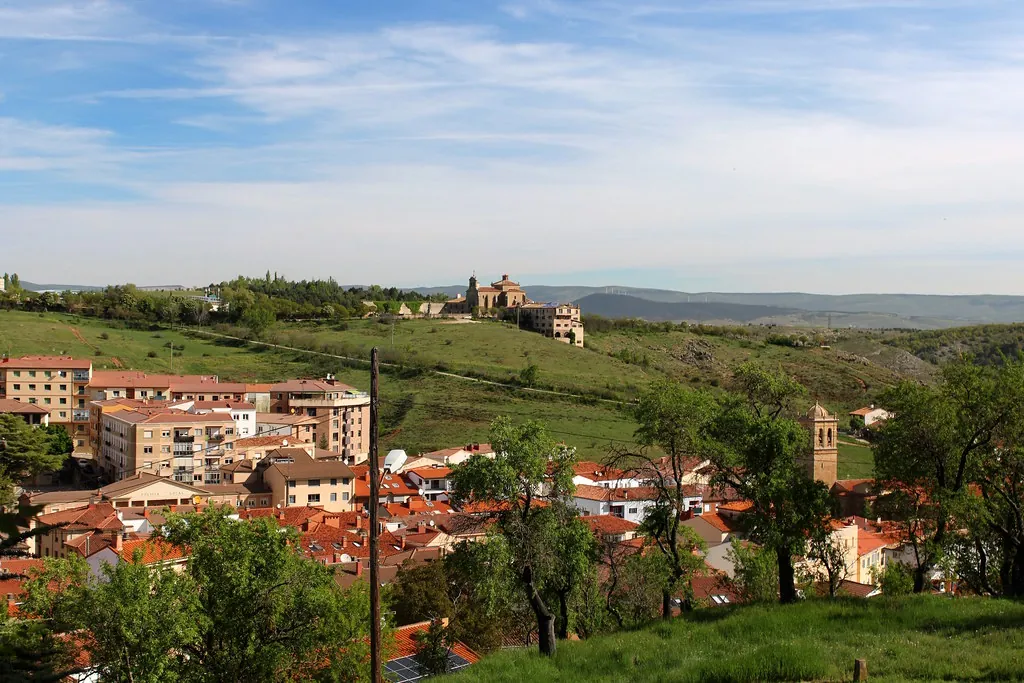
The thermometer in the car drops six degrees in the final ten kilometres. That is the first clue that Basconcillos del Tozo is not just another Castilian village passed at speed on the way to the coast. At 1,010 m above sea level, the settlement sits on the lip of the northern meseta, a limestone shelf where Atlantic clouds stall and break, dumping April snow or August hail with equal nonchalance. Locals claim they can see the weather coming fifteen minutes before it arrives; the horizon is wide enough to watch the same squall cross three separate valleys.
Fifty kilometres north of Burgos city, the place announces itself with stone, not signage. Granite houses the colour of storm clouds shoulder right up to the BV-731, their rooflines jagged where owners have removed, replaced or simply lost tiles over centuries. There is no ring road, no industrial estate on the outskirts. Traffic slows to a crawl because the tarmac narrows to a single lane between barn walls, and you realise the village was laid out for ox-carts, not Fiat Ducatos.
Stone, Sky and the Smell of Rain on Dust
Walk the main street at 7 a.m. in late May and the only sound is the click of swallow beaks under the eaves. By 7.30 a tractor will cough into life somewhere beyond the church, and the day’s thermal will start lifting the smell of dew-warmed thyme from the surrounding páramo. These high, treeless plateaux look empty until you notice the stone walls: waist-high, no mortar, built simply to stop sheep drifting sideways in a gale. Each wall points towards a vanished farmstead; the map is read by absence.
The parish church of San Andrés closes its door with a key the size of a screwdriver. Ask for it at the house opposite—number 14, blue door, geraniums—and the caretaker will wipe her hands on an apron before leading you in. Inside, the air is cave-cool and smells of extinguished candles. A single nave, thick-walled, with a 16th-century font hacked from one block. No baroque excess here; the decoration is the light itself, sliding across plaster the colour of oat biscuit. Drop a euro in the box and she’ll switch on the nave lamps, though the bulbs barely reach the rafters.
Leave the square by the alley beside the bakery and you emerge onto a lane that peters out into cereal fields within two hundred metres. Wheat, barley and vetch alternate in orderly stripes that turn from emerald to brass between June and July. Follow the track for twenty minutes and you reach the Ermita de la Soledad, a chapel locked except on 15 August, when the village carries its patron statue here in procession. From the doorstone you can see the entire municipal boundary: three ridges, two dry valleys, one distant wind turbine whose blades flash like a lighthouse for tractors.
Walking the Calendar
Spring arrives late and all at once. One week the oaks are charcoal sketches; the next, lambs and green shoots appear together. The best circular walk starts by the cemetery gate: follow the yellow-arrowed PR-BU 71 north-west along a drove road used until the 1960s for moving cattle to summer pastures in Cantabria. After 5 km the path dips into the valley of the Arroyo del Tozo, where a stone trough still holds water from a captured spring. Climb back onto the plateau and you meet the BV-731 again exactly at the picnic tables outside the village. Total distance: 9.4 km; cumulative ascent: 260 m; likely human encounters: zero, unless you count the shepherd with a walkie-talkie clipped to his stick.
Autumn is golden only for a fortnight. Then the broom turns bronze, the sky rinses itself to porcelain, and the first northerly sweeps the fields flat. October walkers should carry both sun-cream and gloves; midday can touch 22 °C while dusk brings frost that makes the limestone sparkle like broken crockery. Winter access is rarely blocked—snow seldom lies more than a day on the wind-scoured ridges—but the single bus from Burgos is cancelled at the first forecast of sleet. If you do arrive in January, bring boots with ankle support: frozen ruts will twist a careless knee faster than any Pyrenean scree.
What You’ll Eat and What You Won’t
The village bar opens at 6 a.m. for the lorry drivers who haul feed grain to Miranda de Ebro. By 11 the same counter serves coffee laced with patxaran for the retired gauchos playing mus. They will tell you—without being asked—that the best morcilla comes from the abattoir at Villarcayo, 25 km away, and that you should order it with roasted pimientos, not fried eggs. A plate costs €6; bread and a glass of tinto add another €2.50. Close your tab before 2 p.m.; the owner pulls the shutter whether you have finished or not.
There is no restaurant, no tasting menu, no chef interpreting terroir through foam. What you get is a stew cooked by whichever neighbour has volunteered for the month’s communal dinner in the sports hall: chickpeas, judiones or lentils, depending on the day. Tickets are sold at the bakery; €8 includes wine decanted into lemonade bottles and dessert of arroz con letra—rice pudding so thick the spoon stands upright. Strangers are welcome but must sign the ledger on the door: name, village of origin, number of helpings. British visitors usually write “too much” in the final column.
Getting Here, Getting Stuck, Getting Out
Public transport reaches only Villadiego, 18 km south. From Monday to Friday one ALSA coach leaves Madrid at 7.30 a.m., arrives 10.45, and connects with a local taxi willing to make the climb for a fixed €35. Otherwise you need wheels. Hire cars at Burgos railway station start at £38 a day for the smallest Fiat; take the N-623 towards Santander, turn off at the junction marked “Tozo/Villadiego”, then count 23 km of road that narrows with every village. Petrol pumps disappear after Villadiego—fill up or risk pushing the last incline.
Accommodation is limited to three village houses signed up to the regional “Casas Rurales” scheme. Expect stone floors, wood-burners and Wi-Fi that falters every time the microwave is switched on. Nightly rates hover around £70 for two bedrooms, minimum stay two nights at weekends. Bring slippers: even in July the ground floor holds the chill of centuries. One house keeps the original stable mangers; another has a bathroom door salvaged from the 1990s village discotheque, its sticker still warning “No Zapatos de Tacón”.
When to Cut Your Losses
Come in August and you will share the streets with returning emigrants, their Madrid-registered cars clogging the only junction. Music thumps from a temporary stage until 4 a.m.; the bakery sells out of croissants before you have rubbed the sleep from your eyes. In February the place is yours, but the bar may close for three days if the proprietor’s sciatica flares up. There is no ATM; the nearest pharmacy is 19 km away; and if the wind turbine sheds a blade—rare, but documented—the access road is closed while a crane lumbers in from Bilbao.
Basconcillos del Tozo will not change your life. It offers no epiphany, no Instagram rainbow, no craft market. What it does give is a yardstick for how quiet the world can still be, and how much conversation can be squeezed out of a shared bowl of lentils when the broadband fails. Arrive with a full tank, an offline map and a jacket you can trust in a gale. Leave when the horizon starts to feel like a wall—or when you realise the wind has been writing the weather in a language you can almost read.