Full Article
about Belbimbre
Ocultar artículo Leer artículo completo
The church bell strikes noon and only two cars sit in the main square. One belongs to the baker who drives in from Miranda de Ebro; the other to the village priest who still reads the Sunday bulletin to half-empty pews. This is Belbimbre at midday in February – not abandoned, not thriving, simply determined to outlast the century.
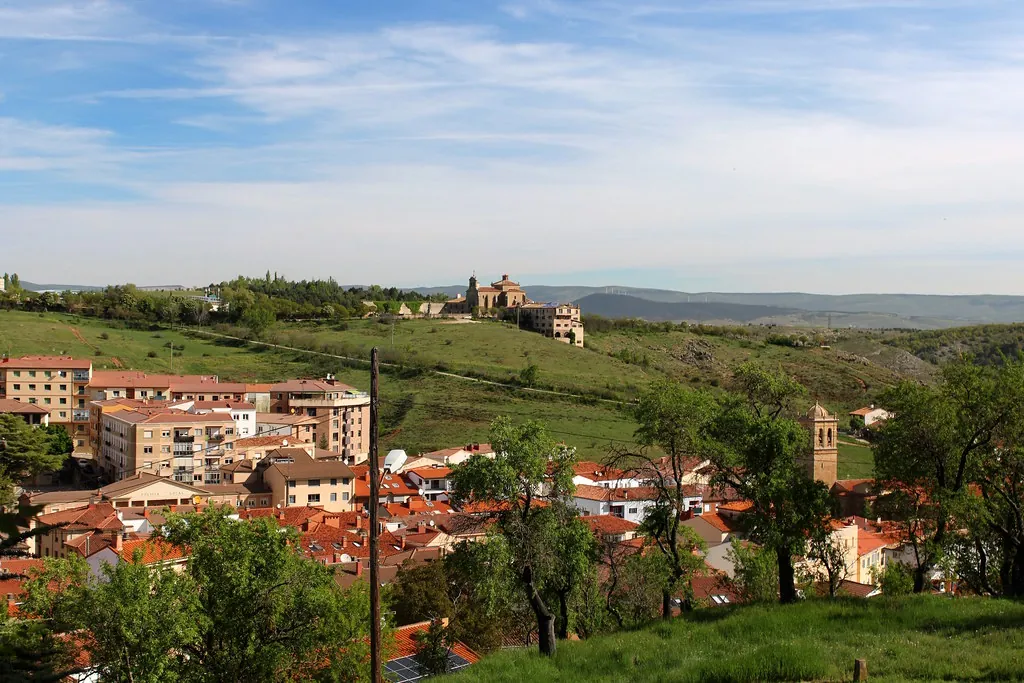
Five hundred souls cling to this granite outcrop on Burgos's southern fringe, 800 metres above sea level where the wind scours the plateau clean. The elevation matters. It means winter nights drop to minus eight, forcing even the hardiest shepherd to bring flocks indoors, while July afternoons push thirty-five and the earth cracks into hexagonal plates. Spring arrives late; by the time London's cherry trees have shed their blossoms, Belbimbre's wheat is still a short green crew-cut rattling in the breeze.
Getting here requires commitment. From the UK, fly to Bilbao, collect a hire car, then drive south for ninety minutes on the A-68 before turning onto the CL-127, a single-carriageway road that narrows to a thread after Lerma. The last fifteen kilometres twist through holm-oak dehesas where black Iberian pigs graze freely. Phone reception flickers out halfway; by the time you crest the final rise, Google Maps has given up entirely. This is deliberate geography – Castile has always used distance as defence.
What greets you isn't a film set of perfectly restored cottages. Stone walls slump against newer breeze-block extensions; corrugated iron roofs glint between traditional terracotta tiles. One house stands roofless, its beams skeletal against the sky, slowly returning to the soil that built it. The effect is honest rather than romantic: a working village that forgot to die when the grain markets crashed in the Nineties.
Start at the plaza, where the 18th-century ayuntamiento still flies a faded EU flag alongside the Spanish colours. The building's ground floor once stored wheat tithes; now it hosts the monthly pensioners' card game and doubles as polling station for elections that change nothing much. Opposite, Bar Ángel keeps erratic hours – if the metal shutter is up, order a caña and a plate of morcilla for €2.50 before the owner's wife finishes her cigarette and decides it's siesta time.
The Iglesia de San Pedro dominates the western ridge, its sandstone tower repaired with mismatched limestone after lightning struck in 1978. Step inside and the temperature drops ten degrees. Baroque gilt glimmers in the gloom, but look closer: the side chapel's altarpiece lists at fifteen degrees, held upright by two lengths of modern scaffolding that have become permanent fixtures. No admission charge, no audio guide, just a printed A4 sheet laminated and Blu-tacked to the lectern, yellowing at the edges.
Following the Harvest
Belbimbre makes sense only if you walk its circumference. A farm track leaves the north edge, signed simply "Arroyo – 3 km". Follow it between wheat stubble and the occasional field of vetch that glows purple in late April. The path drops into a shallow gully where groundwater allows narrow vegetable plots –老年人的私人花园,each fenced with bedframes and bicycle wheels to keep hares out. They grow lettuce here that tastes of iron and frost.
By mid-May the plateau erupts into a green so vivid it hurts the eyes. Poppies splatter blood-red across the wheat, and the air smells of rain on warm earth. This is the moment to come if you photograph landscape, but bring a jacket: Atlantic weather systems still reach this far inland, and an eighty-kilometre-hour wind can arrive without warning, flattening the crop in parallel ripples like a Zen garden.
Summer hardens everything. The cereal ripens to gold, then grey. Harvesters work twenty-hour shifts while the dew holds down the dust, their headlights carving white tunnels through the darkness. Locals claim you can hear the machines from five kilometres away on still nights – a constant mechanical heartbeat that finances another year. Try asking at the cooperative on the village edge; if the foreman is in a good mood he'll let you climb into the cab of a €300,000 Claas combine, provided you shut the gate against escaping dogs.
What Passes for Entertainment
Evenings centre on the front terrace of Casa Manolo, the only grocery still trading. Pensioners occupy the plastic chairs first, arriving at six with their own playing cards and seat cushions. They gossip about rainfall statistics and Madrid politics with equal passion, voices rising against the cicadas. Buy a €1.20 bottle of Mahou beer and you qualify as honorary audience; attempt Spanish and someone will recount how their grandfather hid republican pamphlets in the church organ during the Civil War. The story alters slightly with each telling – history as oral graffiti.
Festivities compress the year into three July days. The population quadruples as descendants return from Bilbao and Barcelona, pitching tents in almond orchards because every bed is taken. A truck-mounted stage rattles in on Friday morning; by nightfall the plaza becomes an open-air disco where toddlers chase glow-sticks until dawn. Saturday brings the running of the heifers – not Pamplona's lethal spectacle but still requiring sobriety and decent trainers. Sunday mass is standing-room only, the priest's sermon broadcast via a 1970s PA that distorts consonants into white noise. Then Monday arrives, the visitors depart, and the village exhales into its quiet winter shape once more.
Eating (or Not)
Manage expectations. There are no restaurants, only Bar Ángel's lunchtime menu of whatever María found in the freezer that morning. Dinner means a thirty-kilometre drive to Aranda de Duero, where asadores charge London prices for lechazo roasted in centuries-old wood ovens. Better to self-cater: the Saturday morning bread van brings still-warm baguettes at nine sharp, followed by the mobile fishmonger whose prices are scrawled in marker pen on the windscreen – hake from Santander, €8 a kilo if you bargain.
Buy cheese from the Martínez farm on the road to Salas. They produce 200 wheels of raw-milk ewe's cheese annually, curing them in a limestone cave that stays twelve degrees year-round. The flavour starts mild, grows peppery, then finishes with the scent of thyme the animals grazed on. €14 for a half-kilo wedge that keeps for weeks wrapped in the fridge of whatever rental flat you've secured.
The Reality Check
Winter here is brutal. When snow blocks the CL-127 – usually two or three days each January – the village becomes an island. Power cuts last hours; the elderly rely on butane heaters that smell of kerosene and produce condensation that runs down the walls. Mobile data slows to 2G, enough to send a WhatsApp but not to stream weather forecasts. If your flight back to the UK departs in forty-eight hours, this matters.
Come prepared. Pack walking boots with ankle support – the gypsum soil forms a thin crust that hides ankle-breaking rabbit holes. Bring binoculars: calandra larks pour their liquid song over the fields in March, and great bustards sometimes feed on the fallow plots beyond the cemetery. Download offline maps before you leave the airport. And carry cash: the nearest working ATM is 25 kilometres away in Lerma, and Bar Ángel's card machine broke in 2019.
Belbimbre won't change your life. It offers no epiphanies, no Instagram trophies, merely the rare sensation of standing in a landscape that measures time in harvests rather than financial quarters. Stay three days, walk until your boots are dust-grey, then leave before the silence becomes habitual. On the drive back to Bilbao, the city lights will feel positively frantic – and you'll realise the village has done its job, reminding you how little space quiet occupies in modern Britain.