Full Article
about Berlangas De Roa
Ocultar artículo Leer artículo completo
The stone wall of Dominio Fournier’s tasting room is still warm from the morning sun when the winemaker pulls the cork on a 2018 crianza. Outside, the only sound is a tractor ticking itself cool in the vineyard. You are eight kilometres from the nearest cash machine, the bakery has been shut since Tuesday, and the village bar may or may not open before nine o’clock tonight. Berlangas de Roa doesn’t so much greet visitors as wonder what they’re doing here; stay long enough and you start wondering why you ever bothered with the coast.
High-plateau routines
Altitude matters at 841 m. Nights stay cold even in July, morning mist clings to the Duero valley until the wind scours it away, and the grape skins thicken to cope with a swing of 20 °C between sunrise and sunset. The result is the dark, tight-knit tempranillo that built the Ribera del Duero name, and the reason every second doorway here once led to a hand-dug cella scraped out of the clay subsoil. Some still house family presses; others store bicycles or feed sacks. There is no brown-signed “wine route”, just a grid of sandy lanes where the smell of diesel and fermenting must drifts from open garage doors.
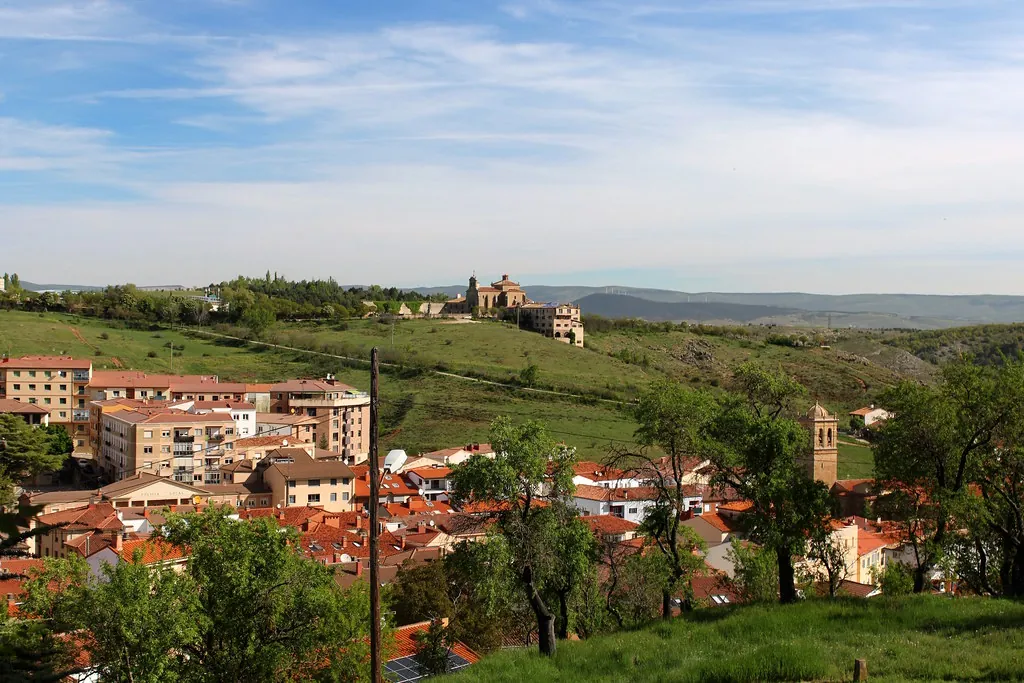
The village centre is a five-minute stride across. Houses the colour of dry biscuit line up along streets barely two cars wide, their wooden gates painted the same ox-blood red you will later find in your glass. The 16th-century church squats on the highest point, bell-tower truncated after a lightning strike in 1890; locals still argue whether the missing tier was stone or brick. Around its feet the graves carry surnames – Herrero, Vega, Mena – that reappear on winery letterheads within a ten-kilometre radius. Genealogy is public record here, and everyone knows who owns which parcel of vines by the curve of a hillside.
Monday is tasting day
Most British travellers arrive with a hire car from Valladolid, 90 minutes away, and a mental list of Peñafiel castles or Aranda wine museums. Berlangas works better as a palate-calmer between the big names. Dominio Fournier opens its gates on weekday mornings without the laminated itineraries demanded further west. Ring ahead if your Spanish stops at “buenos días”, though the staff switch to effortless English the moment they spot a UK licence plate. Tastings are free if you buy a bottle; prices start around €14 for the joven and climb to €45 for the single-vineyard garnacha. Monday is blissfully quiet – Spanish weekenders have driven back to Madrid and the coach circuits have yet to swing south from Burgos.
If the gate is shut, walk on for three minutes to the meteorite monument. In 1811 a stone the size of a football thumped into the vineyard opposite, scattering mare shod in the nearby hamlet of La Horra. The event is commemorated by a stainless-steel obelisk that looks like a discarded tent peg; children love the story, and it makes a convenient turning point for a circular stroll through the vines. The loop back to the village takes forty minutes, just long enough to justify another glass.
When the oven lights
Food options are straightforward: there aren’t any mid-week. The bakery shuts Tuesday–Thursday, the asador only fires its wood oven at weekends, and the solitary bar keeps hours that would make a British pub landlord blush. Self-catering is the pragmatic choice; stock up in Aranda’s Carrefour before you leave the A-11. If you time it right, the weekend roast of lechazo (suckling lamb) appears at Asador Berlangas, served on enamel plates with a wedge of lemon and a glass of house tinto. Expect to pay €22 for a half-ration that feeds two, crusty enough to satisfy Yorkshire standards of crackling. Vegetarians get tortilla, salad or both; embrace the simplicity or drive to Roa where a marisquería will happily sell you gambas at Rioja prices.
Walking it off
The landscape flatters walkers rather than mountaineers. Farm tracks link Berlangas with neighbouring villages every three to five kilometres, threading between trellised vineyards and wheat the colour of pale ale. Leave at nine, reach La Aguilera in time for coffee, circle back via the ruined Ermita de San Juan; total distance 8 km, cumulative climb 120 m, hazards limited to an over-friendly pointer dog and the occasional tractor blowing warm air and diesel. In April the soil smells of rain and iron, storks clack on telegraph poles and the vines are still leafless, letting you see horizon to horizon. October reverses the palette: ochre leaves, purple fruit, and mornings sharp enough to make you grateful for the thermos of tea you remembered to pack.
Winter brings its own rules. Daytime highs hover at 6 °C, night frosts glaze the windscreen, and the siesta becomes less affectation than survival strategy. Roads stay clear – snow rarely settles at this altitude – but the wind sweeping down from the Meseta can whip through a Barbour like a blunt razor. Summer, by contrast, is a sun-trap; 30 °C by noon, 15 °C after dark, so bring both shorts and a fleece. Rain is scarce, shade scarcer; the church portico and the winery tasting room double as climate-controlled refuge.
Beyond the village gate
Berlangas makes no attempt to entertain you after the sun goes down. That is the point. Sit on the plaza wall, listen to sparrows rattling in the plane trees and you will hear the soft pop of a cork carried on the wind from someone’s back kitchen. Conversation turns to yields, pruning dates, whether the co-op in Roa will raise prices this year. You could drive to Aranda for a jazz bar and a €12 gin-tonic, but you will probably finish the bottle you bought earlier and turn in early, windows open to the smell of damp earth and distant woodsmoke.
The village rewards patience, not check-lists. Two days let you taste, walk, eat lamb and memorise the five street names. Three days embed you in the rhythm enough to nod hello to the baker when he finally reopens, to know which vineyard dog will escort you to the meteorite stone, to realise that the shuttered house opposite the church is not abandoned – the owner simply prefers Madrid during the week. Stay a week and you stop asking for Wi-Fi passwords, start judging the weather by the smell of the vines, and leave with a case of wine that cost less than a single Peñafiel lunch.
Drive away at dawn and the plateau looks rinsed, the vines in perfect rows like soldiers waiting for orders. Somewhere behind you the tractor starts again, the same one that was cooling when you arrived. Berlangas de Roa will not wave you off; it has vines to prune, grapes to crush, winters to endure. The bottle on the passenger seat rattles gently over the cattle grid – a quiet reminder that you were briefly part of the vintage, and that Monday-morning wine tastes better at altitude.