Full Article
about Buniel
Ocultar artículo Leer artículo completo
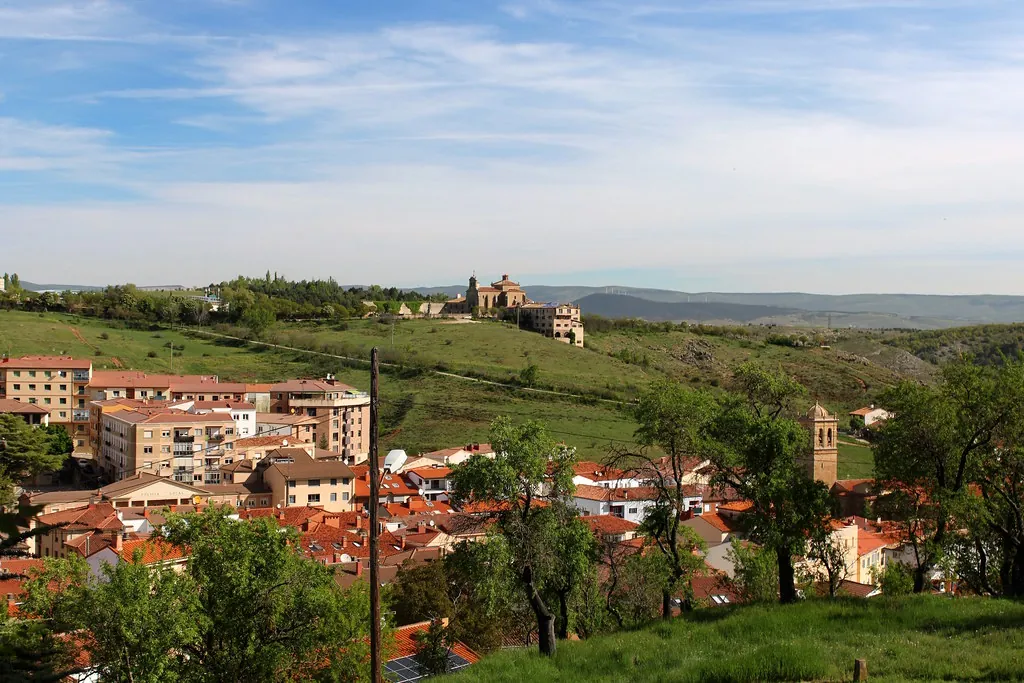
At 945 metres above sea level, Buniel sits high enough for the air to feel thinner than in Burgos city, ten kilometres away. On clear mornings you can see the wind turbines turning on the ridge above the village, their blades catching the same breeze that makes the wheat fields ripple like water. This isn’t postcard Spain; it’s working Spain, where the combine harvesters start at dawn and the only traffic jam is caused by a tractor turning into the cooperative granary.
The village spreads along a low limestone ridge, houses arranged in no particular hurry. Stone walls the colour of oatmeal give way to brick façades painted salmon or custard, depending on which decade they were last touched up. There’s no centre in the British sense—no market square flanked by tea rooms—just a widening in the road where the church, the bar and the municipal noticeboard compete for attention. If you arrive after lunch you’ll find the place deserted; the silence is so complete you can hear the church clock strike three seconds before it actually chimes.
Church, Bar, Fields, Repeat
The Iglesia de San Pedro Apóstol squats at the top of the gentle slope, its tower a useful landmark when the cereal fields all start to look the same. The building is 16th-century Castilian: thick walls, small windows, a single nave that feels wider than it is long. The door is usually locked; ring the number taped to the noticeboard and the sacristan will wander over from his vegetable plot, wiping earth from his hands. Inside, the altarpiece is gilded pine, not mahogany, and the paint is flaking in continent-shaped patches. Admission is free but a two-euro coin in the poor box guarantees the lights stay on long enough to see the 18th-century statue of Saint Peter whose toes have been rubbed smooth by local petitioners.
Opposite the church, Bar Buniel does double duty as café, grocery and social club. Opening hours follow the farming calendar: 07:00–10:00 for coffee and churros, 12:00–15:00 for beer and tapas, 20:00–22:30 for whatever’s left in the fridge. The menu is written on a whiteboard and never changes: migas (fried breadcrumbs with scraps of chorizo), huevos rotos (chips and egg), lechazo (roast suckling lamb) at weekends. A three-course menú del día costs €11 and includes half a bottle of house Rioja; ask for “agua del grifo” if you want tap water without the theatrical sigh. There is no vegetarian option unless you count the chips.
Walking Without Drama
Leave the village on any track and within five minutes you’re between wheat fields that run to the horizon. The paths are unsigned but obvious: tractor ruts bordered by poppies. In April the soil is dark chocolate, in July it turns the colour of digestive biscuits. A gentle 6-kilometre loop south-east brings you to the abandoned hamlet of Morcillo, where storks nest on the church roof and the only sound is the click of irrigation sprinklers. Take water—there’s no fountain and the breeze at this altitude is deceptively drying.
Serious hikers sometimes complain that the plain is, well, plain. The highest point within the municipality barely tops 1,000 metres. Yet what the landscape lacks in altitude it repays in space: larks rise straight up, sing, and drop again; the sky feels three times wider than at sea level. If you crave limestone cliffs, the Sierra de la Demanda is forty minutes away by car; Buniel itself is for slow walkers who like reading the seasons rather than ticking summits.
Wind, Wheat and Weekends
The wind farm you can see from every lane was switched on in 2004. Twenty-seven turbines generate enough electricity for 30,000 homes—six times the population of Buniel. Some locals still call them “las helénicas” (the Greek girls) because the first blade shipment arrived via Piraeus. They are not picturesque, but they pay the municipal bills: every child gets free schoolbooks and the elderly subsidised heating oil. British visitors used to moors and turbines will feel at home; those expecting Don Quixote’s white sails will be disappointed.
Weekends bring a trickle of city families who keep second flats above the shuttered shops. They arrive Friday night, stock up on charcoal and wine, and disappear again Sunday evening. During fiestas at the end of June the population triples. Brass bands play until 03:00, lamb sizzles in street stalls, and teenagers hold drag races on the straight bit of the N-120. Book accommodation early or stay in Burgos and drive over for the fireworks—worth seeing because they’re launched from the castle mound 200 metres above the village, so the sparks fall like glitter into the wheat.
Beds, Bread and Burgos
There is no hotel in Buniel. What you get are three self-catering houses marketed as “casas rurales”. Casa Cuarenta y Ocho Luces sleeps six, has under-floor heating and a kitchen stocked with more knives than a Borough Market stall. Keys are fetched from a lockbox; the owner lives in Madrid and communicates via WhatsApp. Expect Wi-Fi fast enough for iPlayer, patchy mobile signal on Vodafone, and absolute silence after the bar closes. Price: €90 per night year-round, two-night minimum.
Buy provisions before you arrive. The village shop closed in 2018; the nearest supermarket is a Carrefour in Burgos. Fresh bread appears at the bar around 09:00 and sells out by 11:00. If you need cash, the ATM is five kilometres away in Tardajos—withdraw on Friday or you’ll spend Saturday morning chasing opening hours.
Burgos itself is ten minutes by car down the N-120, fifteen if you catch the grain lorries. Park in the underground plaza de Santa Teresa and walk to the cathedral in four minutes flat. After a day of Gothic spires and the Museum of Human Evolution, Buniel feels like the countryside waiting with the lights off—no restaurants to choose, no parking meters, just the smell of damp earth drifting through open windows.
When to Come, When to Leave
April and May turn the fields emerald and the temperature hovers around 18 °C—perfect for walking without sunburn. September brings stubble and threshing dust, the sky a hard cobalt you rarely see in Britain. Mid-summer is hot (32 °C) but the altitude keeps nights tolerable; mid-winter sinks to –5 °C and the wheat sleeps under frost. Snow is light, yet the lanes ice over quickly—hire chains if you’re driving in January.
There is no railway station, no taxi rank, and the daily bus from Burgos has been “temporarily suspended” since 2020. A hire car is essential; book at Burgos Airport, a twenty-minute drive away. Ryanair flies Stansted–Burgos twice weekly in summer, otherwise Madrid is two hours by dual carriageway. Petrol is cheaper than in the UK, motorways are toll-free, and the speed limit on the open plain is a lenient 90 km/h—though you’ll be overtaken by Seat hatchbacks whatever you do.
Leave before you run out of milk, or stay long enough to learn the sacristan’s name and the exact pitch of the church bell. Buniel will not change your life, but it will recalibrate your sense of scale: a place where the horizon is twenty kilometres away, the nights are properly dark, and the loudest noise is grain sliding into a metal hopper. Come for the silence, add Burgos for the culture, and head home when the wind turbines start to feel like old friends waving you off.