Full Article
about Cabanes De Esgueva
Ocultar artículo Leer artículo completo
The wheat fields surrounding Cabanes de Esgueva turn gold in late June, rippling like a vast inland sea that happens to grow cereal. Standing at the village edge, you can watch combine harvesters crawl across this ocean of grain while the morning sun burns off the last wisps of mist. It's a scene repeated across northern Castilla y León, but here you won't need to share it with coach parties or Instagram influencers. The soundtrack remains distinctly agricultural: diesel engines, the occasional bark of a farm dog, and silence.
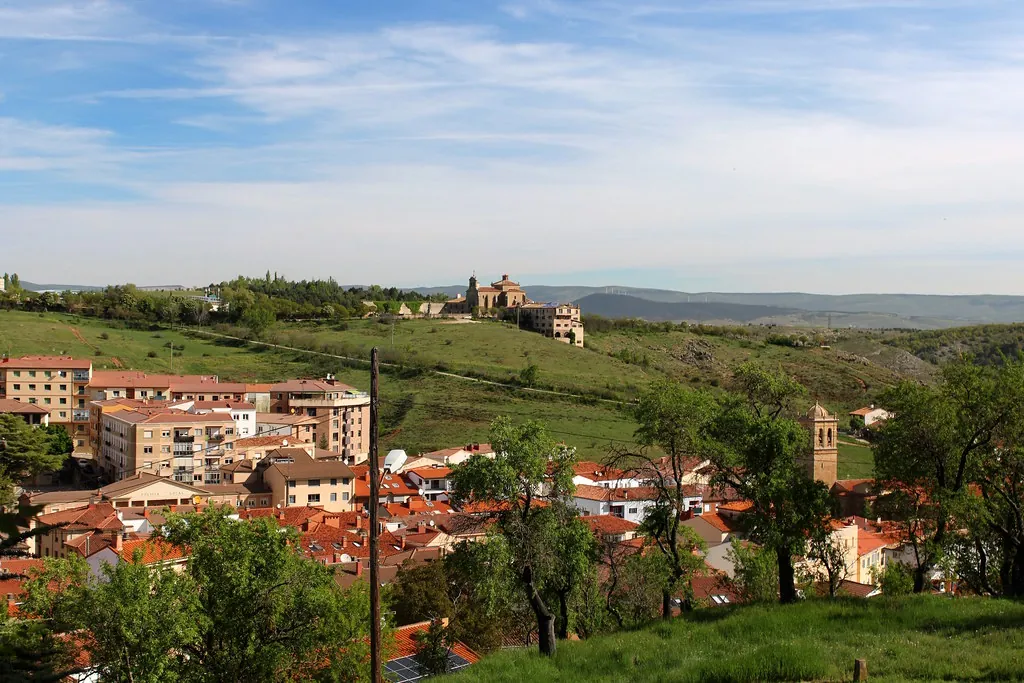
Twenty kilometres east of Burgos, this farming settlement of roughly five hundred souls sits in the valley of the River Esgueva, a modest waterway that irrigates vegetable plots rather than powers mills. The Romans passed through, the Moors didn't bother, and modernity arrived late enough that stone-and-adobe houses still line narrow lanes barely wide enough for a tractor's wheelbase. What passes for rush hour involves two locals exchanging gossip outside the panadería while a third tries to manoeuvre a trailer loaded with irrigation pipe.
The Church That Commands the Square
Every Castilian village worth its salt has a church that dominates the plaza, and Cabanes delivers. The parish temple rises square-shouldered above the single-storey houses, its stone bell tower visible long before you reach the centre. Step inside and you'll find the usual saints, worn flagstones, and the faint smell of incense that never quite dissipates. Services happen twice weekly; the rest of the time the heavy wooden doors stay locked, so time your visit for Sunday morning if you want to see more than shadowy interior glimpses through the wrought-iron grille.
Beyond the church, the village's architecture tells a story of thrift and climate. Walls are thick enough to keep July heat and January frost at bay. Windows face south whenever possible; north-facing apertures are few and small, sealed with wooden shutters painted the regulation dark green. Many roofs still carry their original Arabic tiles, curved to shrug off snow that falls for perhaps a fortnight each winter. It's textbook high-plateau building, evolved over centuries to cope with temperature swings that can exceed 20 °C in a single April day.
Walking Without Way-Marks
Forget sign-posted trails and glossy brochures. The surrounding countryside offers kilometre after kilometre of farm tracks that stitch together wheat, barley and sunflower fields. These are working roads, graded twice a year by the local cooperative, and you share them with the occasional 4×4 or a farmer on a quad bike checking irrigation pumps. A circular ramble of eight kilometres heads south to the hamlet of Izana de Esgueva and back, passing an abandoned grain store that locals claim is haunted by the ghost of a Franco-era foreman. Nobody sells maps; instead, ask at the bar for "el camino de Izana" and you'll receive hand-waving directions that somehow work.
Spring brings the best walking weather—mild mornings, green shoots underfoot, and skylarks overhead. By July the thermometer nudges 35 °C at midday; early starts are essential. Autumn offers stubble fields the colour of pale ale and the smell of freshly turned earth, while winter can be surprisingly sharp. Frost lingers in the valley bottom until late morning, and when the wind arrives from the Cordillera Cantábrica you'll be grateful for that anorak you almost left in the hire car.
Food That Comes From Within a 30-Kilometre Radius
There is no restaurant in Cabanes itself, which either delights or horrifies depending on your view of culinary adventure. What you do get is the bar on the plaza, open from 07:00 for coffee and churros, then again from 20:00 for beer and tapas. On Friday evenings the owner fires up a tiny grill behind the counter and serves lamb chops—tiny, intensely flavoured cuts from animals raised on the surrounding plains. A plate of three costs €6; bread and a glass of Rioja Alavesa add another €3. Vegetarians can content themselves with pimientos de Padrón, shipped in from Galicia but fried to order.
For anything more elaborate, drive ten minutes to Pedrosa de Duero or twenty to Aranda de Duero, where asadores specialise in lechazo, suckling lamb roasted in wood-fired ovens until the skin crackles like brittle toffee. Expect to pay €25–30 per person for a full meal including wine. If you're self-catering, the weekly market in Burgos (Wednesdays and Saturdays) sells local cheese, morcilla spiced with onion, and jars of honey from beekeepers who move their hives according to sunflower and heather bloom.
When the Village Wakes Up
August changes everything. The fiesta mayor, held around the 15th, marks the one time of year when Cabanes genuinely fills up. Ex-pats return from Bilbao and Madrid, grandchildren run riot in the plaza, and a sound system appears overnight for outdoor dancing that continues until the Guardia Civil remind organisers of the 03:00 noise curfew. There's a cardboard bull stuffed with fireworks, a procession behind the statue of the Virgin, and a communal paella cooked in a pan the diameter of a tractor tyre. Visitors are welcome—expected, even—but accommodation within the village is non-existent. Book a room in Aranda early, or accept an invitation to sleep on someone's sofa after sufficient glasses of clarete.
Outside fiesta week, the calendar ticks quietly. Semana Santa sees a handful of robed penitents walking the lanes at dawn; Christmas involves midnight mass and a lottery syndicate run from the bar. Otherwise, life follows the agricultural rhythm: sowing in October, praying for rain in March, harvesting in July, fixing machinery in December.
Getting Here, Staying, Leaving
Cabanes sits just off the BU-905, a secondary road that meanders through the Esgueva valley. From Burgos airport it's a 25-minute drive; Madrid is two hours if you resist the speed-limit temptation of the A-1 motorway. Car hire is essential—public transport means one bus each way on alternate weekdays, timed for pensioners rather than tourists. Petrol stations are scarce once you leave the main drag; fill up in Burgos.
Accommodation options within the village amount to a single casa rural, three bedrooms above the baker's shop, booked through the regional tourism office. It costs €70 per night for the whole house, including firewood and patchy Wi-Fi. Otherwise, base yourself in Aranda de Duero or Burgos and day-trip. Summer weekends see Spanish families snap up nearby rural apartments; mid-week availability is better.
Bring walking boots, a Spanish phrasebook (English is rarely spoken), and realistic expectations. Cabanes de Esgueva will not change your life, reveal hidden spiritual depths, or deliver the perfect Instagram shot. What it does offer is a slice of interior Spain that continues perfectly well whether visitors turn up or not—a quiet reminder that somewhere between the motorway and the mountains, farmers still gather at dawn to discuss rainfall statistics over bitter coffee.