Full Article
about Cardenadijo
Ocultar artículo Leer artículo completo
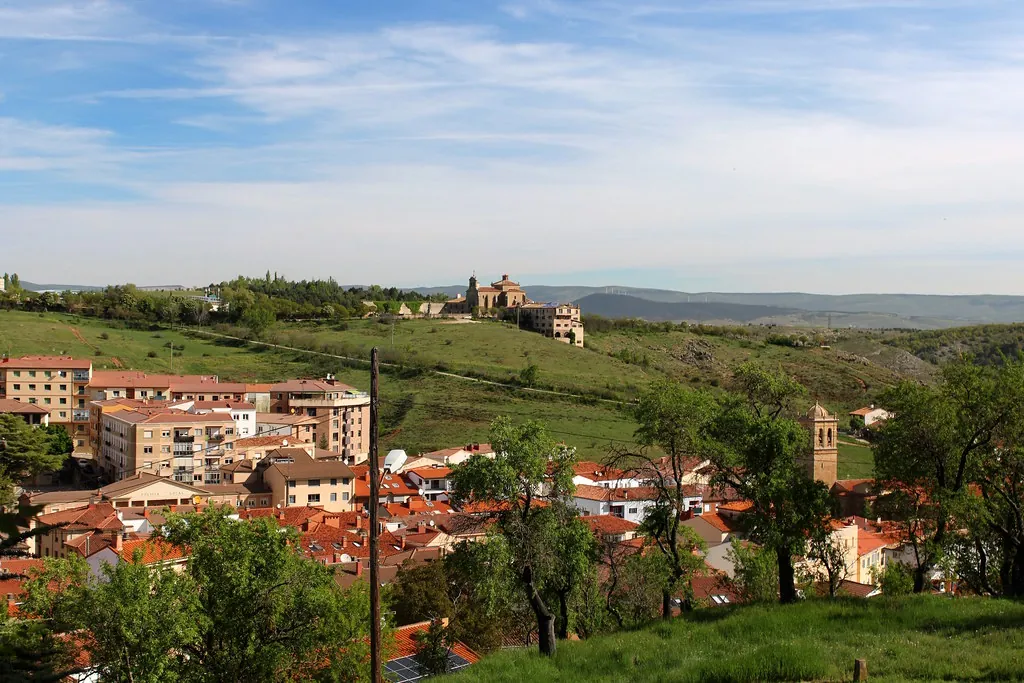
The wheat stops here. Or rather, it starts – rippling out from Cardenadijo in every direction until the horizon blurs into a pale gold shimmer that makes the sky look almost violet. Stand on the village’s single traffic-calming bump at dusk and you’ll see what the A-1 drivers miss: a plateau so flat the grain silos resemble ships, and the only vertical punctuation is the stone bell-tower of San Pedro, tolling the hour for 500 souls who still set their watches by it.
Twenty-five minutes from a cathedral, a century away
Geography does funny things in Castilla y León. Burgos, with its Michelin stars and high-speed rail link, lies just 22 km north, yet Cardenadijo keeps the hours of a place that has never needed to hurry. Tractors have right of way. The bakery van toots at 09:30 sharp; miss it and your morning croissant comes from the freezer compartment in the solitary Dia supermarket down the road in Huerta de Rey. That proximity to the provincial capital is the village’s trump card: you can breakfast on migas—fried breadcrumbs laced with garlic and grapes—then be standing beneath the cathedral’s filigree spires before the breadcrumbs have cooled.
Most British visitors, though, treat Cardenadijo as a comma rather than a full stop. The Santander–Madrid dash is 390 km of motorway monotony; the village sits almost exactly at the halfway mark, give or take a wheat field. Airbnb logs show the same rhythm: guests arrive late evening, sink into the silence, and leave at first light. One couple from Sheffield admitted they booked “The Lantern of San Lorenzo” (a converted 1890 stone house with underfloor heating and a roof terrace) simply because it advertised “zero karaoke bars within 8 km”. They were not disappointed.
What you see when there is nothing to see
There is no tourist office, no brown sign pointing toward a “mirador”, no fridge magnets. Instead, you get a grid of sandy lanes wide enough for a hay baler, houses the colour of dry biscuits, and a church that locks its doors at lunchtime because the priest serves three villages and time is distance. Step inside San Pedro when it is open and the air smells of candle wax and centuries-old pine; the retablo is plain, almost austere, but someone has tucked fresh sunflowers beneath the statue of the Virgin, a flash of cadmium yellow against the wood-smoke grey.
Walk south along Calle del Sol and the settlement dissolves into threshing circles and pigeon lofts. In April the fields are an almost violent green; by mid-July they turn the colour of digestive biscuits and the horizon shimmers like a petrol stain. Photographers arrive at dawn, tripods balanced on the crumbling stone walls, trying to capture that minimalist palette without slipping into cliché. They rarely stay for lunch.
Eating (or not) the Castilian way
The only public catering is Bar El Pájaro, a whitewashed cube with a 1997 calendar still hanging behind the counter. Opening hours obey an ancestral logic: if the owner’s daughter has netball practice, the place shuts. When it is open, a hand-chalked board lists three options: plato combinado (egg, chips, chorizo), caldo de cocido (chickpea broth), and queso de Burgos so fresh it squeaks between the teeth. The red wine comes from a plastic tap, young Ribera del Duero, two euros fifty a glass; Brits tend to treat it like superior Beaujolais and are mildly surprised when the bottle never appears.
There is no evening menu. By 16:00 the shutters drop and the village soundscape returns to sparrows and the distant growl of a combine harvester. Self-catering is the pragmatic option. The Dia in Huerta de Rey stocks baked beans labelled “frijoles estilo inglés” alongside morcilla flavoured with rice rather than onion—an easy introduction for tentative palates. Buy firewood on the way back; nights can dip below 5 °C even in May, and most rental houses charge extra for the first basket of logs.
A circular walk with no souvenir stalls
Stride out early and you can complete a 7 km loop before the sun asserts itself. Head east on the farm track signposted “Villanueva” and you’ll share the path with larks, not hikers. The only elevation is a disused grain elevator, graffiti urging “Vote IU 1994” still clinging to the concrete. Halfway round, the ruined Ermita de San Lorenzo appears like a broken tooth; inside, swallows stitch the air and someone has wedged a plastic Virgin into a niche, her paint blistered by frost. Sit on the tumble-down step, listen to the wind combing the wheat, and you understand why Spaniards use the phrase “paisaje de interior”—interior landscape—as much as exterior: the view works its way inward.
Cyclists can push farther, linking farm lanes to the Arlanza wine belt 25 km south, but carry two spare tubes; thorns from the kermes oak hedges laugh at puny commuter tyres. Mountain-bikers expecting rocky single-track will be baffled—this is billiard-table topography—yet the emptiness is its own adrenaline. You will meet more red kites than red lights.
When the village remembers it’s a village
Cardenadijo’s fiestas last exactly one weekend. The last Saturday in June marks San Pedro’s eve: a brass band that looks suspiciously like the local council in fancy uniforms, a free vat of paella stirred with a boat oar, and a five-minute firework display that sets off at least one car alarm. August adds a low-key verbenas: plastic tables in the plaza, children chasing foam bubbles, grandparents clutching litre bottles of Cruzcampo. If you crave authenticity, come then; if you crave sleep, don’t. The rest of the year the plaza belongs to the elderly men who play cards under the lime trees and the teenage girls practising TikTok dances beside the 5G mast that doubles as a stork platform.
Winter is a different kind of quiet. The wheat is drilled, the stubble fields resemble stubbled chins, and the wind carries snow from the Cordillera 60 km away. Daytime highs hover around 6 °C; night frost whites out the windscreen of every car parked outside the church. Rental houses have proper central heating—owners learnt the hard way that Britons expect to wear T-shirts indoors—but the lanes ice over quickly. Unless you’re comfortable driving a manual on a slick of frozen mud, treat January visits as a writing retreat, not a rambling holiday.
The practical bit, because you’ll ask anyway
Cash: there is none. The nearest ATM is in Huerta de Rey, 15 km south-east; fill your wallet in Burgos before you turn off the A-1.
Fuel: ditto. The petrol station on the N-234 closes on Sunday afternoons; the automated pump swallows Spanish cards only.
Connectivity: Vodafone-ES drops to E in the narrow lanes; EE roaming holds four bars on the church plaza.
Weather: pack a fleece for every month except July. Even then, midnight temperatures can slump to 12 °C.
Driving after dark demands caution. The final 8 km from the motorway is unlit, flanked by wheat that grows higher than a Range Rover. Expect hares, expect tractors without rear lights, expect to arrive with your knuckles the colour of the local cheese.
Depart before you’re ready, or stay until you’re restless
Cardenadijo will not change your life. It offers no epiphany, no bragging-rights summit, no Instagrammable infinity pool. What it does offer is a pause—a wheat-scented, star-loud pause—between the ferry dock at Santander and the capital’s ring road. Some visitors extend that pause into months: remote workers who discover the fibre-optic cable in the old schoolhouse, parents who calculate they can still reach Bilbao airport in under two hours for the 14:35 easyJet to Bristol. Others last precisely twelve hours, long enough to sleep, upload a photo of the silent plaza, and rejoin the motorway refreshed.
Drive out at sunrise and the silhouettes of grain silos recede in the rear-view mirror. Ahead, the A-1 climbs toward the Meseta’s rim, lorries already jostling in the outside lane. Look west and you’ll spot the same bell-tower you photographed yesterday, now a thumbnail scratch against an ocean of gold. In five minutes it is gone. In fifty kilometres you will be searching for the next service station coffee. Whether that seems like escape or exile is the only clue you need to decide if you should have stayed.