Full Article
about Cardenuela Riopico
Ocultar artículo Leer artículo completo
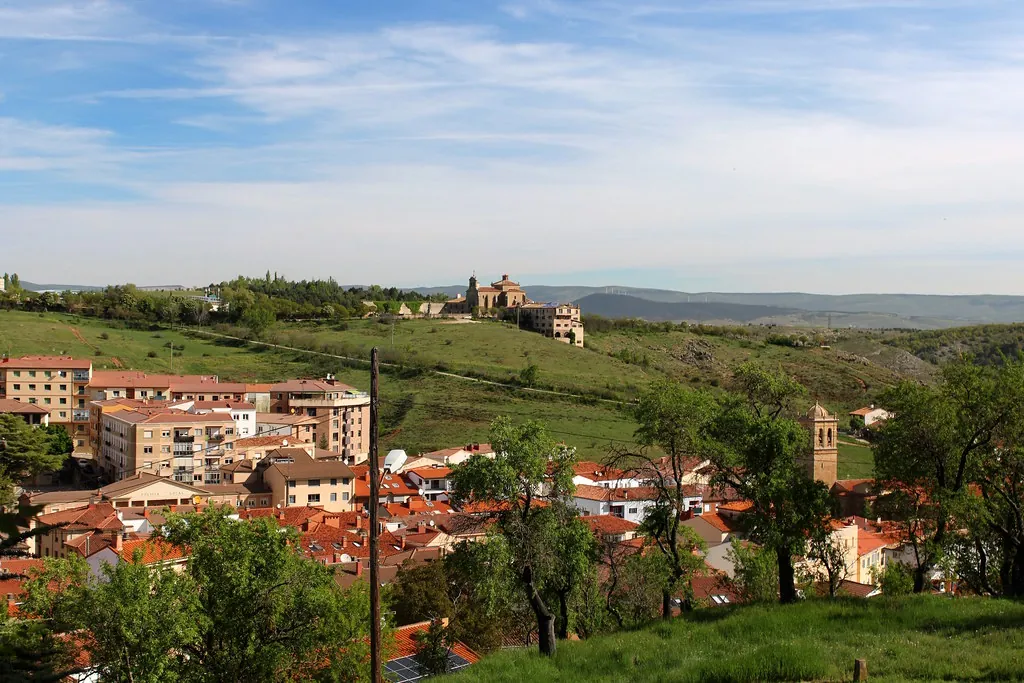
The wheat stops here. Or rather, it rolls right up to the edge of Cardenuela Riopico, brushing against the single-row high street like an incoming tide. One minute you’re on the N-120 with lorries blowing past, the next you’re staring down an alley of ochre stone that ends in a field. No fanfare, no signpost—just the abrupt transition from asphalt to soil that marks most small towns on the northern lip of Spain’s central plateau.
Cardenuela sits fifteen kilometres north-east of Burgos, at the precise point where the Meseta starts remembering it once had mountains to become. The altitude is already 870 m, enough to thin the air and sharpen the wind that scours the cereal belt most afternoons. In April the surrounding plains look almost striped: young barley catching the light one way, fallow earth the other. By July the colour has drained to beige, and the horizon quivers with heat. Come December, the same fields can be white with frost at ten in the morning, the soil hard as fired clay.
A Linear Sort of Place
The village layout is stubbornly practical. Houses string along the road because that was the only paved surface until the 1970s; anything behind it is track, dust and threshing floors turned into vegetable plots. You can walk the inhabited bit in eight minutes, fifteen if the village dogs decide escort duty is required. Building styles hop centuries at random: an 18th-century stone doorway with a 1990s aluminium garage punched through it, a row of terracotta roof tiles butting against grey tin. Pretty? Not particularly. Honest? Entirely.
The parish church of San Pedro keeps watch from the highest point—a chunky tower whose bells still mark the agricultural day at 7 a.m., noon and 9 p.m. Inside, the air smells of candle wax and sun-baked stone; retablos are provincial Baroque, gilded but already flaking. Nobody charges an entrance fee; push the heavy door and you’re in, provided the wind hasn’t wedged it shut.
Pilgrim Pit-Stop
Every day, between Easter and October, a trickle of rucksacks passes through. Cardenuela lies on an alternative stretch of the Camino Francés, a detour taken when Burgos municipal albergues are full or when walkers simply crave a shorter stage. They arrive from Tardajos at siesta time, boots powdered with ochre dust, and make straight for the albergue on Calle de los Hornos. The building was once the village school; blackboards still hang in what is now a 24-bed dorm. Donation box by the door, kitchen to the left, washing lines strung between pear trees. The hospitalero rotates weekly; if you’re lucky it’s Manolo, retired Burgos postman, who boils lentils the size of marbles and can explain in slow, clear Spanish why the local wheat commands a premium price.
The only other public facility is Bar La Parada, halfway along the main drag. Opening hours drift: 8 a.m. for coffee, closed between 3 p.m. and 5 p.m., last sandwich served when the television weather forecast ends. Inside you’ll find crusty bocadillos of tortilla or serrano, cold Estrella Galicia, and a guestbook thick with felt-tip dedications from Australia, Korea, Derbyshire. Prices hover at €2.50 for half a baguette; pilgrims’ menus at the albergue are donation-only, though €8–€10 keeps the kettle working for the next walker.
Walking Without Way-Marks
There are no official hiking trails, and that suits the handful of visitors who prefer their maps blank. Farm tracks radiate out like spokes. One heads north, skirting a threshing circle turned into a dog-training enclosure, then lifts gently onto a low ridge. From the top Burgos cathedral is a distant stapled silhouette, while behind you the Meseta stretches south until it dissolves in summer haze. Round-trip distance: 7 km. Essential equipment: water, because the fountains are for livestock and the colour can alarm, plus a stick for negotiating the occasional aggressive mastiff who believes the track is his.
Cyclists use the same web of lanes. Surfaces range from compacted grit to fist-sized stones, but gradients are mild and traffic nil. A circular 25 km loop eastward links Cardenuela with the hamlet of Rabé de las Calzadas, returning via an abandoned railway line now colonised by broom and the odd concrete bunker built during the Civil War. You’ll share it with tractors and the smell of diesel, not Instagram influencers.
When to Bother
Spring is the kindest season. From late April the fields green up, days reach 18 °C and nights stay above 5 °C. Stone walls echo with house sparrows; storks drift overhead on thermals that will later carry them across the Pyrenees. September runs a close second: harvest stubble glows bronze, mornings are crisp and the smell of burning vine prunings drifts across the plateau.
Mid-summer is less forgiving. Daytime temperatures sit in the mid-30s, shade is scarce and the wind feels like someone pointing a hair-dryer at your face. Winter brings the opposite problem: the village catches the full force of northerly fronts, snow can lie for a week and the albergue shuts between December and February because pipes freeze. If you do come then, book a room in Burgos and visit on a day trip; the wheat silos turn into surreal white towers and you’ll have the streets to yourself.
Eating beyond the Bar
Cardenuela itself offers no restaurant, but the province punches above its weight at table. Ten minutes’ drive towards Burgos, roadside asadores start appearing: whole lambs roasted in wood-fired brick ovens, skin blistered to parchment, meat so tender it leaves the bone if you stare at it. A quarter kilo portion sets you back €16; house wine is young Ribera del Duero, drinkable and cheap. Vegetarians can default to the classic sopa castellana—garlic, paprika, bread, poached egg—though ask them to hold the diced chorizo if that matters. Dessert options rarely exceed flan or yoghurt, but the coffee is properly strong and you’ll need it to stay awake for the post-prandial drive along an unlit national road.
Getting Here Without a Pack on Your Back
Fly to Santander with Ryanair from Stansted or Manchester; ALSA coaches reach Burgos in 1 h 45 m. From Burgos bus station, line 215 towards Belorado stops at the village entrance two or three times each weekday, never on Sunday. A taxi costs around €15 and drivers will phone the albergue hospitalero if your Spanish stalls. Car hire is simpler: take the A-1 motorway north from Madrid, exit at kilometre 235, follow the N-120 for twelve minutes and look for the stone water trough with the village name painted in fading green.
Accommodation options are intentionally limited. Besides the pilgrim hostel, the nearest hotel is a ten-minute drive towards Burgos—a functional three-star beside a petrol station, breakfast included, rooms at €55 mid-week. There is no campsite; wild camping is tolerated if you ask one of the farmers, most of whom respond with a shrug that means “don’t set fire to anything”.
The Catch
Cardenuela Riopico will not suit travellers who need postcard perfection. Modern houses outnumber historic ones, the evening entertainment is a choice between bar dominoes and whichever series La 1 is showing, and if the wind is in the wrong direction the smell of pig slurry travels for miles. Mobile coverage is patchy, the only cash machine is back in Tardajos and you will be woken by tractors at dawn during sowing season.
Yet that is exactly why some people step off the coach. There are no entrance fees, no craft markets, no guide with a raised umbrella herding thirty tourists towards a souvenir shop. Just the sound of wheat rustling like dry paper, stone walls warm from the sun and a bar that still remembers how to make coffee that doesn’t involve syrup. Spend an afternoon here and you’ll understand why Spaniards talk about the Meseta as a state of mind rather than a map reference. If that sounds like hard work, stay in Burgos. If it sounds like breathing space, Cardenuela is already four kilometres closer than you think.