Full Article
about Castellanos De Castro
Ocultar artículo Leer artículo completo
Dawn on the Plateau
At 06:30 the sky above Castellanos de Castro turns a thin, metallic pink. The wheat stubble crackles under dew; a single tractor headlamp bobs two kilometres away. This is the hour most British visitors see the hamlet—boots on, head-torch off, coffee from the albergue machine still burning the tongue. By nightfall the same walkers will be twelve miles closer to León, and the place will shrink back to its permanent forty-six residents plus one sleepy Labrador.
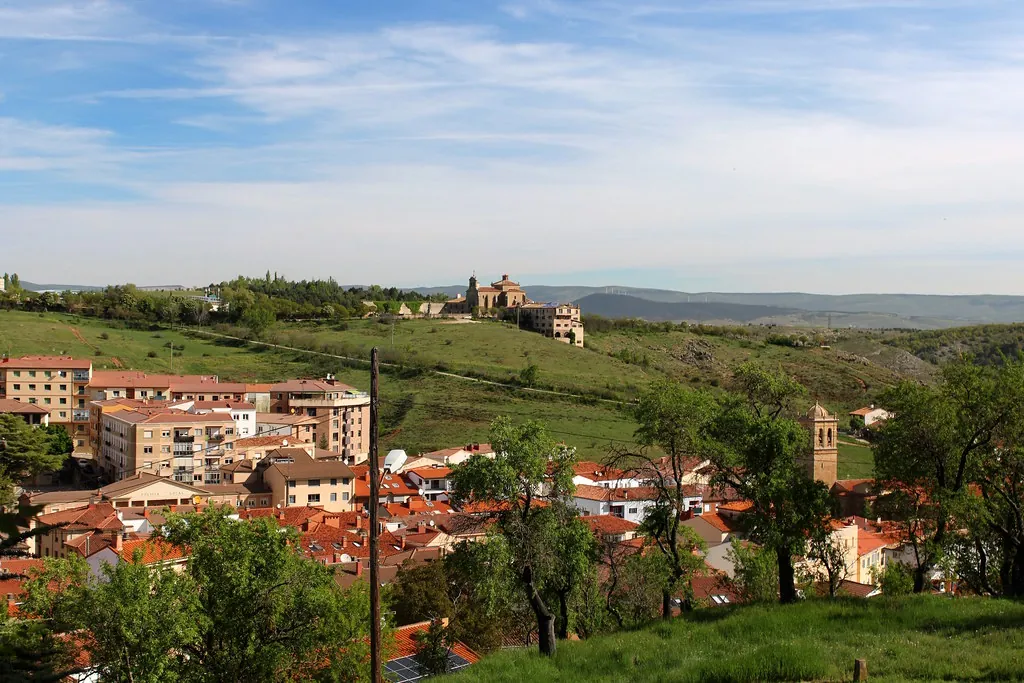
There is no centre to speak of, just a short spine of stone houses, a cruceiro whose carved apostle has lost his nose, and the refuge—a low, slate-roofed building that used to be the village school. Inside, the walls are lined with boot scrapers and the guestbook is full of Home-Counties postcodes thanking “Pilar and the team” for the cleanest showers on the Camino Francés. If you arrive expecting a plaza mayor and a medieval gate you will be disappointed; if you want silence so complete it makes your ears ring, you have come to the right grid reference.
What Passes for Civilisation
The albergue is the village’s only public service. €12 buys a bunk, a blanket and a compostela-friendly stamp. Lights-out is 22:00, but most people are asleep by nine—the alternative is the bar, which is really the refectory with beer. The menu is chalked in biro: sopa de ajo, pollo al chilindrón, yoghurt. Vegetarians get a tortilla thick as a doorstep. Wine arrives in a plastic jug that never seems to empty; the trick is to stop pouring before it reaches the brim of the tin cup. Card payments sometimes work, sometimes don’t—cash is the pilgrim’s insurance policy.
There is no shop, no ATM, no chemist. The nearest bread is two kilometres east in Hontanas, itself hardly a metropolis. British walkers used to resupplying at a Tesco Express learn quickly to hoard: buy nuts in Burgos, blister plasters in Tardajos, emergency chocolate at each previous stop. Phone signal flickers between one bar and none—download your offline map while the bus is still crossing the Arlanzón.
A Walk That Goes Nowhere in Particular
Castellanos sits at 880 m on the shallow watershed between the Arlanza and the Pisuerga. The surrounding tracks are not scenic loops dreamed up by a tourism board; they are farm access roads used to check wheat and spray fungicide. That does not stop them being glorious at seven in the morning when the sun lifts over the grain sea and every stalk throws a shadow twice its height. Walk south for thirty minutes and you reach an abandoned railway cutting where bee-eaters nested last spring; head north and the path peters out among sprinkler pivots and polite signs warning “Propiedad Privada—No Acampar”. Wild camping is tolerated even less than wild swimming; the meseta may look empty but every hectare is accounted for.
Winter Arithmetic
From November to March the population halves. The bar closes, the refuge shuts its metal shutter, and the village returns to the handful of households who have lived here since Franco’s day. Snow is rare but frost is guaranteed; night-time temperatures drop to –8 °C and the wind scythes across the plateau like a Sheffield razor. Summer brings the opposite problem: thirty-degree heat, no shade, water fountains that taste of iron. Spring and autumn are the sane seasons, when the track from Castrojeriz is firm underfoot and the storks are either arriving or thinking about leaving.
The People Who Stayed
Talk to the woman sweeping her threshold and you may hear that her daughter works in a Norwich care home, or that the grandson is studying aerospace in Bristol. Emigration is the village industry; the Camino is the only immigration programme left. Locals greet hikers with the bemused courtesy of householders whose front garden has become a public right-of-way. They will direct you to the fuente, warn you that the next section is “todo cuesta arriba” (it isn’t), and refuse payment when you try to buy a tomato. Pride survives even when the parish does not.
How to Use the Place
Treat Castellanos as a comma, not a full stop. Arrive late afternoon, wash your socks, watch the sky turn peach, leave after sunrise. If you have a non-walking companion with a car, pair the night with a day-trip to the Romanesque church at Hontanas or the monastery of San Antón, three kilometres away and famous for the hospital that once sheltered medieval pilgrims with leprosy and dubious credit ratings. Better still, keep walking: the path west drops into a leafy hollow at Itero de la Vega where the first bar serves cortado in proper china cups—civilisation measured by crockery.
The Honest Verdict
Castellanos de Castro will never feature on a Spanish tourism poster. It has no castle, no gift shop, no Instagrammable infinity pool. What it offers instead is a masterclass in scaled-down living: a hot shower, a glass of wine poured by someone who remembers your face from the previous year, and the realisation that the meseta is not flat at all but gently, relentlessly rolling, like the sea paused mid-swell. Stay a night and you will probably forget the village name by the time you reach León; stay an hour too long and you might find yourself volunteering to repaint the yellow arrows next spring.