Full Article
about Castrillo De La Vega
Ocultar artículo Leer artículo completo
The medieval bridge at Castrillo de la Vega has lost half its arches to river floods and modern road-building, yet traffic still rattles across the patched-up span. Lorries heading for Bilbao thump over the metal plates at dawn; by mid-morning the only sound is the Duero sliding past vineyards that stripe the red-earth banks. That contrast—freight and stillness, wine and commerce—defines a village most travellers glimpse only from the car window.
A Plateau That Thinks It’s a Plain
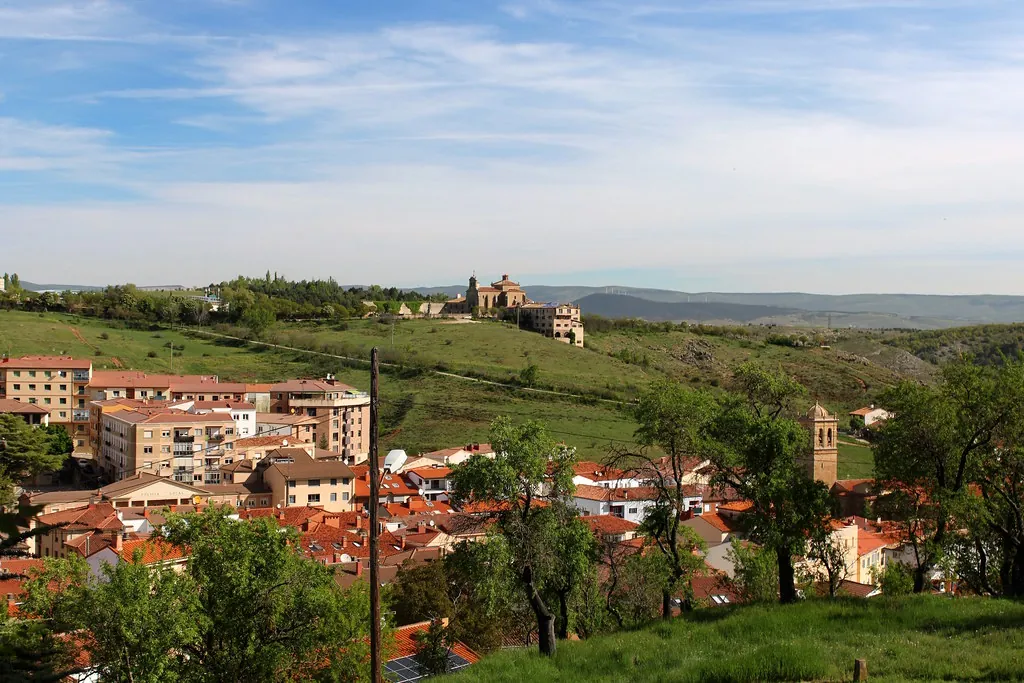
The name promises a fertile flood-plain, but Castrillo sits on an 810-metre shelf above the river. The wind arrives with nothing to block it; even in July you’ll want a jacket after seven o’clock. The plateau explains the vines: cold nights trap acidity in the tempranillo grapes, while the summer sun riens skins to the colour of garnets. Walk ten minutes east of the bridge and you are among gnarled bush-vines, each one spaced so the roots fight for the thin, chalky soil. The horizon feels closer here; stone farmsteads called casetas appear toy-like against cereal fields that glow like brass under late-afternoon light.
One Church, One Bar, No Cashpoint
The village grid is classic Castilian: parallel streets funnel you towards the fifteenth-century church of San Mamés whose bell tower doubles as the evening meeting point. There is no dedicated tourist office; questions are answered by whoever is leaning against the counter in Bar El Ventorro, the only establishment that ignores the 14:00-17:00 siesta lockdown. Inside, the menu del día still costs €14 and arrives in three waves: vegetable soup thick with chickpeas, a quarter-roast of milk-fed lamb, and a plastic dish of rice pudding dusted with cinnamon. House red from a plastic porrón is €2.40 a glass; it would retail in the UK for at least £12 a bottle.
Practicalities are blunt. The last ATM is eight kilometres away in Aranda de Duero; fill your wallet there before you check in. Mobile reception drops to one bar on EE and Vodafone once you leave the N-122; download offline maps while you still have 4G. No Uber, no taxi rank—if you are staying at one of the rural wine hotels, book a cab from Aranda (Taxi Aranda +34 947 510 050) before the kitchens close.
Underground Larders and Sunday Silence
Beneath the stone houses run 300-year-old cellars, hand-hewn corridors where families once stored pig legs and vats of young wine. Most are private, opened only during the August fiestas, but two wineries on the western edge—Valtravieso and Cillar de Silos—run scheduled tours in English if you email ahead. Expect stainless-steel vats parked beside crumbling brick chimneys, a reminder that the Ribera del Duero appellation is younger than the vines: created in 1982, it turned subsistence plots into billion-euro brands within a generation.
Come on a Sunday and the village feels semi-abandoned. The bakery is shuttered, the grocery dark; you will find nothing but a vending machine outside the petrol station on the main road. Plan accordingly: buy bread and tomatoes in Aranda on Saturday night, pack a pocket knife, and make your own picnic by the river. The reward is solitude: storks wheel over the ruined bridge while you drink €1.20 cans of Estrella from the cooler.
Flat Walks, Big Reds
You do not need mountain boots here. A six-kilometre loop heads south along the Duero towpath, turns through poplars, then re-enters the vineyards via a track once used by mule carts. Information boards appear only at the start; after that you are guided by the smell of wild fennel and the occasional yellow arrow painted by the Camino del Duero cyclists. Mid-route you pass a gravel bar where locals swim when the river widens—water is waist-deep, current visible but manageable. No lifeguard, no ice-cream van, just cows on the opposite bank and the hum of the A-1 in the far distance.
If you prefer horsepower to foot power, hire a bike in Aranda (€25 a day, delivered to El Ventorro with prior notice). The disused railway toward Peñaranda de Duero is now a greenway; surface is compacted limestone, fine for hybrids, and shade arrives in the shape of railway tunnels cut into sandstone. Allow three hours return, including a stop at the hilltop castle of Peñaranda for coffee that costs half Madrid prices.
When to Arrive, When to Leave
Late April and early May turn the vines neon-green and the temperature hovers around 18 °C—ideal for walkers who dislike 30-degree glare. Harvest season in September brings bustle: tractors clog the bridge at dawn, and the air smells of crushed grapes. Hotel rates jump 20 percent, but you can taste mosto (partially fermented juice) straight from the tank. August fiestas are loud rather than folkloric; processions last twenty minutes, then everyone heads for the paella pan in the sports pavilion. If you want medieval pageantry, go elsewhere; if you want to drink wine from a plastic cup with farmers who remember Franco, book the third weekend in August.
Winter is honest: blue skies, minus-two mornings, wood-smoke drifting from chimneys. Some rural hotels close January-February; check before you commit. Snow is rare but frost can glitter until eleven o’clock, turning the vines into chandeliers.
Parting Shot
Castrillo de la Vega will never compete with postcard Spain. There is no beach, no Gaudí façade, no flamenco bar. What it offers is continuity: bread baked in the same stone oven since 1890, vines that pre-date the euro, and a river that carried wool to Flanders long before it carried tourists with cameras. Stay one night, maybe two, then leave before the silence feels like inertia—and take a bottle of the local crianza for the friend who thought Castilla was only about castles.