Full Article
about Castrillo De Riopisuerga
Ocultar artículo Leer artículo completo
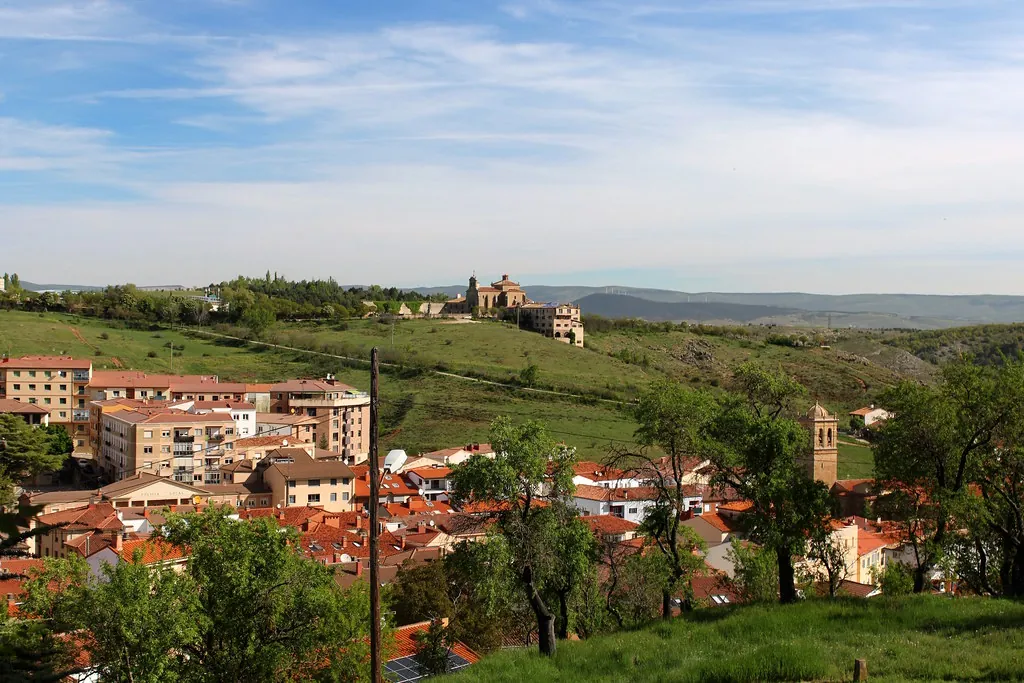
The grain lorry rattling through Castrillo de Riopisuerga at dawn is probably the noisiest thing you'll hear all day. By the time its tail-lights disappear towards Burgos, the only sound left is the wind combing through wheat stubble and the odd tractor coughing to life. This is northern Castile at 900 metres, where the high plateau tilts gently towards the River Pisuerga and the air carries a permanent tang of straw and dry earth.
Most motorists flash past on the A-62, clocking up kilometres between Valladolid and the coast. Stop, and you'll find a settlement that makes no concessions to tourism beyond a single bench in the Plaza Mayor and a bar that opens when the owner's grandson feels like it. The place works to an agricultural calendar, not TripAdvisor reviews.
Stone, Straw and Silence
Castrillo's houses are built from what surrounds them: ochre limestone hacked out of local quarries, roof tiles fired in nearby kilns, beams of chestnut that creak like old floorboards. Walk Calle Real at seven in the evening and the western sun turns every wall the colour of pale honey. Narrow portals give onto courtyards where chickens scratch between cart wheels and rusted seed drills. Overhead, timber balconies sag with the weight of decades; some have sagged so long they've stabilised.
The parish church of San Pedro keeps watch from its slight rise. Its tower, patched in 1787 after a lightning strike, still serves as the reference point for anyone arriving across open country. Inside, the nave is refreshingly bare: no gilded excess, just whitewashed plaster, a sixteenth-century font chipped by centuries of infant skulls, and a single baroque retablo that the diocese could never afford to replace. Sunday mass at eleven draws thirty souls on a good week; the priest drives in from Melgar de Fernamental and is back on the road by lunchtime.
Walking the Boundaries
Footpaths radiate from the village like spokes, etched by farmers checking stock and by locals walking dogs. Follow the one signed "Ermita – 2 km" and you climb a low ridge that shows why the Castilians call this landscape a páramo: an ocean of cereal fields rippling to every horizon, broken only by isolated stands of holm oak. In April the green is almost Irish; by late July it has burnt to bronze. The ermita itself is locked, but the stone bench outside provides a natural picnic spot with enough elevation to pick out Castrillo's single street plan and, further off, the grey smear of the A-62.
Carry on another hour and you reach the banks of the Pisuerga, still a modest river here, fringed with poplars and noisy with cuckoos in spring. Kingfishers flash turquoise above the water; farmers fish for carp on Sunday mornings, parking Land Rover Defenders in the shade. A circular route back via the hamlet of Palacios de Riopisuerga adds five kilometres and brings you to the Bar La Fragua, where a caña costs €1.20 and the tortilla arrives in door-stop wedges.
Eating (and Not Eating) Locally
Castrillo has no restaurant. The bakery van turns up on Tuesday and Thursday; the fish van on Friday. If you want more than crisps and instant coffee, stock up in Osorno la Mayor, twelve minutes away by car, or book a table at Asador Casa Zafra in Palacios. There, a quarter portion of lechazo (milk-fed lamb) serves two British appetites comfortably and sets you back €22. The morcilla de Burgos is lighter than the black pudding you're used to, studded with rice rather than barley, and tastes better with a drizzle of local honey. Vegetarians will struggle; pescatarians can aim for trout from the Pisuerga, though it usually arrives drowned in ham.
When the Weather Rules
Altitude matters. In winter, Atlantic storms sweep across an empty sky and the thermometer can lurch below –10 °C. Snow doesn't paralyse the village—ploughs are out fast on the A-62—but side roads turn to polished ice and footpaths become treacherous. April brings sharp showers; May can gift T-shirt days followed by hail. September and early October offer the kindest light and temperatures that hover around 22 °C, perfect for walking before the stubble is burnt. August is hot, often 34 °C by midday, but nights drop to 15 °C, so keep a jumper handy and expect the fiesta sound system to thump until four in the morning during the patronales.
Getting There Without Tears
No train arrives. The nearest conventional station is Burgos-Rosa de Lima, 45 minutes west on the Santander–Madrid line. From there, a pre-booked taxi costs about €55. Car hire makes more sense: Santander airport is 120 km north, Bilbao 160 km north-east, both served by Ryanair and easyJet out of London. Pick up wheels at the terminal, fill the tank (cheaper than the UK by roughly 20 pence a litre) and you're in the village before supper. Roads are quiet once you leave the autopista; the final approach is on the BU-600, a two-lane road good enough for combine harvesters.
Where to Lay Your Head
Castrillo itself offers one legal rental: a three-bedroom village house restored by an expat couple from Leeds who appear every August. Otherwise, bed down in Osorno la Mayor at the Hotel San Miguel (doubles €70, decent Wi-Fi, erratic hot water) or push on to Burgos for convent-style cells at the Almirante Bonifaz (€55 with breakfast). Wild camping is tolerated along the river if you ask the farmer first and take your rubbish away; vans fit under the railway bridge at Palacios.
The Upshot
Come here for the space, the hush, and the chance to see Castile functioning as a working province rather than a museum. Expect nothing spectacular and you'll leave relaxed. Turn up demanding boutique charm or Michelin stars and you'll be back on the A-62 within the hour. Castrillo de Riopisuerga doesn't sell itself; it simply is, and that, on the right morning, feels like recommendation enough.