Full Article
about Cayuela
Ocultar artículo Leer artículo completo
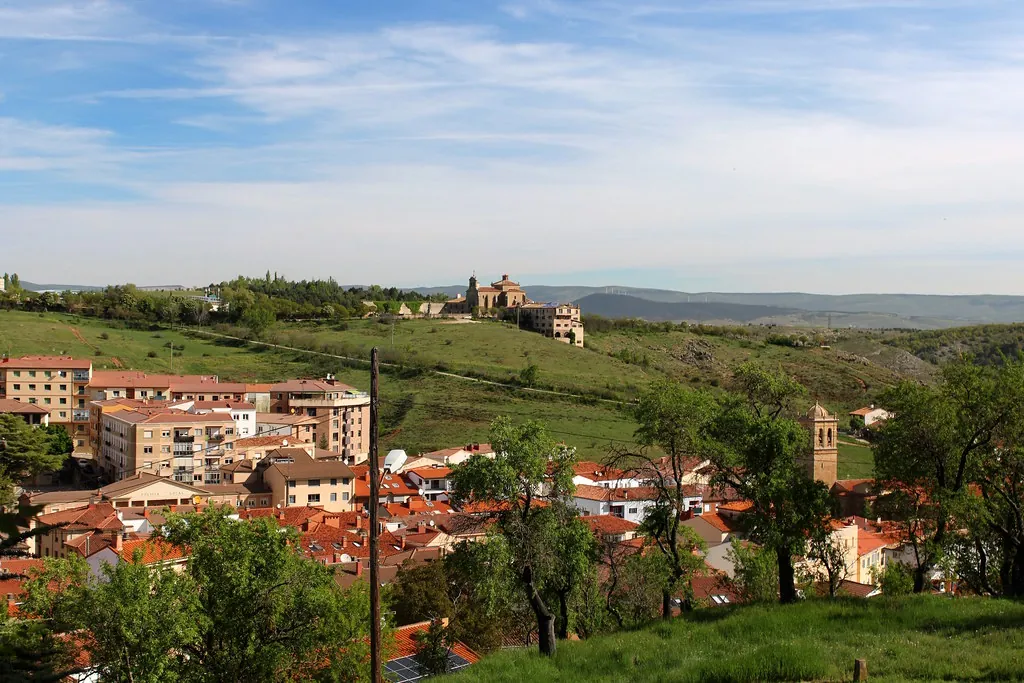
The grain silos stand taller than the church tower in Cayuela. This fact alone tells you most of what you need to know about the village, perched at 912 metres on the northern Castilian plateau. Forty minutes north-east of Burgos, the provincial capital, the landscape shifts from urban sprawl to an ocean of wheat fields punctuated by villages that appear as stone islands on the horizon.
Cayuela's 5,000 residents live at an altitude where winter temperatures regularly drop below freezing, and summer brings relentless sun that bakes the clay soil into patterns resembling alligator skin. The village sits exposed on the meseta, with nothing between it and the Atlantic weather systems that sweep across northern Spain. Wind here isn't a gentle breeze—it's a constant presence that shapes both architecture and daily life, forcing farmers to plant windbreaks of poplar trees along field boundaries.
The Architecture of Necessity
Traditional houses huddle together along narrow streets, their stone walls two feet thick and windows deliberately small. Adobe construction isn't picturesque here—it's practical, using local clay mixed with straw to create walls that breathe during summer heat waves. Many buildings retain their original wooden balconies, though these face south to maximise winter sun rather than for aesthetic reasons. The parish church of San Juan Bautista dominates the skyline with its 16th-century tower, built from the same honey-coloured limestone quarried three kilometres away. Inside, the single nave reflects the pragmatic approach to worship in rural Castile: no elaborate side chapels, just space for the entire community to gather during harvest festivals.
Walking the streets reveals subtle details missed by casual observation. Drainage channels carved into stone doorsteps direct rainwater away from foundations. Iron rings set into walls once tethered mules now replaced by tractors. Even the cemetery follows practical considerations—graves aligned east-west to minimise space, with family plots marked by simple stone crosses rather than elaborate monuments. This is architecture born from centuries of making do, where every element serves a purpose beyond decoration.
Working the Land
The agricultural calendar dictates village rhythm more than any clock. From March through June, fields transform from brown stubble to brilliant green wheat, creating a patchwork visible from the single main road. Local farmers still use the traditional marjada system—dividing fields into narrow strips that follow medieval boundaries, each plot measured in fanegas rather than hectares. Modern combines navigate these ancient divisions, their operators knowing precisely which families own which strips after generations of working the same land.
Harvest arrives suddenly in July. The silence of early morning shatters as machinery starts at dawn, continuing until darkness makes operation dangerous. Dust hangs in the air for weeks, coating everything with a fine layer that turns to mud during August thunderstorms. Visitors during this period should expect limited accommodation—many rooms fill with returning family members who've migrated to cities but return to help with harvest, maintaining connections to land their grandparents farmed.
Autumn brings a different pace. Fields lie bare, revealing the subtle topography hidden beneath crops—gentle undulations that direct rainwater into seasonal streams. Farmers plant next year's crop before November frosts, using seed varieties developed specifically for the meseta's continental climate. These wheat strains mature quickly, racing to complete their cycle before summer drought arrives.
Beyond the Village Limits
Walking tracks radiate from Cayuela in all directions, following cañadas reales—ancient droving routes that once moved sheep between summer and winter pastures. These paths, some dating to Moorish times, remain public rights of way, marked by stone cairns rather than signposts. A four-kilometre circuit eastward leads to abandoned bodegas—cellars dug into hillsides during the 19th century when local wine production briefly flourished. Most stand empty now, their stone entrances slowly collapsing, though a few families still use them for storing cheese made from neighbouring herds.
The landscape appears monotonous initially, but closer inspection reveals complexity. Carrascales—dense thickets of holm oak—provide shelter for red partridge and the elusive Iberian hare. Stone walls harbour ladder snakes and ocellated lizards, while overhead, booted eagles ride thermals rising from sun-baked fields. Spring brings spectacular displays of wild tulips and Saturnia pyri—Europe's largest moth, with wingspans reaching fifteen centimetres.
Night walking offers different rewards. At 912 metres, with no light pollution beyond village streetlights, the Milky Way appears as a distinct river of light. Meteor showers visible in August draw amateur astronomers who set up telescopes in harvested fields, though they should bring warm clothing—even summer nights drop to ten degrees once wind picks up.
Practical Realities
Reaching Cayuela requires private transport. No bus service operates regularly—the twice-weekly market bus from Burgos was cancelled in 2019 due to declining passenger numbers. Car hire from Burgos airport costs approximately £35 daily, with the 40-minute drive straightforward along the A-1 autopista followed by ten kilometres of local road. Parking presents no challenges—village streets accommodate vehicles easily, though narrow sections require care when meeting agricultural machinery.
Accommodation options remain limited. The single hostal offers eight rooms above the main bar, charging €45 nightly including basic breakfast. Rooms face either the street (quieter) or rear courtyard (morning sun but potential noise from delivery vehicles). Book directly—no online presence beyond a Facebook page updated sporadically. Alternative lodging exists in Miranda de Ebro, twenty minutes away, with standard chain hotels and restaurant choices.
Eating requires planning. The village bar serves raciones from 1pm-3:30pm and 8:30pm-11pm, closing entirely on Tuesdays. Expect morcilla de Burgos (blood sausage with rice), queso de Burgos (fresh white cheese), and chorizo from local pigs. Main courses feature lechazo—milk-fed lamb roasted in wood-fired ovens. Vegetarian options extend little beyond tortilla española and tomato salad. Prices remain reasonable—three courses with wine costs under £20, though portions favour those who've spent morning working fields rather than sightseeing.
Weather demands respect whatever the season. Winter brings snow several times yearly, occasionally cutting road access for days. Spring offers the best combination—mild temperatures and green fields—though sudden storms can arrive from the Atlantic with minimal warning. Summer heat proves relentless, with shade scarce outside village centre. Always carry water; the continental climate creates dehydration risks visitors underestimate.
Cayuela offers no grand monuments or orchestrated experiences. Instead, it provides something increasingly rare: a place where daily life continues unchanged by tourism, where farmers discuss rainfall statistics in the bar, and where the landscape reveals its stories to those patient enough to walk slowly and observe carefully. The village rewards visitors seeking understanding rather than entertainment—though achieving that understanding requires effort most aren't prepared to make.