Full Article
about Cebrecos
Ocultar artículo Leer artículo completo
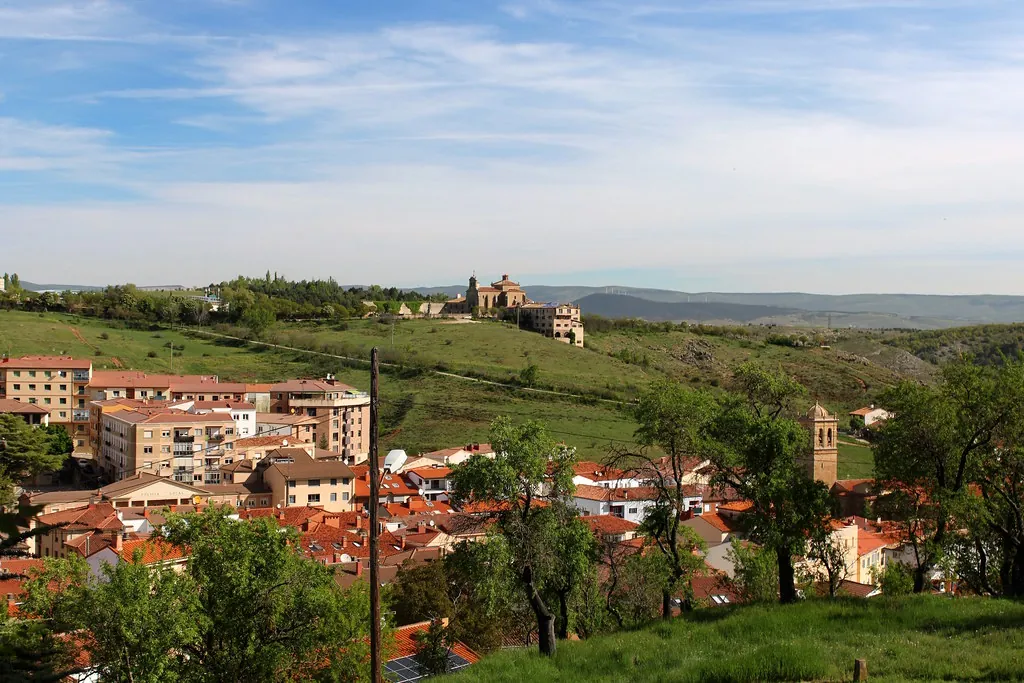
The church bell strikes noon, yet only two tractors and a mongrel acknowledge it. At 965 metres above sea level, Cebrecos floats above the cereal ocean of northern Burgos, small enough—58 residents on the last empadronamiento—that every face is known before lunch and every car is counted by supper. British visitors expecting a plaza bar or even a vending machine will need to recalibrate: the last shop closed in 2003, the nearest cashpoint is fifteen kilometres away, and the only place to buy a stamp is the priest.
What the village does offer is an unfiltered dose of the Castilian interior, the sort Spain itself is fast forgetting. Stone walls rise straight from the earth, their mortar the same ochre as the surrounding wheat; wooden balconies carry geraniums in summer and firewood in winter; and the loudest noise after dark is usually the wind riffling through telecom wires. There is no interpretive centre, no gift shop, no brown sign pointing to a photogenic viewpoint—just the settlement as it has arranged itself for the last eight centuries.
The Architecture of Survival
Start at the top. The parish church of San Andrés squats on the highest knoll, its tower a later addition bricked on to a Romanesque nave. The south doorway still keeps its original tympanum, a weather-worn carving of the saint’s X-shaped cross that once warned off Moorish raiding parties. Inside, the air smells of candle grease and damp stone; the priest unlocks only for Saturday evening mass, but the key hangs next door if you ask politely.
From the church, the village tumbles down two short streets and a stubby alley. Houses are built from whatever the ground yielded: limestone for the corners, adobe for the infill, rye thatch until the 1950s, then corrugated iron. Many still retain their bodegas—cellars scooped horizontally into the hill where families once fermented tempranillo in clay tinajas. Peer through the iron grilles and you can see the jars lined up like炮弹, coated in the white bloom of decades.
The most consistent architectural flourish is the wooden balcony, painted a municipal green so faded it has turned turquoise. In July the balconies explode with scarlet geraniums; by December they hold stacks of oak cut small enough to fit the chimneys. Firewood is serious currency here: ask permission before photographing someone’s pile, because that cord represents three weekends of labour and a frozen back.
Walking the Grain Belt
Cebrecos sits in the crease between the Montes de Ayago and the flat Meseta, which means you can choose your landscape by turning left or right. A five-minute stroll west brings you to the edge of the cereal plateau: kilometre-after-kilometre of wheat, barley and heritage spelt that changes colour like a temperamental teenager—emerald in April, gold in July, sepia stubble by October. The paths are farm tracks rather than waymarked trails; download an offline map before you set off because phone signal vanishes with the first dip.
Turn east and you climb into low sandstone hills threaded with shepherds’ lanes. These drove roads once funnelled merino sheep north to coastal pastures; today they provide a gentle day’s loop through juniper and holm oak, with crests that let you see tomorrow’s weather approaching thirty kilometres early. Griffon vultures cruise the thermals, and if you start at dawn you’ll hear the male bustard’s fog-horn call long before you spot his absurd white whiskers.
Cyclists find the same routes ideal for tempo training: gradients rarely top four per cent, tarmac is smooth, and you can ride for an hour without meeting a lorry. Carry two bidons—there are no fountains between villages—and remember that the altitude exaggerates both sunburn and thirst.
What You’ll Eat (and Where)
The village itself has no restaurant, so self-catering is the default. The nearest supermarket with British comforts is a Mercadona in Belorado, half an hour south on the BU-532; fill the boot with cheddar, baked beans and tonic, then head for the Saturday morning market in Huerta de Rey for local lamb and peppers the size of your fist.
If you want someone else to do the washing-up, drive twelve kilometres to Quintanar de la Sierra. Asador Casa Juan will grill a lechazo (milk-fed lamb) over holm-oak embers until the skin crackles like pork crackling; order media ración for two and you’ll still waddle out. They also do chips, green salad, and waitresses who will happily translate “rare, not cremated”.
Back in Cebrecos, knock on Concha’s door opposite the church. She still makes morcilla the way her mother did—rice, onion, pig’s blood and a whisper of cinnamon—then hangs the sausages in her kitchen for three weeks of wood-smoke. A loop costs two euros, cash only, and she’ll expect you to pronounce “mor-thi-ya” properly before money changes hands.
Calendar of the Almost-Ancient
Fiestas here are less performance, more family reunion. The big weekend is 30 November, San Andrés, when emigrants return from Bilbao, Barcelona and a semi-detached in Swindon. Saturday evening starts with a sung mass that feels like a village meeting—agricultural subsidies are discussed in the homily—followed by a procession carrying the saint’s statue around the single-block circuit. Fireworks are modest: three rockets and a wheel that usually fails to spin. Then everyone squeezes into the multi-purpose hall for cocido, a chickpea stew thick enough to stand a spoon in, lubricated by young red wine served in cereal bowls because glasses run out fast.
Summer brings the verbena of 15 August: one night, one sound system, one bar improvised in somebody’s garage. Dancing starts at midnight and finishes when the generator runs out of diesel, traditionally around 05:30. Bring a jacket; even in August the temperature can drop to 8 °C once the music stops.
Winter Realities
From November to March the village empties further. Snow arrives sporadically—three falls a year is average—but when it comes the BU-532 closes long enough to delay the school bus that shuttles the lone teenager to Aranda. Chains or winter tyres are compulsory; the Guardia Civil check at the junction and fines start at €200. Daytime highs hover around 5 °C, nights sink to –6 °C, and most houses burn a tonne of oak per season. Rental cottages include heating, but the eco-minded should note that the fuel is neither pellet nor heat-pump, but literal logs dragged out of the nearby sierra.
Summer compensates. At 965 m the air stays dry; 30 °C feels like 25 °C on the coast, and dusk brings relief regardless. Mosquitoes are absent, though you may wake to the softer hum of a harvester working under floodlights—wheat doesn’t wait for dawn.
Getting There, Getting Away
The closest airports are Bilbao and Santander, both served by Ryanair from London-Stansted, Manchester and Edinburgh. Hire cars take ninety minutes from Bilbao: A-68 to Miranda de Ebro, then BU-532 through wheat, sunflowers and the occasional wind turbine. Public transport is fiction—no bus, no train, and a taxi from Burgos costs €90—so driving is obligatory. Fill the tank before you leave the motorway; pumps are sparse once the horizon turns horizontal.
Accommodation is scattered outside the village itself. El Rincón del Alfoz sleeps fourteen round a salt-water pool two kilometres down the lane; Complejo Rural El Hortal offers heated stone cottages in neighbouring Huerta de Rey; if you crave a hotel with reception, Valle de Tobalina in Villasana de Mena has English-speaking staff and a translated menu twenty minutes north.
Leave Cebrecos as you found it: quietly. The village neither needs nor markets epiphanies; it simply continues, sowing and harvesting according to a calendar older than any guidebook. Turn the car round at the church, roll down the window, and you’ll still hear the same two things—wind and a tractor—fading behind you until the next traveller arrives, wondering where all the people went.