Full Article
about Ciadoncha
Ocultar artículo Leer artículo completo
The church bell strikes noon and the only other sound is the dry click of a latch as someone disappears behind a wooden gate. No cafés spill onto the pavement, no souvenir racks block the narrow lanes. In Ciadoncha, population five hundred, siesta still means exactly that: a collective pause long enough to hear your own footsteps echo off stone and adobe.
A village that never asked for a bypass
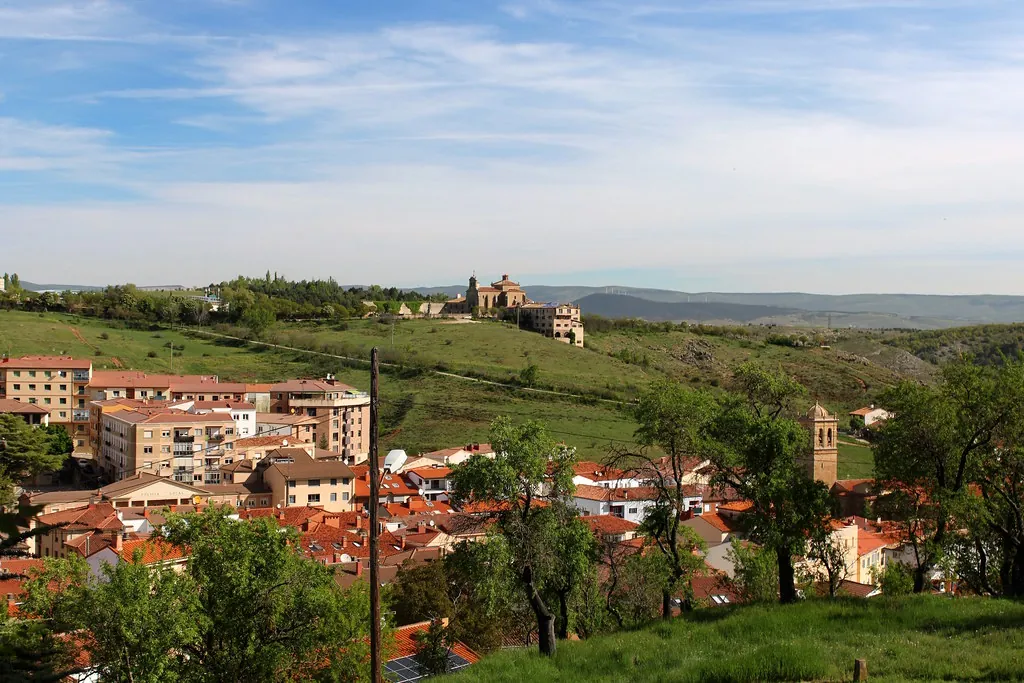
Ciadoncha sits thirty minutes south of Burgos city, close enough to use the provincial capital’s hospital or hypermarket, far enough to have escaped the industrial estates that ring most Spanish towns. The A-1 motorway flashes past to the west; hardly anyone turns off. What you get instead is a grid of sandy-coloured streets that follow the gentle roll of the meseta, the high Castilian plateau. Houses are low, roofs are terracotta, walls are the same limestone that farmers pull from the fields each spring. Nothing is postcard-pretty, yet the coherence is striking: the place looks like itself, not like a set designer’s idea of rural Spain.
There is no centre-ville as the French would understand it. The parish church of San Andrés stands on a slight rise; its square tower, rebuilt in 1890 after a lightning strike, doubles as the local orientation point. Walk fifty paces in any direction and you hit wheat, barley or a stubble field waiting to be ploughed back in. The grain silos you see from the church steps belong to the cooperative in neighbouring Melgar de Fernamental; during harvest the lorries rumble through at dawn, then quietness reasserts itself.
Walking without waymarks
Serious hikers may scoff at the lack of signed trails, yet the surrounding countryside is ideal for anyone content to navigate by hedge line and distant pylon. A spider’s web of farm tracks radiates outwards, graded dirt that stays firm even after rain. Head east and you reach the Arroyo de las Ollas, a seasonal stream where bee-eaters nest in May. Continue for an hour and the plain buckles into a shallow valley; red kites use the updraft, cattle egrets follow the tractors. GPS helps, but the old strategy of keeping the church tower over your left shoulder works just as well for a circular loop of eight kilometres.
Cyclists should bring tyres of at least 32 mm; the surface is too rutted for skinny road bikes and there is no bike shop within 40 km. Mountain bikers can string together 30 km of almost traffic-free riding by linking Ciadoncha with the hamlets of Padilla de Abajo and Soto de Bureba, but carry two tubes—thorns from harvested sunflower stalks are ruthless.
When the kitchen shuts, it really shuts
Food options inside the village are limited to one bakery (opens 07:30–11:00, closes randomly when the flour runs out) and a butcher who doubles as tapas bar on Friday evenings. The nearest proper restaurant is in Melgar, ten minutes by car: Casa Soto, a no-frills dining room that does roast suckling lamb for €22 and will happily sell half portions if you ask. Book ahead at weekends; local families treat Sunday lunch as sacred. For self-caterers, Burgos has a covered market open every morning except Monday—look for the pink-hued lechazo, milk-fed lamb, and piquillo peppers jarred by nuns in the nearby town of Santo Domingo de la Calzada.
Bring coffee. The village houses, however prettily restored, do not come with Nespresso machines. Most still use the two-chamber Italian pot that takes ten minutes on the hob—time, at least, to watch the swallows.
Sleeping under 900 metres of sky
Accommodation is strictly private. “Cuarenta y Ocho Luces” (Forty-Eight Lights) is a former forge converted for up to six guests, thick-walled enough to stay cool when the plateau tops 35 °C in July. Expect exposed stone, underfloor heating, and a roof terrace that delivers unimpeded views of the Milky Way once the lights go off at midnight. It books for around £95 a night, cleaning fee included. Larger groups can rent “La Fragua”, a seventeenth-century manor that sleeps seventeen and costs £580 per night—split between three families it becomes reasonable, and the owners throw in a stack of firewood for the bread oven.
Both properties are arranged through OwnerDirect; payment is in sterling which avoids Spanish bank surcharges, but you will need a hire car to collect supplies first. Mobile coverage is patchy inside the houses; WhatsApp messages reach the host faster than email.
Seasons that bite back
Spring arrives late on the meseta. Farmers sow barley in March while the night temperature can still drop to –3 °C; frost feathers the stone cross outside the church at dawn. By mid-May the wheat is knee-high and the air smells of chamomile crushed under tractor tyres. Summer is dry, often breezy, and surprisingly comfortable at night thanks to the 900 m altitude—no need for air-con, just keep the shutters closed at midday. Autumn brings stubble burning and the occasional thunderstorm that turns dirt roads to glue; October walkers should pack gaiters. Winter is not for softies: the plain funnels Arctic air straight down from the Cantabrian mountains, snow lies for days, and the baker sometimes fails to turn up. Chains or winter tyres are essential if you plan to drive out; the council grater reaches the village last.
Festivals without neon
The main fiesta honouring the Virgen de la Soledad happens over the third weekend of August. Former residents who left for Bilbao or Madrid in the 1970s return with grandchildren and cool-boxes; the population triples overnight. Events unfold in the grain store yard—mass on Saturday, outdoor dancing to a cumbia band shipped in from Burgos, communal paella at 15:00 sharp. Visitors are welcome but there are no wristbands or tourist offices; just buy a €5 ticket for the paella from the lady at the fold-up table. The firework display consists of six rockets set off by the local farmer; health and safety is refreshingly relaxed, so stand up-wind.
If you prefer ecclesiastical calm, come for Semana Santa. On Good Friday the villagers carry a simple birch-wood cross between the church and the cemetery at dusk; no hoods, no marching bands, just absolute silence broken by the crunch of gravel underfoot. Photography is tolerated if you stay at the back.
Parting shot
Ciadoncha will never make a “top ten” list. It offers no souvenir tea-towels, no zip-wire adventure park, no sunset selfie platform. What it does provide is a calibration service for urban clocks: four days here and the evening news begins to feel hysterical. Come armed with supplies, a sense of direction, and a tolerance for the village’s indifference to your schedule. If the church bell is the loudest thing you hear all afternoon, consider the experiment a success.