Full Article
about Cidones
Church of San Miguel;Cuerda del Pozo reservoir
Ocultar artículo Leer artículo completo
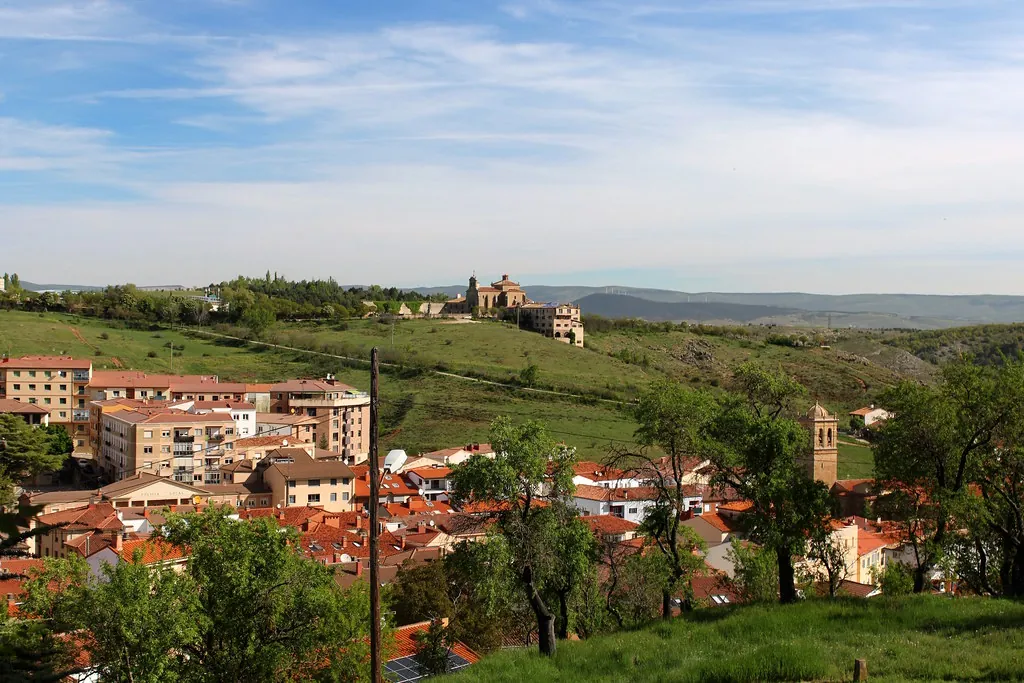
The thermometer reads eight degrees cooler than Soria city, just 35 kilometres down the road. At 1,087 metres above sea level, Cidones sits high enough that mobile phones sometimes lose signal between the stone houses, yet low enough that tractors still rumble through the narrow streets each morning. This is Spain's interior stripped of coastal gloss: a village where wood smoke competes with pine resin in the air, and where the year-round population of roughly three hundred swells to perhaps five hundred when August arrives.
The Arithmetic of Altitude
Winter arrives early at this height. By late October, frost patterns decorate the windscreens of the few cars parked along Calle Mayor. Snow isn't guaranteed every year, but when it comes, the village transforms into something approaching cut-off. The road from Soria—a twisting N-122 that climbs through resin-scented forests—becomes treacherous without winter tyres. Locals stock up accordingly, filling wood stores to last through March.
Summer brings a different calculation. While Madrid swelters at 38°C, Cidones hovers around 26°C. The altitude doesn't just moderate temperature; it changes the quality of light. Photographers arrive with tripods and patience, capturing how evening sun filters through pine needles to create patterns on weathered stone. Morning walkers set out at seven, when dew still clings to wild thyme and the only sounds come from boot soles on packed earth.
The village's position on a south-facing slope matters. It catches enough sun to support modest vegetable gardens—tomatoes ripening against south walls, peppers strung like red flags beneath eaves. Yet turn any corner and the north-facing aspect reveals itself: moss-covered stone, perpetually damp corners where ferns establish footholds in wall crevices.
Stone, Wood and What Happens Between
Cidones grew organically, without planning permission or heritage consultants. Houses cluster around the parish church, its tower visible from kilometres away across pine plantations. Construction follows logic rather than aesthetics: thick stone walls for insulation, wooden balconies for drying washing, chimneys wide enough to handle oak logs that burn slow and hot.
Not everything's picturesque. Half-finished renovations sit next to immaculately restored homes. A tractor parts catalogue flaps against a bar window where locals gather for morning coffee. This isn't a museum piece—it's a working village where building materials arrive on flatbed trucks and where the smell of fresh mortar mingles with century-old wood smoke.
The church interior tells a similar story of adaptation. Medieval foundations support Baroque additions; the bell tower received concrete reinforcement after a storm in 1987. Inside, votive candles flicker beneath a crucifix carved from local pine, while an electric heater hums discreetly beneath wooden pews. Practicality trumps purity every time.
Walking the Boundaries
Footpaths radiate from Cidones like spokes, following ancient routes between villages. The Camino de Berlanga heads east for 12 kilometres through managed forest, emerging at a village with two bars and a weekly market. Southwards, a narrower track drops into the Rio Razuela valley, climbing back past abandoned water mills where stone wheels still turn in flood seasons.
These aren't manicured trails. Waymarking appears sporadically—yellow paint flashes on pine trunks, cairns built by shepherds at junction points. The compensation comes in solitude: walk for an hour and you're unlikely to meet another soul, save perhaps a forest ranger in a white Land Rover. Wildlife shows less caution here. Wild boar root in clearings at dawn; short-toed eagles circle overhead, riding thermals that rise from sun-warmed slopes.
Mushroom season transforms these paths. From late September, locals emerge carrying wicker baskets and walking sticks topped with small knives. They move with purpose, eyes scanning the forest floor for níscalos—golden chanterelles that fetch €30 per kilo in Soria markets. The unwritten code: never ask directly where someone found their haul, though general directions might be offered over cañas in the evening.
The Economics of Staying
Accommodation options remain limited. Posada del Indiano offers eight rooms in a converted merchant's house, its restaurant serving migas—fried breadcrumbs with garlic and chorizo—beneath wooden beams blackened by centuries of smoke. British guests particularly rate the staff's patience with phrase-book Spanish and their willingness to adjust spice levels for northern European palates.
Self-catering alternatives exist. Casa de la Hiedra, two kilometres outside the village, provides a pool and modern kitchen, though you'll need to drive for bread and newspapers. Rental prices fluctuate wildly: €80 per night in February, €180 during August's fiesta week. Book early for mushroom season—photography groups reserve months ahead.
The village's single shop opens erratically. Morning hours depend on when the owner finishes helping her son with livestock. Stock up in Soria: the Mercadona on Avenida Valladolid provides everything from Yorkshire Tea to chorizo worth transporting. Local wine—robust reds from the Ribera del Duero—costs €4-6 per bottle, though asking for "something decent" in the bar usually produces something better for €8.
When the Village Celebrates
Fiesta week arrives mid-August, timed to coincide with the Assumption. The population quadruples as former residents return from Madrid, Barcelona, even London. Streets fill with second-generation migrants speaking perfect Castilian mixed with English slang picked up from construction sites. Temporary bars appear in doorways; someone's cousin arrives with sound equipment for outdoor dancing that continues until the Guardia Civil suggest moderation at 3am.
The religious procession follows a route mapped centuries ago: from church to cemetery gates, acknowledging those who've maintained the village through their absence. Women in black—whether mourning or simply traditional—carry candles despite August heat. Afterwards, wine flows freely though never wildly; these are celebrations of survival rather than excess.
Winter brings different rituals. New Year's Eve happens in the church square, where locals gather with twelve grapes and bottles of cava. At midnight, everyone consumes a grape per bell strike—a Spanish tradition that requires coordination when church bells echo across the valley. Temperatures often drop below freezing; gloves make grape-grasping tricky, adding comedy to ceremony.
The Honest Account
Cidones won't suit everyone. Mobile coverage remains patchy; streaming films requires patience. Winter isolation can feel complete when snow blocks the pass. Summer weekends bring day-trippers whose cars clog narrow streets, their music competing with church bells.
Yet for those seeking Spain's interior rhythms—where lunch happens at 3pm, where neighbours notice unfamiliar cars, where the forest provides dinner as well as scenery—the village offers something increasingly rare. It's a place where altitude affects more than temperature, where human scale still matters, and where the smell of wood smoke signals not romance but survival through another high-mountain winter.
Bring walking boots and a Spanish phrasebook. Leave expectations of picture-postcard perfection at Madrid airport. Cidones rewards those who arrive without agenda, who can appreciate the beauty of function over form, and who understand that real places come with rough edges attached.