Full Article
about Cilleruelo De Abajo
Ocultar artículo Leer artículo completo
Thirty kilometres southwest of Burgos, the A-1 drops off the limestone ridge of the Sierra de la Demanda and levels out onto the cereal ocean of the southern meseta. Exit 135 signs read “Cilleruelo de Abajo – Servicios” and most Britons obey the arrow only long enough for petrol, loo break and a grim coffee that scores 2.1 on TripAdvisor. Few bother to drive the extra four minutes past the BP canopy, past the grain silos, to the village itself. That is the first reason to go.
The village that time (and most drivers) forgot
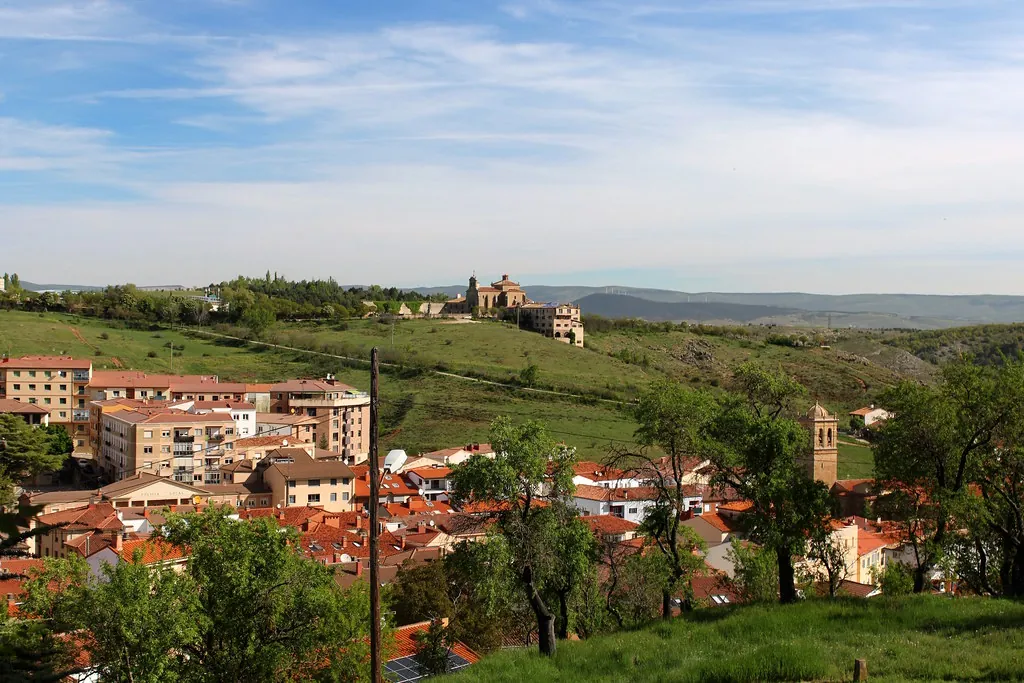
Cilleruelo de Abajo sits at 870 m, high enough for the wind to carry the smell of newly cut barley into the streets even in June. Stone-and-adobe houses, their roofs the colour of burnt toast, line two short grids that end abruptly in wheat. There is no plaza mayor in the guide-book sense, just a widening where the church door faces the only bar. Inside, the counter is laminated 1970s brown, the coffee machine wheezes like an asthmatic dog, and the proprietor will tell you—politely but firmly—that the menú del día finished an hour ago. Order a caña and a bocadillo of local queso de Burgos instead; it costs €3.50 and arrives in under three minutes, which is three times faster than the service area on the motorway and half the price.
The Iglesia de San Andrés presides over this modest scene with the air of a building that has seen every fad from Romanesque to radiator paint. The oldest stones are twelfth-century; the bell-tower is a nineteenth-century afterthought in brick; the porch was closed in 2021 after a lorry clipped the corner. Step inside and the temperature drops ten degrees. There is no ticket desk, no audio guide, only the faint smell of beeswax and the creak of wooden pews that have held the same 200 families for generations. Donations box: €1. Lighting: one €2 coin activates floodlights for five minutes—long enough to notice the Mudéjar trusses and the fresco of Saint Christopher that looks suspiciously like a 1960s repaint.
Walking the meseta without waymarks
Leave the church, turn left at the last house, and the tarmac gives way to a camino of packed clay wide enough for a combine harvester. This is not a signed footpath; it is simply how you get to the next village, three kilometres east. In April the verges are flecked with crimson poppy and the air smells of fennel. By July the earth has cracked into pale hexagons and the only shade is the shadow of your own body. Walk for twenty minutes and the horizon is still level in every direction—Castile’s own brand of vertigo.
Serious hikers can stitch together a 12-kilometre loop that links Cilleruelo with its uphill sibling, Cilleruelo de Arriba, then drops into the Arlanza valley. Gradient: negligible. Drama: zero. What you get instead is skylark song, the mechanical whisper of an irrigation pivot, and the occasional stone winepress carved into the hillside in 1782. Take water: the next fuente is back in the village and the summer thermometer kisses 34 °C by eleven o’clock.
Lamb, bread and the politics of the roast
Castilla y León does not do delicately plated tapas. Order cordero lechal asado for two at Bar El Paraíso (the only full restaurant, open weekends only) and you receive an entire suckling lamb that has been slow-roasted in a wood-fired horno until the ribs resemble antique ivory. Price: €24 per person including patatas panaderas and a bottle of tinto from Aranda. Brits who like their meat pink should specify “poco hecho”; the default here is bien hecho, which means well-done even by English standards.
The village still supports one panadería. Bread emerges at 9 a.m.; by 2 p.m. the slate shelves are bare. If you arrive late, knock at the side door—Marisol the baker will sell you a barra from the cooling rack for €0.90, still too hot to hold. The flour comes from the cooperative silo you drove past on the way in; the wheat travelled three kilometres in a trailer, not 3,000 in a container ship. Taste the difference, then try to find the same loaf in a British supermarket.
When to come, and when to give it a miss
April–mid-June and September–October are the sweet spots. Temperatures sit in the low twenties, the fields are either emerald green or gold stubble, and the village’s 500 permanent residents are joined by roughly 100 returning grandchildren at weekends. Accommodation within Cilleruelo itself does not exist; the nearest beds are:
- Parador de Lerma – 12 km north, duques de Lerma’s palace, doubles £110 including parking.
- La Hacienda de mi Señor – roadside wine-cellar conversion 8 km south, £65, popular with Britons doing the Santander–Madrid slog.
July and August are scorching (40 °C is routine) and the place empties except for the bar television showing looping Tour de España highlights. Winter is another creature entirely. At 870 m, night frosts start in October; January fog can park itself for a week, turning the village into a refrigerated stage set. Snow is rare but ice is not—bring chains if you plan to arrive after dark, because the road from the motorway is untreated.
The honesty clause
Cilleruelo de Abajo will never feature on a souvenir fan. There are no craft shops, no evening paseo of pastel-coloured balconies, no Instagram-ready mirador. The nearest cash machine is in Lerma; the village shop closes between 2 p.m. and 5 p.m. sharp; if the bar owner decides to watch the football, you will eat crisps for supper. What the place does offer is a calibration point for anyone who has begun to suspect that rural Spain ends at the car-park of the last boutique winery. Here the meseta is still worked, not themed; the bread is today’s, the lamb was yesterday’s, and the church door is open because someone forgot to lock it, not because a focus group decided authenticity sells.
Drive back to the A-1, rejoin the stream of Britons heading for the coast, and within ten minutes Cilleruelo de Abajo has sunk below the horizon, indistinguishable from the wheat. That is exactly how the villagers—and the lorry driver who clipped the church—prefer it.