Full Article
about Cilleruelo De Arriba
Ocultar artículo Leer artículo completo
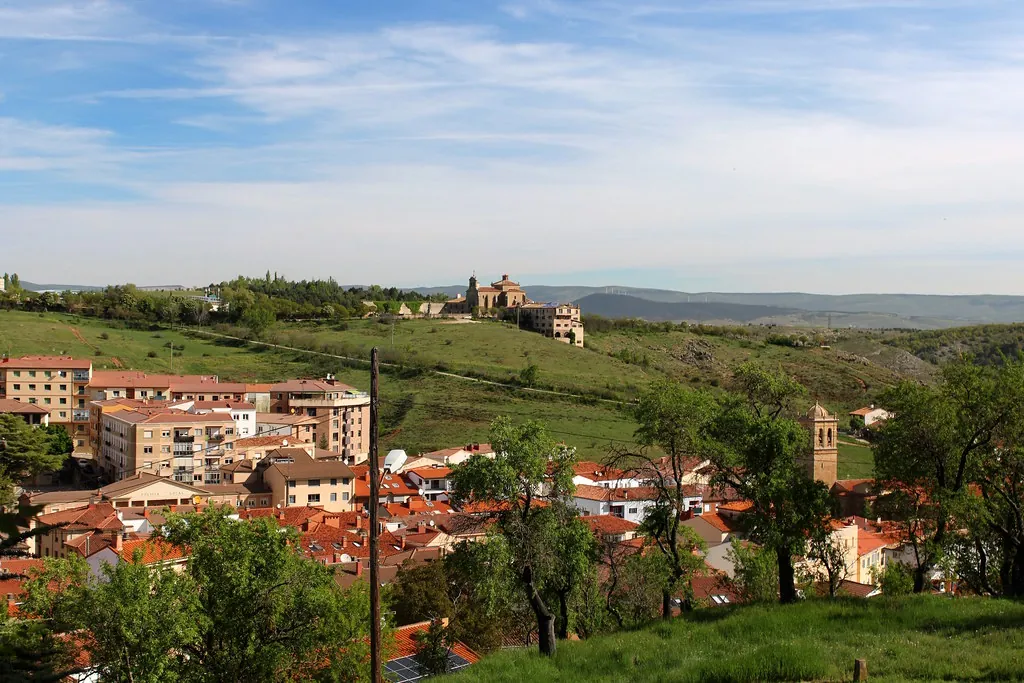
At 966 metres above sea level, Cilleruelo de Arriba sits high enough for the air to carry a noticeable snap, even when Seville is sweltering three hours south. The village name translates roughly as “Upper Granary”, a reminder that every stone house here was once a ledger entry in Castile’s centuries-old wheat account. Stand on the low ridge above the single main street and the view confirms it: a checkboard of cereal plots rolls away in every direction, the colours changing faster than British weather—lime-green after spring rain, burnt gold by July, then a bruised ochre once the combine harvesters have passed.
Sixty-eight residents remain. That is not a rounding error; it is the entire electoral roll. Their houses—whitewashed adobe below, timber balconies above—form a tight U-shape around the 16th-century church of San Pedro. The building looks squat, almost defensive, because it was rebuilt during a decade when bandits still used the surrounding plain as a racetrack. Step inside and the temperature drops another five degrees: thick stone walls, a single nave, and a wooden roof whose beams still carry masons’ marks that predate the Union of the Crowns.
There is no ticket office, no audioguide, and no shop selling fridge magnets. What you do get is the custodian, Don Jerónimo, who will appear with a 1970s key if he sees you loitering by the south door. He speaks no English, but the offer is clear: climb the narrow spiral, emerge onto the roof, and you can see the province of Burgos spill out like a map—field boundaries drawn by dry-stone walls, the occasional cortijo, and, on a clear day, the faint blue silhouette of the Sierra de la Demanda 40 km west. Bring binoculars: the stone stairwell is too narrow to share with a rucksack.
The Plain’s Quiet Calendar
Visitors expecting a programme of events will be disappointed. Apart from the fiestas patronales held around the third weekend of August—when the population quadruples as grandchildren return from Madrid and Barcelona—Cilleruelo keeps its own slow time. Wheat dictates the rhythm. In late May the fields shimmer like liquid under the wind; by mid-June the first headers drone from dawn to dusk; come October the stubble is burned off, and the smell of smoke drifts through the streets for days. Photographers should aim for the “golden hour” that starts just after six in the morning: the low sun sets the straw alight and turns the stone walls peach-pink. At that hour the only soundtrack is a distant tractor and the clink of a milk churn as the solitary dairy lorry does its round.
Walking options are straightforward. A farm track leaves the village at the last lamppost (there are only four) and strikes north for 5 km to the abandoned hamlet of Nava de los Tejados. The path is dead-level, signed only by the twin ruts of a seed drill, and you will share it with crested larks rather than hikers. Midway you pass a stone hut with a tin roof; inside, someone has left plastic chairs and a visitors’ book that records 17 entries in the past year—one couple from Sheffield, one cyclist from Munich, and fourteen Spanish day-trippers. Add your name, close the gate behind you, and remember that the return journey always feels twice as long under the midday sun.
What to Eat When There is Nowhere to Eat
The village bar closed in 2019 when the owner retired. Today, if you want sustenance you have three choices: knock on the door of María Luisa (third house on the left after the church) and ask whether she will fry eggs and chorizo, ring ahead to Asador Tres Cantos in the neighbouring town of Huerta de Rey 12 km away, or pack a picnic. Prices at Tres Cantos are refreshingly un-touristy: a quarter-kilo of roast lamb, chips and a carafe of house Ribera del Duero runs to about €18. If you beg María Luisa’s hospitality, leave a fiver on the dresser; she will pretend to refuse, then pocket it with a grin. Either way, try the local cheese, a raw-milk ewe’s round called “ata” that tastes like a Welsh farmhouse Caerphilly with more salt. Supermarkets in the provincial capital Burgos stock it, but here it comes wrapped in greaseproof paper straight from the shepherd’s fridge.
Getting Up, Getting Stuck, Getting Down
Access is the single biggest caveat. There is no railway, no bus, and no Uber. The nearest useful airport is Madrid, a 2 h 10 min drive on the A-1 autopista followed by 25 minutes of country road. In winter that final stretch can ice over; snow chains are not legally required but hire companies will charge you €8 a day if you want them in the boot. Summer brings the opposite problem: the asphalt softens and the occasional lorry sheds stones that will chip your windscreen. Keep the tank at least half full—petrol stations thin out north of Aranda de Duero, and the village’s single pump dried up years ago.
Accommodation is limited to three self-catering cottages booked through the provincial tourist board. Expect stone floors, wood-burning stoves and Wi-Fi that flickers whenever the wind swings north. Night-time temperatures in April can drop to 4 °C, so pack the same layers you would take to the Peak District in October. Daytime highs in July regularly touch 32 °C; start any walk before eight and finish by eleven, or you will discover why the streets empty after the church bell strikes twelve.
The Honest Verdict
Cilleruelo de Arriba will never feature on a “Top Ten Spanish Villages” list, and that is precisely its appeal. There is nothing to tick off, no souvenir to buy, and the mobile signal vanishes the moment you need to post proof you were here. What you get instead is the meseta in miniature: vast sky, creaking windmills on the horizon, and a silence so complete you can hear your own pulse. Come if you need a reset, if you like the idea of sharing a village with more storks than people, and if you are prepared to travel half a day for the privilege. Otherwise, keep driving south until you reach the coast—just remember that the coast, unlike this ridge-top granary, will never smell of woodsmoke and newly threshed wheat at sunrise.