Full Article
about Ciruelos De Cervera
Ocultar artículo Leer artículo completo
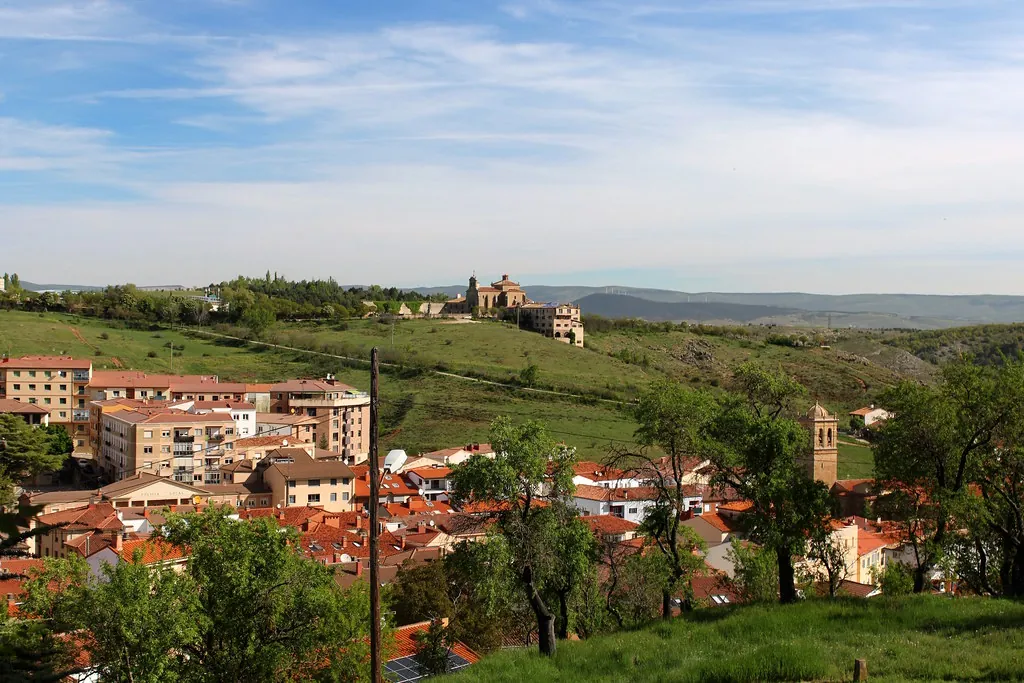
The wheat stops, the sky doesn’t. Stand on the edge of Ciruelos de Cervera and the plateau rolls away like a rough brown ocean until it meets a horizon sharp enough to cut your finger. At 940 m above sea level, the village is only 150 m higher than Birmingham, yet the air feels rinsed, thinner; you can hear car doors slam on the far side of the cereal fields.
This is the Spain that never made it onto the brochure. No coast, no Gaudí, no ski-lifts. Just 130 houses, a stone church, and a population that swells from 90 in winter to 400 for ten days in May when the diaspora returns, hire-cars loaded with grandchildren and multipacks of Estrella.
A village that outlived its own usefulness
Ciruelos grew up around cereal and sheep, then lost both to mechanisation and the pull of Madrid. The façades still wear 18th-century stone, but the ground floors are garages for combine harvesters or locked-up bodegas where grandfathers once trod tempranillo barefoot. Look down: iron grilles in the pavement vent those old cellars, square mouths breathing cool air that smells of earth and extinguished cigarettes. There is no organised “wine route”; if you want to descend you’ll need to knock and ask, probably in Spanish, and accept that most caves are now storage for fencing wire and broken cribs.
The parish church of Nuestra Señora de la Asunción keeps the plaza in proportion. Inside, a 16th-century Flemish retable shows what happens when you mix oak, gold leaf and provincial faith; the colours are surprisingly loud for Castile. Opening hours follow the priest’s asthma rather than any timetable – try 10 a.m. Sunday or listen for the bell that calls the two daily masses. Donations box for roof repairs; 50 c covers the mortar you’re likely to dislodge with the heavy wooden door.
Walking without waymarks
There are no gift shops, so the only thing to buy is a map of the province at the petrol station in Aranda, 28 km south. From the church door, three tarmacked lanes radiate into the plain; take the one signed “Castrillo Mota de Judíos 5 km” and within ten minutes the village is a brown comma behind you. The track is dead straight, used by tractors at dawn, their tyres pressed into the asphalt like dinosaur footprints. Larks, not traffic, provide the soundtrack.
Spring brings colour: green wheat fingers, crimson poppies, and the occasional blob of white – a farmhouse whose occupants left in 1973. Autumn is the photographers’ season, when the stubble glows copper and straw bales sit like rejected sofa rolls. In July the palette burns to beige and the sensible stay indoors between 1 p.m. and 5 p.m.; walks shift to 7 a.m. when the dew still smells of iron and the thermometer hovers at 18 °C.
If you need a destination, aim for the ruined Ermita de San Bartolomé, 3 km north-west. Only the apse stands, propped with scaffolding since 2004; swallows nest where the altar once was. Take water – there is no bar, no fountain, and mobile signal dies with the first slope.
Food that happens by invitation
Public catering is essentially one bar, Restaurante Montero, open Thursday to Sunday and closed without warning if the owner’s daughter has a netball match in Burgos. Order the cordero asado: a quarter lamb, slow-roasted in a wood oven whose aroma drifts across the plaza at 9 a.m. and pulls parishioners out of Mass early. £18 feeds two, £22 if you want chips instead of salad. The wine list is a bottle of Ribera del Duero handed over with the price felt-penned on the cork; they’ll apologise for charging €12 until you realise the same vintage is £28 at Heathrow.
Everything else is domestic. The bakery vanished in 2019, so locals buy bread from the travelling van that beeps its horn at 11 a.m. (Tuesday and Friday). Cheese comes from a shepherd in Fuentespina who parks outside the church on feast days; his queso de oveja is softer than Cheddar, saltier than ricotta, and travels home well wrapped in a sock.
If your visit coincides with the fiestas patronales (first weekend after 1 May), someone will press a polystyrene plate into your hand. Accept. The menu is hornazo – a pie of pork loin, hard-boiled egg and chorizo baked in a hoop the size of a steering wheel – followed by migas, fried breadcrumbs studded with garlic and grapes. You’ll eat standing between tractor wheels while a playlist of 90s Madrid pop bounces off stone walls. Midnight brings a firework that rattles greenhouse panes in Aranda; by 2 a.m. even the teenagers have surrendered to the silence.
How to get here, and why you might turn back
The nearest airport is Madrid-Barajas; ALSA coaches run every hour to Aranda de Duero (1 h 45, €11). From Aranda you have two choices: a pre-booked taxi (€35, WhatsApp +34 600 123 456) or a hire car. The road is perfect tarmac until the final 5 km when it narrows to single-track and pheasants sprint in front of the wheels like incompetent sprinters. In winter the plateau ices over; if the locals leave their cars at the top of the hill and walk down, you should too.
Accommodation is scarce. Casa Rural Los Antiguos Pajares sleeps eight around a hearth big enough to roast an entire choir; £140 a night on Airbnb, minimum two nights, bring your own logs (supermarket in Aranda sells them by the crate). There is no ATM, no petrol station, and the village shop opens 9–11 a.m. except Sunday. Card machines exist, but the owner prefers cash because the terminal “talks too much”.
Phone signal is patchy on Vodafone and non-existent on Three. Download offline maps before you leave Aranda; Google’s blue dot likes to teleport you into a wheat field.
So should you bother?
Ciruelos de Cervera will never be “on the way” to anywhere except perhaps yourself. It offers no adrenaline, no Instagram peak, and the souvenir choice is a fridge magnet of a village that looks like every other village in Castile. What it does provide is a calibration of scale: sky huge, village tiny, human somewhere in between. Come if you want to hear wheat grow, to walk until the only moving thing is a distant header glowing like a match at dusk, to eat lamb that never saw a refrigerated lorry. Leave before you start romanticising depopulation; the place deserves better than pity. Book the car, pack cash, and set your out-of-office to honest: “Gone to where Spain stopped rushing.”