Full Article
about Cubillo Del Campo
Ocultar artículo Leer artículo completo
The church bell strikes noon and nobody appears. Not a café owner arranging chairs, not a shopkeeper flipping the sign to abierto. In Cubillo del Campo the siesta starts early and finishes late, and the only sound between bell strokes is a single tractor grumbling across a horizon so wide it seems to bend the light.
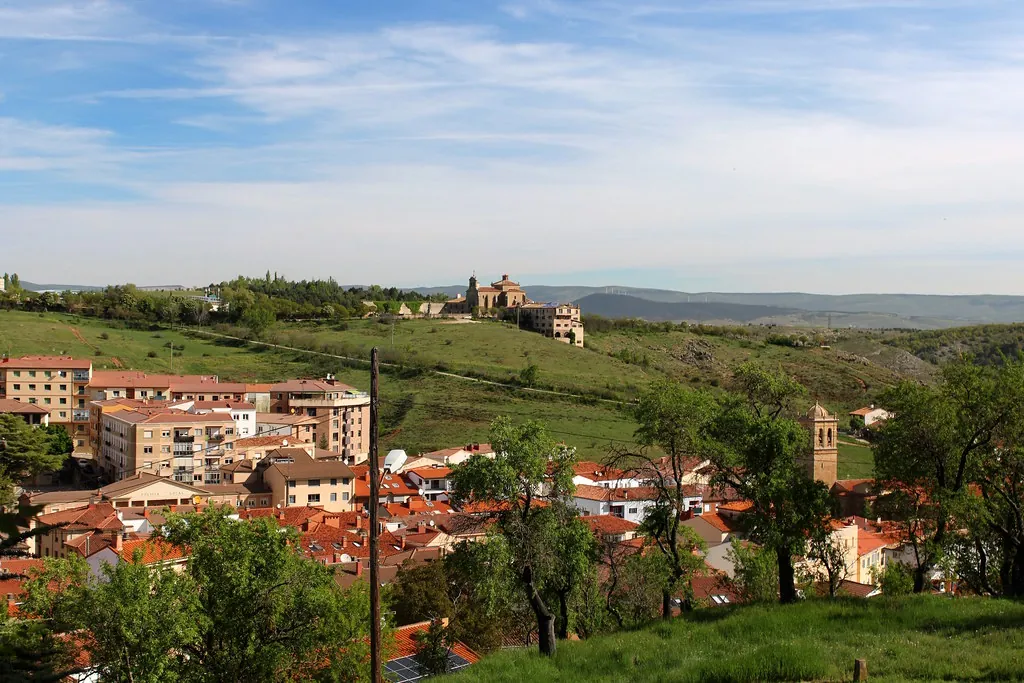
This is the Castilian plateau at its most matter-of-fact: 1,000 metres above sea level, forty minutes south of Burgos city, and a world away from the cathedral coach-tour circuit. The village sits on a gentle swell of land where cereal fields run to every compass point and stone houses the colour of dry earth keep their heads down against the wind. There are no monuments to tick off, no audio guides, no artisan ice-cream parlours. Instead you get space, silence and a lesson in how slowly the clocks used to turn.
Stone, adobe and the smell of rain on wheat
Cubillo’s streets are short and logical, laid out for animals and carts rather than cars. Walk them in ten minutes, then walk them again more slowly. The older façades are built from local limestone mortared with adobe—walls half a metre thick that keep interiors cool in July and surprisingly warm when the plateau’s winter drops to –8 °C. Some have been re-pointed in sharp cement, others slump gracefully under decades of patching. It is architecture without vanity: a house stands, so it is used; when it falls, the beams are salvaged for the neighbour’s shed.
The parish tower rises above the roofs like a compass needle, visible from any approach road. The door is usually locked unless you arrive ten minutes before the Saturday-evening Mass, but the brickwork alone is worth the stop: medieval base, baroque middle, twentieth-century crown each telling its own story of earthquakes, population booms and the slow leak of people towards Valladolid and Madrid.
Keep walking past the last houses and the wheat takes over. Footpaths are signed, after a fashion—white paint on stones, the occasional wooden post—but the real rule is: if you can see the village you haven’t gone too far. In May the fields glow emerald; by mid-July they have turned the colour of toast and the air smells of straw dust and spicy cistus. A dusk circuit of three kilometres brings you back in time for a beer that costs €1.50 in the only bar still keeping regular hours, next to the bakery that opens when the owner wakes up.
Winter lungs, summer furnace
The altitude makes weather here a seasonal drama. From October to April the north wind (the cierzo) can touch 70 km/h and lift the topsoil into ochre clouds. Bring a scarf and moisturiser; the humidity rarely climbs above 35 %. Summer, on the other hand, is a kiln: 32 °C by eleven in the morning, thunderheads that promise but rarely deliver, nights that stay above 20 °C. Spring and autumn are the sweet spots—warm afternoons, cold beers, cool bedrooms under eiderdowns that smell of lavender cupboards.
Driving is straightforward: take the N-234 out of Burgos towards Soria, peel off at the CL-116 signposted Covarrubias, then follow the BU-901 for 12 km. The tarmac is good, the bends gentle, the petrol stations scarce—fill up before you leave the ring road. Public transport exists on Tuesdays and Fridays: a Burgos–Aranda bus that drops you 4 km away at Huerta de Abajo. Carry water; the walk in is flat but shadeless.
Lamb, lentils and the politics of the frying pan
There is no restaurant in Cubillo itself. The bar serves toasted bocadillos of local chorizo and cheese made with sheep’s milk from the next village, but anything more elaborate requires a ten-minute drive. In Huerta de Rey the Asador Casa Paco will sell you a quarter roast lamb (enough for two hungry walkers) for €22, plus patatas and rioja crianza at supermarket prices. Vegetarians should head to Covarrubias where La Posada de Don Manolo does a menú del día with lentil stew and roasted peppers for €14.
If you are self-catering, the bakery’s pan de pueblo keeps for three days and the little tienda in the square stocks tinned beans, tinned tuna and tinned tomatoes—proof that Castilian cuisine was survivalist long before it was fashionable. The nearest supermarket is a Carrefour in Aranda de Duero, 25 km south; ring ahead if you need gluten-free pasta or oat milk because rural shelf space is still stubbornly 1985.
Fiestas that fill the houses people left
The population hovers around seventy in winter and triples during the fiestas of San Roque on the second weekend of August. Then the plaza becomes an open-air kitchen, grandmothers gossip in kitchen chairs dragged into the street, and teenagers who grew up speaking castellano with a Madrid accent try to remember the village songs. There is no programmed coso, no tourist office wristbands, just a procession at dawn, mass with a visiting priest, and a disco that starts at midnight in the sports pavilion and finishes when the generator runs out of diesel.
Come in winter and you will share the silence with hunters waiting for red-legged partridge and elderly men who meet daily at 11 a.m. to play mus (a Basque card game) for cent coins. Snow falls two or three times a year and lingers just long enough to turn the fields into a black-and-white photograph before the sun burns it away. Chains are rarely necessary, but the CL-116 can ice over; if the forecast says cota de nieve 900 m consider staying put with a bottle of tinto and the certain knowledge that tomorrow the sky will be postcard blue.
Where to sleep (and why you might not)
Accommodation inside the village limits itself to two Airbnb houses: the best-reviewed is Cova Caballar, a 150-year-old stone dwelling restored with underfloor heating, original beams and a roof terrace that faces directly into the sunset. It sleeps four from about €90 a night, minimum two nights, and the owner leaves a bottle of local wine on the table—drink it outside and you will understand why Castilians talk to the horizon.
Alternative options cluster in Covarrubias (25 km) where small hotels occupy former noble houses and charge €80–120 for a double including breakfast pastries no one in Cubillo would recognise as bread. Camping is tolerated beside the village deportivo if you ask at the town hall, but there are no showers; the river is seasonal and often dry by July.
The honest verdict
Cubillo del Campo will not change your life. It offers no epiphanies, no Instagram hotspots, no story you can brag about back home. What it does offer is a calibration tool for urban pulses: a place where distance is measured by how far you can walk before the next bell tolls, and where the loudest noise after dark is your own breathing. If that sounds like a waste of a day, stay on the motorway. If it sounds like an antidote, fill the tank and go—just remember to lock the car, not because of crime but because the village dogs have perfected the art of opening doors in search of sandwiches.