Full Article
about Frandovinez
Ocultar artículo Leer artículo completo
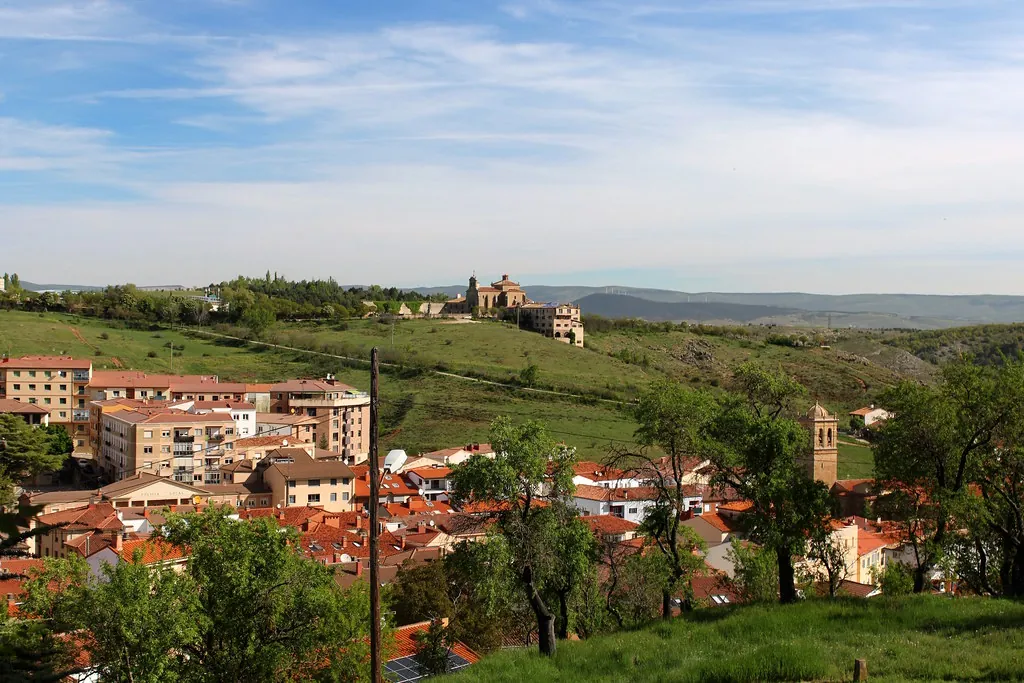
The grain silos appear first, rising like watchtowers above the wheat. Then the church tower, square and unadorned, its bell visible through arched openings. By the time Frandovinez itself comes into view—a cluster of ochre walls on a slight ridge—you've already climbed 900 metres above sea level without noticing the incline. This is the secret of northern Castilla y León: the land lifts so gradually that the village feels higher than it looks, catching breezes that never quite reach the scorching plains below.
At 5,000 souls, Frandovinez sits at the upper limit of what Spaniards still call a pueblo. Size matters here; the bakery stays open year-round, the pharmacy keeps proper hours, and the bar serves coffee from 7 am rather than whenever the owner rolls out of bed. Yet numbers tell only half the story. Walk the main street at 3 pm in August and you'd swear the place abandoned—until a sudden clatter of dominoes spills from an open doorway, revealing half the male population sheltering from the white-hot sun.
The architecture gives little away. Houses are built from the very earth they stand on—mud-brown adobe below, limestone chunks above, all capped with terracotta tiles thick enough to blunt the sharpest hailstone. Nothing dates from later than 1950, not because of preservation orders but because no one saw fit to build anything newer. The effect is neither pretty nor dramatic; instead it's honest, the sort of place where walls have memory and doorways still echo with the scrape of medieval boots.
The Church that Anchors Time
Santa María Magdalena squats at the village centre, its Romanesque gateway the only concession to ornament. Inside, the air smells of beeswax and damp stone, thick enough to slice. The altar cloth was embroidered by eight local women during the 1949 drought—each stitch supposedly accompanied by a prayer for rain. Whether coincidence or divine intervention, the clouds did return that October. Modern visitors drop coins into a box marked "for the roof" though the real problem isn't rain getting in but the meseta wind finding every crack. Restoration proceeds at Castilian pace: one month of work, six months of fundraising, repeat for three decades.
The church's true treasure hides in plain sight. Look up during Sunday mass (11 am, visitors welcome but communion requires Catholic credentials) and you'll see ceiling beams painted with agricultural constellations. Medieval farmers navigated by these same stars; their descendants still plant wheat when Orion hangs vertical in the southern sky. The priest, when present, delivers sermons in a Burgos dialect so thick even Madrilenõs struggle. English speakers shouldn't bother with translation apps—just watch the congregation's faces. When they nod, it's social commentary. When they smile, he's cracked a joke about the mayor.
Walking Where Wheat Meets Sky
Frandovinez sits at the precise point where Spain's central plateau begins its slow fracture into the Cantabrian mountains. Strike out north on the unpaved road past the cemetery and within twenty minutes the wheat gives way to holm oak. Another thirty and you're crossing limestone outcrops where griffon vultures ride thermals above your head. The village provides no maps—these aren't official trails, merely paths farmers use to check boundary stones. But follow any track bearing northeast and you'll hit the Arlanza river within two hours, its banks shaded by poplars that turn butter-yellow in late October.
Summer walkers should start early. By 10 am the temperature can hit 35°C, and shade exists only where clouds deign to cast it. Spring and autumn prove kinder, though sudden storms turn clay paths to grease within minutes. Winter brings its own reward: crisp air that carries sound for miles, and views stretching clear to the Sierra de la Demanda fifty kilometres distant. Just beware the norte wind—when it howls down from the Bay of Biscay, even locals think twice before leaving their kitchens.
The birdlife rewards patience. Little bustards stalk through stubble fields in April, males inflating white neck feathers like cotton wool. Calandra larks pour liquid notes across summer cereal seas. Stay after harvest and you'll witness the great autumn movement: thousands of common cranes riding evening thermals, their bugling calls drifting down from heights where human eyes see only specks. Binoculars help, though the village optician closed in 2008—bring your own.
What Passes for Gastronomy
Don't expect innovation. The bar serves two menus: breakfast and everything else. Morning brings strong coffee with churros made by the owner's wife—she fries them fresh at 8 am sharp, runs out by 9.30. Afternoon options centre on cordero (milk-fed lamb) raised on nearby estates where flocks outnumber people ten to one. A quarter-kilo portion costs €14 and arrives sizzling in its own ceramic dish, accompanied by potatoes cut so thin they shatter. Vegetarian? There's always tortilla, though the cook considers anything less than three eggs per person a dietary fad.
The local wine comes from Aranda de Duero, forty minutes west by car. Order vino tinto and you'll get a young tempranillo poured from an unlabelled bottle. It tastes of iron and cherries, costs €2.50 a glass, and performs the same function here that central heating serves in British pubs—it's not about nuance, it's about maintaining core temperature through long winter evenings when the mercury drops to -8°C.
For self-caterers, the mini-supermarket stocks tinned white beans, morcilla spiced with onions, and cheese made by a cooperative in Covarrubias. The shopkeeper wraps purchases in paper printed with last year's fiesta schedule—recycling taken seriously, or perhaps just evidence that nothing changes very fast.
The Seasonal Equation
Visit in May and you'll find the village at its photographic best. Green wheat ripples like ocean swell, punctuated by blood-red poppies that local farmers consider weeds but artists paint from memory. Temperatures hover around 22°C—still cool enough for walking at noon, warm enough to sit outside the bar without a jacket. The fiesta patronal erupts mid-month: three days of processions, brass bands, and neighbours who haven't spoken since Christmas sharing botas of wine passed hand to hand. Accommodation within the village fills up with returning emigrants from Bilbao and Barcelona; book early or prepare to drive twenty kilometres for a bed.
August belongs to the harvest. Combines work through the night, their headlights carving white tunnels through wheat dust. The bar stays open until 2 am serving brandy to drivers who've been inside cabs since 4 pm. It's atmospheric but deafening—light sleepers should request rooms facing away from the main road. October brings the vendimia grape harvest, though vines here grow for family consumption rather than commercial gain. Join in and you'll spend eight hours snipping fruit under a sun that feels Mediterranean, followed by a dinner where the host's grandmother insists you try her homemade pacharán, a sloe-flavoured liqueur that tastes like liquid Christmas.
Winter strips everything back. Snow falls perhaps twice, melting within hours, but frost lingers all day in shadowed corners. The population halves as retirees flee to warmer coasts. Those remaining light wood stoves at dawn; the smell of burning oak drifts through streets where your footsteps echo like gunshots. It's beautiful in the way abandoned places can be beautiful, though services reduce accordingly. The bakery opens three days a week, the butchers two. Plan accordingly or learn to freeze bread.
Getting There, Getting Away
No train reaches Frandovinez. The nearest station lies at Burgos, 65 kilometres north on the Madrid-Irún line. From there, Alsa buses depart twice daily, winding through cereal monoculture that makes East Anglia look topographically interesting. Journey time: ninety minutes, price €7.40. Hire cars prove more flexible—take the A1 motorway to junction 230, then follow the CL-117 for twelve kilometres. Warning: petrol stations close at 8 pm. Run low and you'll be explaining "sin gasolina" to a farmer who last spoke English during his military service in 1975.
Accommodation options reflect village pragmatism. The casa rural sleeps six across three bedrooms, costs €80 per night minimum two nights, and includes a kitchen equipped with implements last fashionable during Franco's dictatorship. Alternatively, Covarrubias offers two hotels twenty minutes away—useful when local fiestas book every bed within a thirty-kilometre radius. Whatever your choice, pack earplugs. Spanish villages don't do silence—dogs bark at shadows, cockerels confuse streetlights with dawn, and the church bell marks quarters regardless of your REM cycle.
Leave before sunrise at least once. Stand where wheat meets sky and watch the plateau emerge from darkness. First the silos materialise like ship masts, then the church asserts its authority over the horizon. By the time the sun clears the eastern ridge, you'll understand why Castilians measure distance in walking hours rather than kilometres. Frandovinez doesn't seduce; it simply exists, the way mountains exist, or the meseta wind that forgets to blow just often enough to make you notice when it returns.