Full Article
about Fresnillo De Las Duenas
Ocultar artículo Leer artículo completo
The church bell strikes noon and the only other sound is a combine harvester grinding through wheat stubble somewhere beyond the stone houses. In Fresnillo de las Dueñas, population 466, this passes for rush hour.
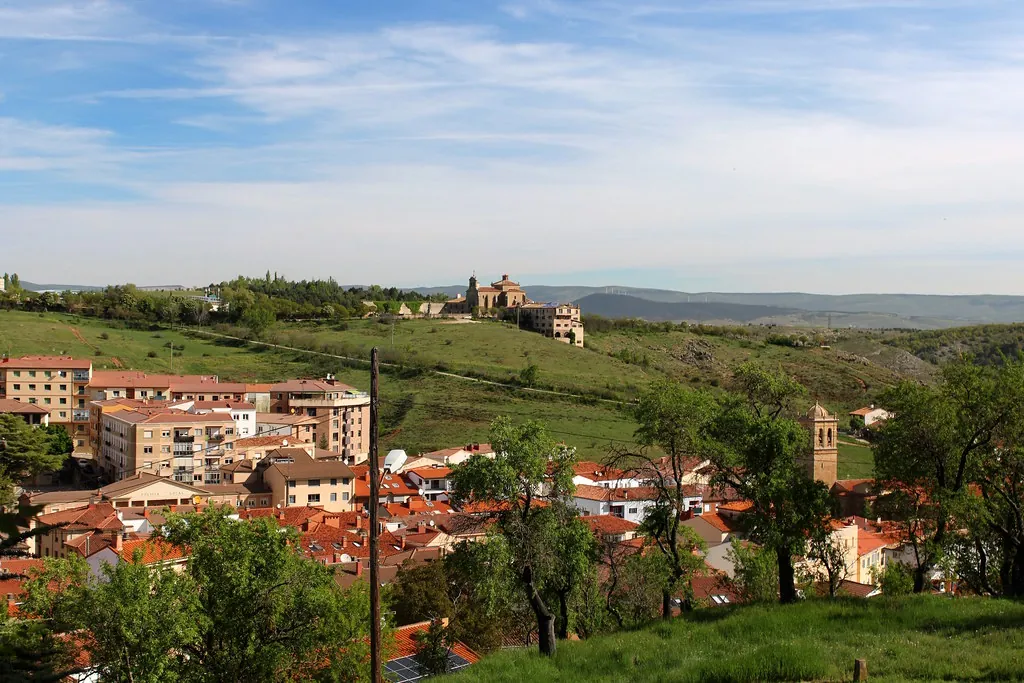
Eight hundred metres above sea level on the northern edge of the Duero basin, the village watches over a sea of cereal fields that flush from emerald in April to biscuit-brown by July. The name—literally "little ash grove of the ladies"—dates to the Middle Ages when the locality belonged to a female religious house, though nothing remains of the nunnery except the memory baked into the place-name. What survives is a working grain village that has never quite got round to repainting itself for visitors.
A village that forgot to renovate
Approach from the BU-11 and the first sight is reassuringly ordinary: a tractor shed, a stack of irrigation pipes, a pair of elderly gentlemen on a bench who pause mid-sentence to follow your car with their eyes. There is no arc de triomphe, no mirador carpark, no boutique hotel occupying the former priest's house. Instead, narrow lanes of ochre stone and timber beams funnel towards the parish church of San Juan Bautista, whose squat tower serves as both spiritual compass and weather vane for anyone bringing sheep in off the surrounding páramo.
Step inside the church and the temperature drops ten degrees. Restoration here has been careful rather than lavish—a 15th-century Gothic arch left in plain stone, a Baroque retablo whose gold leaf stops where the money ran out. The guidebook, if you can find one, is a laminated A4 sheet propped on a chair. Donations go into an envelope taped to the door; nobody checks how much you leave.
Outside again, the village returns to its real business. A woman in overalls throws grain to chickens behind a low wall; a farmer backs a trailer the width of the street while neighbours reposition plastic chairs to let him through. The scene feels half-forgotten rather than staged, and therein lies the appeal. You are not interrupting—just passing through.
Walking country where the sky never ends
Fresnillo sits on the Ruta del Duero, a string of minor villages linked by quiet farm tracks rather than coach parks. From the last houses a gravel lane heads east towards Vadocondes (6.5 km), threading wheat plots and stands of holm oak. The gradient is negligible but distances deceive: what looks like a twenty-minute stroll can swallow an hour once you factor in photo stops, skylark interludes and the realisation that the horizon is still receding.
Early mornings bring hen harriers quartering the stubble; at dusk red kites tilt on thermals above the threshing floors. Bring binoculars and water—there are no kiosks, no vending machines, and shade is whichever oak you can reach before the sun wins.
Cyclists can loop south to Aranda de Duero (5 km) along the old wheat-dray road, returning on the tarmac service lane that follows the Arandilla river. The surface is rough but manageable on 35 mm tyres; road bikes will complain, gravel bikes will feel at home.
What passes for lunch
There is no restaurant in the village. The nearest full menu is in Aranda, twelve minutes by car, where asadores still roast milk-fed lamb in wood-fired brick ovens. If you insist on eating locally, ask at the bar opposite the church before 11 a.m.; the owner sometimes prepares cocido for labourers at harvest time and may sell you a portion by prior arrangement. Otherwise stock up in Aranda's covered market: morcilla de Burgos (rice-black pudding), a triangle of queso de oveja, and a loaf from Hornos San Blas will see you through the day. Expect to pay €8 for enough supplies to feed two.
The village shop opens 9–1 and 5–8, theoretically. Bread arrives Tuesday and Friday; on other days locals drive to the polígono on the outskirts of Aranda where a Mercadona does brisk trade in tractor fuel and baguettes. Plan accordingly.
Heat, cold and the bit in between
At 804 m nights stay cool even in August—pack a fleece for post-sunset card games in the plaza. Winters, conversely, are sharp: minus five is routine, snow arrives overnight and lingers in the shadowed lanes until lunchtime. Spring and autumn give the best compromise of mild afternoons and empty countryside; Easter week is busy only by Fresnillo standards—meaning you might have to share a pew with twenty other people.
Rain is scarce but torrential when it comes. Farm tracks turn to paste within minutes; leave the car on the higher verge and walk the last stretch if black clouds mass over the Sierra de la Demanda.
How to get here without getting lost
Fly into Madrid, collect a hire car, and aim the sat-nav for the A-1 north-west. After 150 km leave at junction 115 for Aranda, then pick up the BU-11 towards Burgos. Fresnillo appears on the right just before the road climbs towards the Montes de Oca; there is no signpost larger than a dinner plate, so believe the odometer and turn when you see the grain silo.
There is no petrol station, no cashpoint, no ticket machine for the faintly optimistic disc-parking zone beside the church. Fill the tank and your wallet in Aranda; the only ATM in the village vanished when the savings bank closed in 2014.
Buses from Madrid stop in Aranda six times daily; from there a local taxi (€18 pre-booked) will run you out to Fresnillo. Do not rely on ride-sharing apps—signal drops to a single bar the moment you leave the dual carriageway.
When the fiesta finally starts
The patronal fiesta honouring the Virgen de la Asunción lands around 15 August. Emigrants return, grandchildren are paraded, and the plaza sprouts a sound system that looks borrowed from a stadium tour. Events begin with a sung mass at noon, proceed to a communal paella for which you must supply your own spoon, and end with dancing until the generator runs out of diesel. Visitors are welcome but not fussed over; buy a raffle ticket for the ham and nobody will ask where you are from.
Any other week the calendar is blank. If you need fireworks or flamenco, Aranda stages a proper medieval fair in early September—close enough to drive, far enough that Fresnillo's dogs won't bark.
Worth the detour?
Fresnillo de las Dueñas offers no souvenir shops, no audio guides, no sunset viewpoints curated for Instagram. What it does provide is a calibration point for anyone worn out by Spain's more strident attractions. Sit on the bench outside the church for half an hour and you will learn the rhythm: tractor out, tractor back, bread delivery, siesta, cards, nightfall. It is not charming—merely real—and the experience lingers longer than another cathedral treasury. Bring patience, sturdy shoes and a sense that travel can still be something you discover rather than purchase.