Full Article
about Fuentecantos
San Miguel Church;Fuentecantos Lagoon
Ocultar artículo Leer artículo completo
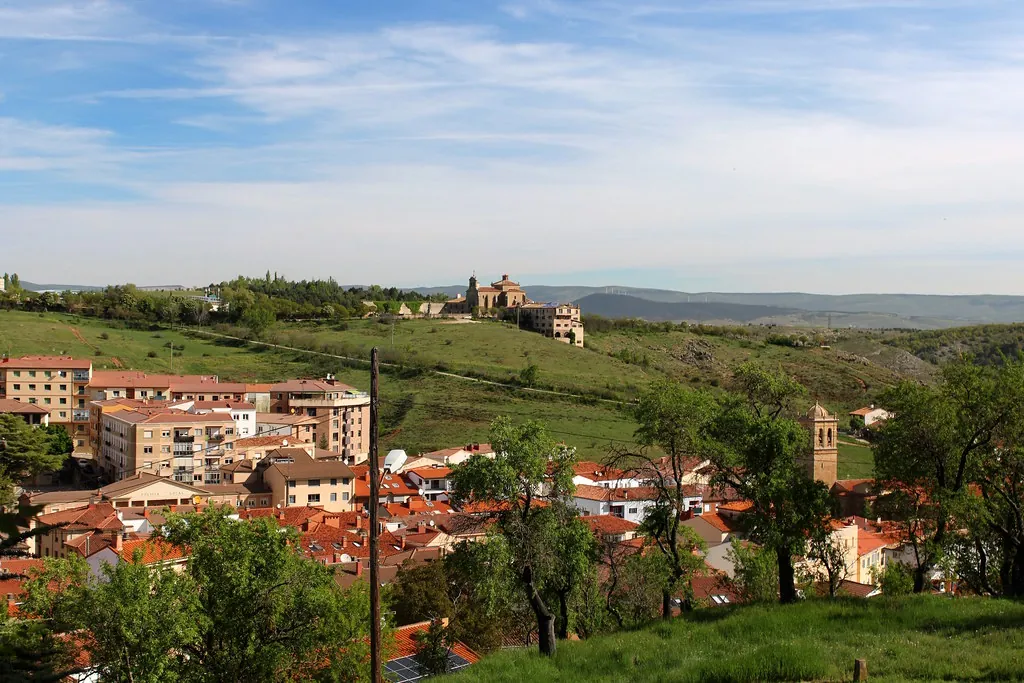
At 1,040 metres above sea level, Fuentecantos sits high enough that the air thins slightly and conversations carry further than you'd expect. The village rises from golden wheat fields like a stone ship adrift on an ocean of cereal crops, its handful of streets arranged around a 16th-century church whose bell still marks time for sixty-five permanent residents and whoever happens to be passing through.
The Arithmetic of Altitude
The maths is simple: every hundred metres climbed from Soria's provincial capital drops the temperature by roughly one degree. When August hits 35°C in the city, Fuentecantos hovers at a more tolerable 28°C. But winter arrives early at this elevation. The first frosts typically appear in mid-October, and snow isn't unusual before December. The road from the N-122 remains passable most winters—gritting crews prioritise this route to larger villages further along—but driving after dark requires caution when temperatures plummet.
Spring brings its own calculations. At 1,000-plus metres, blossom appears three weeks later than Madrid's parks. April mornings often start at 3°C, warming to 18°C by midday. Pack layers, regardless of what the forecast claims. The reward for braving the chill? Walking tracks through fresh green wheat without another soul in sight, save perhaps a farmer checking his crops or a shepherd moving his flock between pastures.
What Passes for Activity
The village's main attraction requires no entry fee, opening hours, or audio guide. It consists of wandering its two principal streets—Calle Real and Calle de la Iglesia—while looking up. The stone houses here weren't built for architectural applause. They're functional structures, their thick walls designed to withstand bitter winters, their Arab tiles angled to shed summer storms. Wooden balconies sag pleasingly with age. Doorways narrow to human width, built before furniture grew bulky and cars arrived.
The church of San Juan Bautista anchors everything, though don't expect to step inside unless you time your visit for Sunday mass at noon. The building's exterior tells its own story: walls patched with different stone types, a bell tower that leans slightly westward, windows resized over centuries as architectural fashions shifted and funds allowed. The plaza fronting it measures exactly forty-three paces across—someone counted during a particularly slow afternoon—and serves as the village's living room, playground, and meeting hall.
Three marked walking routes depart from the plaza's edge. The shortest, a 45-minute circuit to the abandoned hamlet of Villanueva, offers gentle gradients suitable for most fitness levels. The longest, a 12-kilometre loop through holm oak dehesas to neighbouring Calatañazor, demands sturdier footwear and a basic sense of direction. Mobile signal drops out after the first kilometre—download offline maps before setting off. None of the routes qualify as hiking in the Alpine sense. They're agricultural tracks used by farmers, not mountain goats. Which makes them perfect for walkers who prefer their countryside served straight, without dramatic peaks or manufactured viewpoints.
The Seasonal Economy
Fuentecantos contains zero shops, bars, or restaurants. This isn't an oversight—it's reality for many Spanish villages this size. The last grocer closed in 1998 when its proprietor retired at 82. These days, residents drive fifteen kilometres to Soria for weekly shopping, or wait for the mobile supermarket that visits every Tuesday at 11:30. The white van pulls into the plaza for exactly forty-five minutes, selling basics at prices that reflect the convenience: milk costs €1.20 compared to 85 cents in town.
Accommodation follows a similar pattern. No hotels operate within the village boundaries. Two houses offer rural rentals, both converted by families whose children moved to cities for work. Casa de la Plaza sleeps four and costs €80 per night minimum two nights. The smaller Casa del Panadero accommodates two at €60. Both include heating—essential October through April—and kitchens stocked with basics like olive oil, salt, and coffee. Booking requires Spanish language skills or patience with Google Translate; neither owner speaks English, though they're adept at communicating through gestures and goodwill.
When the Village Wakes
August transforms everything. The fiesta patronal, held around the 15th, swells the population to perhaps 400 as former residents return. Suddenly the silent plaza fills with folding tables, the church bells ring more frequently, and someone's uncle grills sardines over coals until 3am. It's the worst time to visit if you seek solitude. It's the best time to understand how Spanish villages actually function—as networks of obligation and affection that geography can't dissolve.
The fiesta's programme varies yearly but follows predictable rhythms. Morning mass draws the faithful and the nostalgic. Afternoon brings a paella cooked in a pan two metres wide, feeding anyone who queues with plate in hand. Evening features a brass band whose volume compensates for technical limitations. At night, teenagers who've spent the year in Madrid or Barcelona reclaim their childhood square while grandparents pretend to disapprove. By August 18th, silence returns. The plaza empties. Normal service resumes.
Practical Considerations
Getting here requires either a car or considerable determination. No public transport serves Fuentecantos directly. The nearest bus stop lies six kilometres away at the junction with the N-122, where two daily services connect Soria with nearby towns. From there, it's a hot walk with no pavement. Hiring wheels in Soria makes more sense—daily rates start around €40 for a basic Fiat 500.
Fill your tank before leaving the city. The closest petrol station stands fifteen kilometres away, and it closes Sundays. Similarly, cash machines require a 20-kilometre drive to El Burgo de Osma. The village's single ATM disappeared in 2010 when the bank decided profits didn't justify its existence. Bring euros, preferably in small denominations. The mobile supermarket doesn't accept cards.
Weather demands respect at this altitude. Summer sun burns stronger than sea-level logic suggests—SPF 30 minimum. Spring and autumn deliver perfect walking conditions but pack a waterproof; mountain weather changes quickly. Winter visits require proper coats and footwear. The village looks magical under snow, but icy cobbles demand sensible shoes and steady nerves.
The Value of Nothing
Fuentecantos won't suit everyone. Those seeking Michelin stars, boutique shopping, or nightlife beyond star-gazing should continue elsewhere. The village offers instead what increasingly rare: permission to do nothing in particular without feeling inadequate about it. Sit on the church steps as shadows lengthen across stone walls warmed by day's heat. Listen to swallows nesting under ancient eaves. Watch wheat fields shimmer like liquid gold in evening breeze.
Time moves differently here. Not backwards, exactly, but at an angle to modern urgency. The church bell still rings for deaths and weddings. Farmers still judge weather by cloud formations their fathers taught them. Neighbours still know whose grandfather planted which olive tree, and why that matters. These aren't museum displays but living continuities, increasingly precious in a world that prizes novelty above all.
Come for the silence. Stay for the realisation that silence contains multitudes—sheep bells, distant tractors, conversations drifting across narrow streets, your own thoughts finally audible above digital noise. Leave when you must, carrying the peculiar lightness that accompanies places asking nothing of you except presence.