Full Article
about Fuentelisendo
Ocultar artículo Leer artículo completo
The stone fountain in Fuentelisendo’s single plaza still runs winter and summer, pushing up water that’s cold enough to numb your fingers even when the meseta is baking at 35 °C. No one is quite sure how deep the spring goes; villagers just call it la fuente and fill plastic jugs for the week’s drinking water because it tastes better than the tap. Stand there long enough—say, the length of time it takes to drink a coffee in Aranda de Duero twenty kilometres north—and you will have met half the parish.
A Plateau that Breathes at 900 m
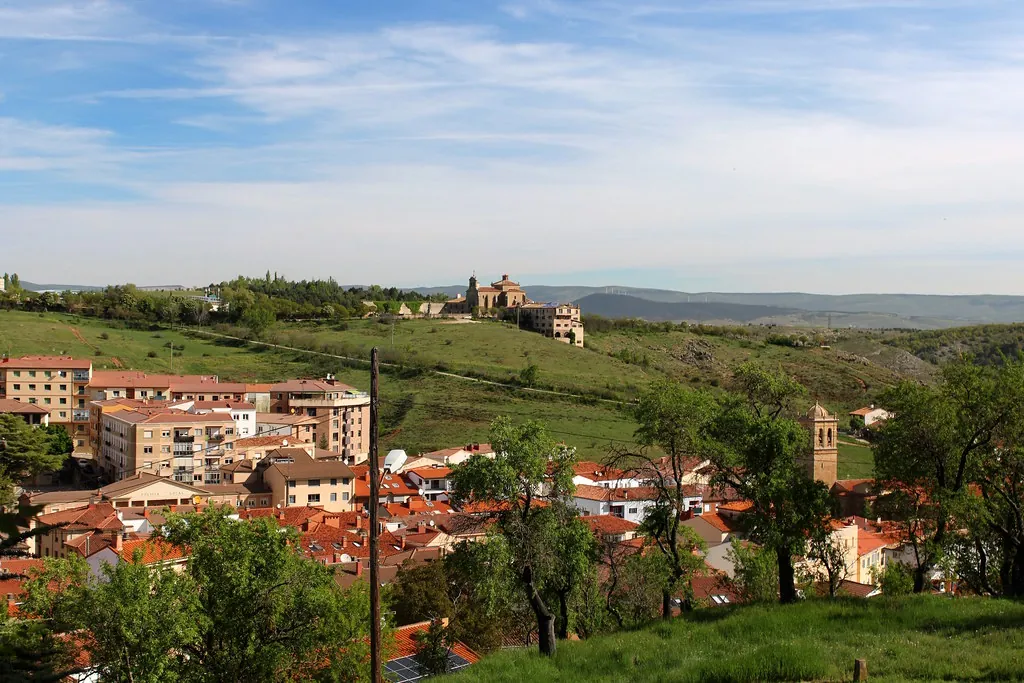
Fuentelisendo sits at 930 m on the southern rim of Burgos province, high enough for the air to feel thin the first morning if you’ve flown in from sea-level Britain. The surrounding wheat ocean is not flat; low whale-backs of limestone break the horizon and every track eventually climbs one of them, giving views that stretch to the snow-striped peaks of the Sierra de la Demanda on a clear February day. Altitude also means the thermometer can drop 15 °C after sunset even in July—pack a fleece whatever the month—and that the village is often above the fog that pools in the Duero valley, so dawn starts golden rather than grey.
Winter access is straightforward if you rent a car with decent tyres: the BU-11 from Aranda is kept open for the grain lorries, but the last 4 km are unlit and deer wander at dusk. In heavy snow the council grades the road by 9 a.m., yet school buses still get through when Madrid airport is closed. Summer is easier, though the same emptiness that makes star-gazing spectacular means there is no street lighting; download the Michelin offline map because mobile data vanishes between hedgerows of rock-rose and juniper.
Adobe, Oak Beams and Subterranean Wine
Most houses are built from the ground they stand on: ochre adobe blocks the colour of digestive biscuits, trimmed with hand-split oak that has turned black with age. Rooflines sit low, the better to shrug off the cierzo wind that barrels across the plateau. Notice the wooden grilles halfway up many façades—ventilation hatches for the bodegas scooped out underneath. Until the 1970s families pressed grapes here; now the cool 12 °C caves store bicycles and homemade morcilla. Number 14 Calle de la Iglesia keeps its original stone treading trough; if the owner is watering geraniums he will lift the trapdoor and show you, but conversation is in rapid Castilian and he stops when his English runs out.
The parish church of San Pedro is open only for Saturday-evening mass. Push the heavy door and you step into a single nave that smells of candle wax and grain dust; the altar cloth was embroidered by the same ladies who sell lottery tickets outside the bakery. There is no ticket desk, no audio guide, just a printed sheet that says the Romanesque apse was rebuilt after a lightning fire in 1782. Donations go to the roof fund; the box accepts euros, but if all you have is a twenty the sacristan will chase you down the aisle with change.
Walking the Grain Sea
Leave the plaza by the signed sendero at the cemetery gate and you are on the GR-14, the long-distance footpath that links Segovia with Miranda de Ebro. For a two-hour circuit ignore the red-and-white stripes and simply keep the village on your left; within ten minutes wheat gives way to carrasca holm oaks where hoopoes flop across the path. The limestone track is stony—proper boots rather than trainers—yet gradients are gentle enough for anyone who can manage the Lake District’s easier fells. Mid-April brings a carpet of purple limonium and the air smells faintly of thyme and diesel from a distant tractor. You will meet no one, but a string of concrete posts marks where Franco’s government planned a reservoir that never filled; farmers still cut hay around them.
Serious hikers can continue south to the ruins of the medieval village of Rebolledo, abandoned after the 14th-century plagues; add another 90 minutes and a 250 m climb. Take water—there are no cafés, and the only bar in Fuentelisendo opens unpredictably when the owner returns from the fields.
Eating What the Fields Provide
Food is lunchtime only and cooked by mothers who have never heard of TripAdvisor. The Asador Casa Ramón in nearby Tubilla del Agua (12 km) does lechazo—milk-fed lamb roasted in a wood-fired clay oven—at weekends. A quarter portion (€18 pp) is plenty for two Brits and arrives with a simple lettuce salad dressed in olive oil sharp enough to make your tongue tingle. Order the local Torrederos Roble (€9 a bottle) made from Tempranillo grown on chalk; the winery will let you fill an empty plastic five-litre bottle for €12 if you ring first on +34 947 532 627. Vegetarians are stuck with judiones—fat white beans stewed with paprika—yet the portion is large enough to count as supper back at the cottage.
Fuentelisendo itself has no restaurant, but the bakery (open 08:00–11:00 except Monday) sells empanadillas stuffed with tuna and piquillo pepper for €1.50; buy two and you have picnic rations. There is no cash machine—bring euros in Aranda or you will be washing plates.
When the Village Remembers Itself
Visit in late August for the fiestas of San Bartolomé and you will wonder where the silence went. Emigrants return from Madrid and Barcelona, the plaza fills with folding tables, and a sound system plays 90s Spanish pop until the Guardia Civil remind the councillor about noise limits. The high point is the quema de rastrojos, a controlled stubble fire on the edge of town; children chase sparks while grandparents compare rainfall figures. Accommodation trebles in Aranda, so book early or time your trip for the quieter Romería of 15 May, when half the village walks 5 km to a field chapel and returns for almond cake and sweet moscatel.
Practicalities Without the Brochure Speak
Fly Ryanair Stansted–Valladolid (1 h 50 min), pick up a hire car and drive 55 min on the A-11. Alternatively take the weekday AVE to Valladolid-Campo Grande (2 h 15 min from Madrid) and rent wheels there. Trains reach Aranda de Duero every two hours from Madrid Chamartín; buses onwards to Fuentelisendo do not exist, so a taxi costs €25—book through your hotel the night before.
Stay in Aranda if you want dinner after 21:30: Alojamiento Mirabuenos has EV chargers and stone-walled rooms from €70. Casa Ribera Maya 15 km south offers a pool and self-catering for families. Petrolheads should note the village pump closes at 19:00 and only sells 95-octane; diesel is cheaper in Aranda anyway.
Leave the tripod at home—wind gusts can topple even carbon fibre—and pack a refillable bottle. The fountain water is potable, and every plastic jug you don’t buy is one less piece of rubbish on the plateau. Fuentelisendo will not change your life, but it might recalibrate your ears: by the second night you will hear the wheat grow, and that is soundtrack enough.