Full Article
about Fuentemolinos
Ocultar artículo Leer artículo completo
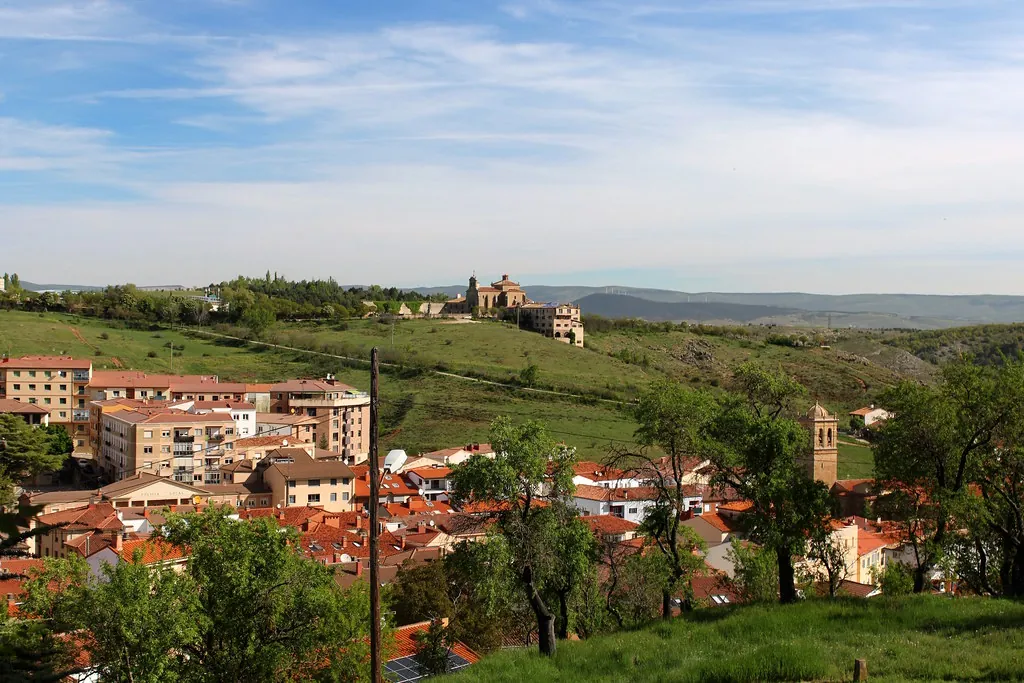
The first thing you notice is the silence after you switch the engine off. No gulls, no surf, just a faint ticking from the cooling hire-car and the dry rustle of wheat stubble in the breeze. Fuentemolinos sits on a slight rise above the northern Meseta, 940 m up, and the horizon is so wide you can watch weather systems argue miles before they reach you. The village name translates roughly as “Mill Springs”, though the mills have gone and the springs now run underground—straight into a limestone labyrinth that happens to be the sixth-largest cave network on the planet.
A hole in the ground that dwarfs the village
Ojo Guareña, the proper name for the karst, begins literally at the back edge of town. A five-minute walk down a farm track brings you to a metal gate and a cool breath of air that smells of wet rock and ferns. Inside, three storeys of galleries, chimneys and an underground river have been opened for guided visits. The standard 90-minute circuit drops you 35 m below the pasture, then zig-zags along gangways bolted to 100-million-year-old conglomerate. You cross a footbridge where the river Turca has carved a canyon the height of a church nave; the guide switches the lights off for thirty seconds and the darkness feels like a weight. Hard-hats are compulsory—not for show, but because the ceiling weeps flakes the size of digestive biscuits. Temperature holds at 7 °C year-round; a decent fleece is more use than the usual Spanish sun-lotion.
Only two public tours leave each day outside July and August, and the booking line still prefers Spanish. Call +34 947 130 015 or wrestle with the provincial tourism site; if the morning slot is full, the afternoon group usually has space because coach parties from Burgos city have to be back for the 17:00 school run. Tuesdays and Thursdays are worst; aim for a Wednesday if you want the cavern more or less to yourself.
Streets built for winter wind
Back in daylight, the village itself is a textbook example of Castilian practicality. Stone houses shoulder together, doorways just wide enough for a mule and a hay-cart. Plaster is left the colour of oatmeal; woodwork is painted the same green you see on every rural church bench in Spain. There are no boutique hotels, only three self-catering casas rurales booked by word of mouth. The council tourist office (open Tue–Thu 10:00–14:00, Fri–Sun also 17:00–19:00) hands out a hand-drawn map that fits on one side of A4 and doubles as a beer mat.
The 16th-century church of San Juan Bautista squats at the highest point, its tower doubled as a granary during the Civil War. Inside, the altarpiece is a no-nonsense job in gilded pine—no ivory, no marble, just what the parish could afford after the 1755 Lisbon earthquake shook half the roof down. Services are still announced by a bell that cracked in 1937; the note is flat enough to make any British campanologist wince.
Walking tracks that follow medieval drovers
Fuentemolinos works best as a base for short, wind-lashed walks across the cereal plateau. A 7 km loop north-east reaches the deserted hamlet of Corullón, where storks nest on a roofless chapel and the only sound is your boots on gravel. Another path, way-marked with yellow paint dots, heads south to the Arlanza river across wheat and chickpea fields. In late April the soil smells of rain and germinating grain; by July everything has faded to the colour of digestive biscuits again. There is no shade—take water, a hat and factor 30 even if the sky looks hazy. Birds are the main entertainment: great bustards stomp through stubble like feathered dustbins, and lesser kestrels hover overhead waiting for grasshoppers.
Food that sticks to your ribs
The village bar, Casa Juana, opens at 07:00 for farmers and closes when the last customer leaves. Breakfast is a brandy-sized pour of coffee with a slab of sobao pasiego, a buttery sponge that tastes like Madeira cake left in the sun. Lunch is whatever Juana’s mother feels like cooking—usually olla podrida, a chickpea and pork stew thick enough to stand a spoon in. Vegetarians get a version with spinach and egg, but this is still Castile: expect ham stock. Wine is DO Arlanza, younger and fruitier than neighbouring Rioja, sold by the glass for €1.80. If you need a menu in English you are, frankly, in the wrong place.
The nearest proper restaurant is in Covarrubias, 18 km north. Restaurante Tiki (ignore the name) does a grilled lechazo—milk-fed lamb—served in an earthenware dish that fits exactly one rack. Portions are sized for two; a half-order is perfectly acceptable and still defeats most appetites. Book ahead at weekends; Spanish families drive over from Burgos for Sunday lunch.
When to come, and when to stay away
Spring and autumn give you green fields, daylight until 20:30 and daytime highs of 18–22 °C. Nights drop to 5 °C even in May—pack a jumper. August is hot, dry and dusty; midday hits 34 °C and the cave tour feels like stepping into a fridge. Winter brings proper frost and the occasional dusting of snow; roads are gritted promptly but the secondary approach from the N-234 can ice over before dawn. If the forecast says “cota de nieve 900 m”, assume the village will be white by breakfast.
Fiestas happen in mid-July, when ex-pats return and the population triples. There is a foam party in the plaza, a procession with a brass band that only knows four tunes, and a communal paella cooked in a pan the size of a satellite dish. It’s fun if you like your Spain loud; if you came for the silence, book the week before.
How to get here without getting lost
From the UK, fly to Bilbao or Santander, then drive south for two hours on the A-67 and A-1. Ignore the sat-nav shortcut through the Montes de Oca—single-track, no barriers, and local truck drivers treat it as a rally stage. From Madrid, allow three hours on the A-1 to Burgos, then 55 minutes east on the CL-116 and local BU-532. The last 12 km twist between wheat fields; mobile data dies at the junction with the village access road, so download offline maps before you leave the motorway. Petrol is 8 c cheaper per litre in Burgos city than on the autopista—fill up.
No public transport reaches Fuentemolinos. The closest bus stop is in Huerta de Rey, 14 km away, with one south-bound service a day at 06:45. A taxi from there costs €25 if you can persuade the driver to leave his coffee.
Leave the car in the signed square at the top of the village; parking is free but don’t block the grain lorries—they start work at 05:30 and have been known to fold wing mirrors inwards. Everything worth seeing is within a ten-minute walk, including the cave entrance. Heels are pointless; even the church nave is cobbled.
Worth it?
If your idea of Spain is sangria on a beach, give Fuentemolinos a miss. If you want to see how a handful of families still coax a living from 300 hectares of wheat, and you don’t mind sharing the night sky with more bats than bars, the village delivers. Come for the cave, stay for the sobremesa— that Spanish habit of sitting on after lunch until the conversation runs dry. Just don’t expect Wi-Fi to keep up.