Full Article
about Fuentenebro
Ocultar artículo Leer artículo completo
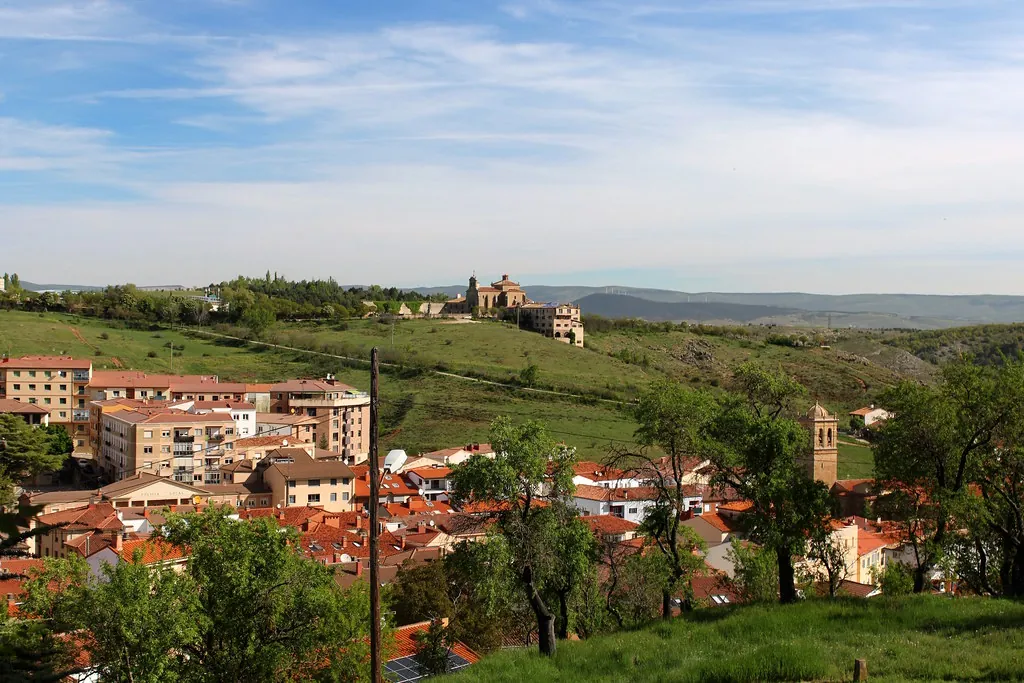
The church bells stop at eleven. After that you hear only the wind combing through cereal stubble and, if you’re lucky, a hoopoe calling from the walnut tree behind the stone houses. Fuentenebro sits at 840 m on the southern rim of Burgos province, exactly where the high plateaux of Castilla begin their tumble towards the Duero valley. The village is small—139 permanent souls—and the altitude means nights stay cool even when Madrid swelters 150 km to the south. Bring a fleece in July; you’ll still need it after sunset.
A Plateau Edge That Feels Like the World’s Lip
Drive south from Aranda de Duero on the BU-901 and the land starts to sheer away on your right. Peñacuerno mountain (“Horse-Shoe Peak”) rears up across the frontier with Segovia, its limestone face catching the late light like wet concrete. Fuentenebro is the last place before the road tips over the edge, which explains why every house seems to lean backwards, bracing itself against the wind that scours the ridge most afternoons. The horizon is huge—wheat, barley and strips of tempranillo vine stitched together with stone walls no higher than your knee. In May the fields glow acid-green; by late July they have bleached to biscuit brown and the air smells of dry straw. There are no hedgerows, no gentle English contours, just a ruler-straight skyline and the sense that you might fall off if you walk too far.
The village itself is a single funnel of lanes that converge on the fifteenth-century parish church of San Juan Bautista. The tower is short and square, more fortress than bell-tower, built for villagers to scramble up if bandits rode in from the meseta. Inside, the air smells of candle wax and damp stone; the altarpiece is nineteenth-century, gilded but restrained, the colours of a fox’s coat. No one will hurry you out—if the door is locked, knock at the house opposite and the key arrives within minutes, carried by whoever happens to be in the kitchen.
Wine Cellars Under Your Feet, Tractors in Your Ears
Fuentenebro’s name translates roughly as “Dark Fountain”, a reminder that water has always been hoarded here. Look for the small brass plaques set into the pavement—they mark the old public fountains, now dry. More interesting are the bodegas subterráneas, family wine caves dug horizontally into the hillside south of the church. From the lane you see only ochre vents poking through the earth like periscopes; descend the rough steps and the temperature drops ten degrees. Most are private, their oak barrels stamped with the owner’s initials, but the Ruiz family will open theirs if you phone the day before (€5 donation, tasting included). The wine is young tempranillo, bottled without fuss—juicy, slightly tarry, nothing like the polished Riojas on British shelves. Buy a litre for €2.50 and they rinse out a plastic water bottle to carry it in.
Walking options radiate along the farm tracks. Head east on the gravel lane sign-posted “Valdearcos” and you drop 200 m in 4 km to an abandoned railway that once hauled sugar beet to Valladolid. The sleepers are gone, leaving a perfect flat path through three tunnels; torch essential, echo guaranteed. For a shorter loop, follow the ridge north-west to the ermita de San Roque (2 km). The chapel is locked but the stone bench outside lines up perfectly with Peñacuerno’s tooth—bring coffee, sit, listen to skylarks. You will meet tractors, not hikers; wave and they wave back, surprised to see legs instead of wheels.
Where to Eat and Why Monday is the Enemy
There is no shop, no ATM, no petrol station. Stock up in Aranda de Duero (20 km) before you climb the last ridge. The village’s only bar closed three years ago when the owner retired; the nearest food is in Villanueva de Gumiel, ten minutes down the hill. Even there, Monday is culinary death—both restaurants shut and the bakery opens only for breakfast. Plan accordingly. The saving grace is Bodega Severino Sanz on the main road, a winery whose tasting room doubles as a weekend asador. Order cordero asado—milk-fed lamb slow-roasted in a wood oven until the skin shatters like burnt sugar. A quarter kilo is plenty; it arrives with only a wedge of lemon and a plate of chips heavy enough to stun a hunger. House red is €2.20 a glass, poured from a tap behind the bar. They speak English if you catch them between harvest and pruning season.
If you prefer to self-cater, the single holiday rental “Acogedora casa en Fuentenebro” sleeps four, has a roof terrace aimed straight at the sunset and a barbecue sturdy enough for a suckling pig. The owners live in Valladolid but leave the key under a flowerpot; fresh eggs from the neighbour cost €1.50 and an apology for not having change.
When to Come, When to Stay Away
April to mid-June is the sweet spot: days hover around 20 °C, the steppe flowers briefly and larks provide the soundtrack. September and October are almost as good, with the added theatre of harvesters dusting the sky gold. Mid-July to August is hot, still and thick with harvest dust; walking is best finished by 11 a.m. Nights, however, are magnificent—clear down to 14 °C, Milky Way unpolluted, village lights too few to compete. Winter is another country: the BU-901 can ice over, the wind slices sideways and most houses rely on butane heaters that smell of camping. Come then only if you crave absolute solitude and remember to ring the church bell so someone knows you haven’t frozen to the bench.
Leaving Without Regret (or With Only a Small One)
Fuentenebro will not change your life. It offers no epiphany, no Instagram splash, merely the quiet realisation that somewhere in Europe fields still outnumber people by a thousand to one. The regret comes later, back in Britain, when you open the boot and smell the last of the plastic-bottle wine, or when the evening news seems louder than you remember. That is the moment you understand the village’s real altitude: 840 m above sea level, and roughly a million miles from the next notification on your phone.