Full Article
about Garray
Numancia archaeological site;Bridge over the Duero;Hermitage of the Martyrs
Ocultar artículo Leer artículo completo
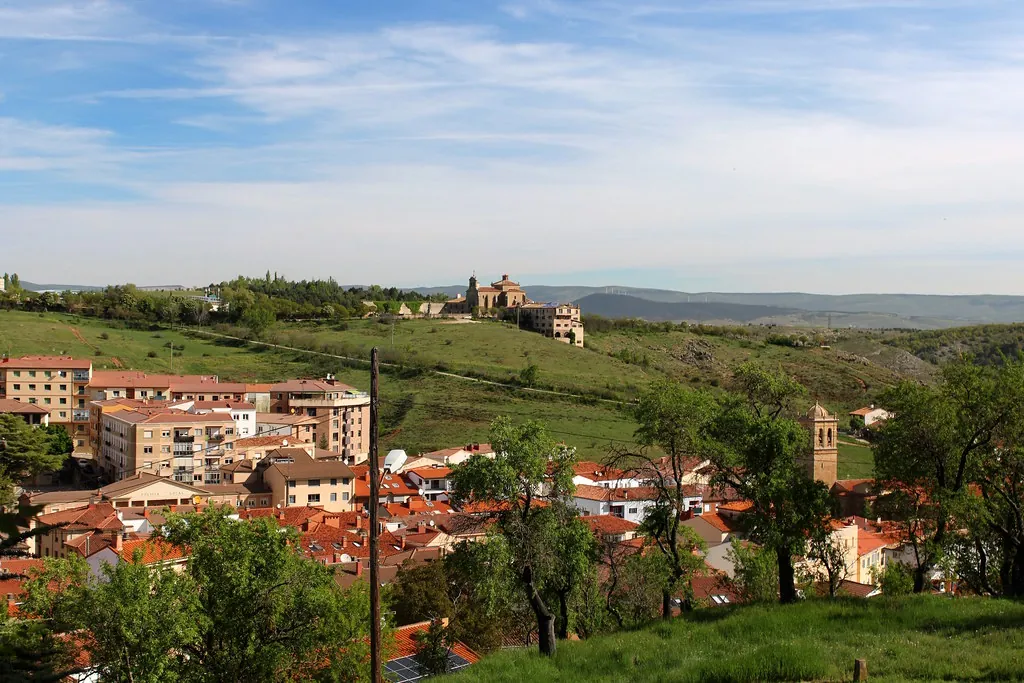
The Duero slips past Garray at a deliberate pace, as if it still remembers the twenty-month siege that took place on the hill above. Stand on the medieval bridge at dusk and you can see the mound they call La Muela, a bald 300-metre shoulder of earth that looks more like a neglected National Trust motte than the cradle of Spanish identity. This is Numancia, and the village clinging to its shadow is home to 767 people, one parish church and, remarkably, the modest interpretation centre that explains how a Celt-Iberian town made Rome lose face in 133 BC.
Most British visitors arrive by hire car from Soria, eight kilometres south. The road climbs gently; by the time you pass the cement works on the outskirts the thermometer has usually dropped three degrees. At 1,011 m Garray is high enough for the air to feel rinsed, and high enough for snow to cork the place in for a day or two most winters. Spring and autumn give you the easiest ride: wild marjoram on the riverbanks, daylight until gone eight o’clock, and no need for the heavy fleece you packed “just in case”.
The Ruin and the Reality
Numancia’s stone footprint is a twenty-minute walk from the village fountain – uphill, unshaded, and with no kiosk at the top. Bring water, especially in July when the cereal stubble crackles underfoot and the thermometer nudges 34 °C. The path is paved but steep; if mobility is an issue, drive the farm track that leaves from the football pitch and park by the chain-link fence. Entry is €3, cash only, and the ticket seller still uses a carbon-copy machine. Tuesdays to Sundays, 10:00–14:00 and 16:00–18:00; locked tight on Monday.
What you get for the money is a grassy grid of house foundations, a stretch of wall they rebuilt for Franco’s 1950s propaganda epic, and views that stretch north to the pinewoods of the Sierra de Urbión. The bilingual panels are short on punctuation but long on drama: Scipio’s siege works, the mass suicide that denied Rome its slaves, and the nineteenth-century diggers who first prised souvenirs from the clay. In the tiny on-site hut you’ll find sling-stones the size of satsumas – the Numantine artillery. Pick one up and the weight explains why the Romans lost so many teeth.
Back in the village, the Aula Arqueológica fills the ground floor of the ayuntamiento. It is essentially one room, yet the wall-length timeline is the clearest in English you’ll find anywhere in Castilla y León. A looping nine-minute film gives the Hollywood version (no subtitles, but the soundtrack is suitably thunderous). Kids usually race through in seven minutes; adults linger over the digital reconstruction of the pre-Roman street pattern. Free entry; ring the bell if the door is locked.
River, Rations and the Nine-o’clock Hush
Garray’s centre is a single grid of four streets. House martins nest under the eaves, and the bakery sells chewy country loaves for €1.40 before 11 a.m. After that the choice is reduced to chorizo rolls and little else. There is no supermarket, no cash machine, and no petrol station. Stock up in Soria: the nearest Mercadona is five minutes off the ring-road by the Renault dealer.
What the village does have is a handful of casas rurales fitted out to UK cottage standards: underfloor heating, Wi-Fi that fades when the wind is in the north, and kitchens equipped with corkscrews you don’t have to hunt for. Nightly rates hover around €80 for a two-bedroom house; mid-week discounts are common outside fiesta season. Hostal Posada de Numancia above the church square offers en-suite doubles for €55, including towels thick enough to pass a stern aunt’s inspection. Ask for a back room – the front ones overlook the only bar, where the television relays football until the landlord closes at half-past midnight.
Food is Castilian plain. The local menu del día (€12–14) runs to roast suckling lamb, chips and a quarter-litre of young tempranillo that tastes like Beaujolais with better manners. Vegetarians get the village’s pocha beans stewed with paprika; request “sin chorizo” and nobody argues. Pudding is usually cuajada, a set sheep’s-milk yoghurt dribbled with honey – think of it as a Spanish take on a Muller Light without the additives. If you need something greener, order the river trout grilled whole with lemon. It arrives staring, but the flesh flakes off the backbone like a miniature Dover sole.
Walking Without Waymarks
The Duero is flanked by poplars and a farm track that doubles as the Camino Natural del Duero. Head west and in 90 minutes you reach the ruined Benedictine monastery of San Juan de Duero, its cliff-side cloister perfect for a sandwich stop. The return leg gives you the afternoon sun on your face and, in October, the smell of newly pressed olives drifting across from a cooperative on the opposite bank. Serious walkers can continue to Almazán (17 km), but there is no bus back; arrange a taxi through your host or plan a two-car shuffle.
Eastwards, a signed but rougher path climbs to the ruined Iron-Age fort of Numantóbriga. The gradient is stiff, the thistles high, and the reward is a view of La Muela from the north – handy for photographers who want siege-ditch shadows in the late afternoon. GPS tracks are downloadable from the Soria provincial website; print them, because signage is sporadic and the cattle grids all look identical.
Winter brings a different challenge. Snow can start in December and the Numancia ridge catches the wind like a ship’s prow. Paths become slick with hoar frost and the interpretation centre opens only when staff can get through from Soria. On the other hand, the light is crystalline, lambing starts in the fold yards below the hill, and you may have the entire site to yourself. Bring micro-spikes and a thermos; the nearest café is back in the village and it shuts at six.
One Night, Two Millennia
Garray’s fiestas are short, loud and rooted in pork. The August Keltiberoi Roman re-enactment weekend now includes English-language tours led by a teacher from the Instituto in Soria who spent a gap year in Sheffield. Book early: the village has only thirty rooms and the Romans’ catapult tends to draw a crowd. September’s romería hauls the statue of Nuestra Señora de Numancia uphill for a picnic mass among the stones; visitors are handed slices of spicy chorizo and paper cups of lemonade whether they know the responses or not.
Leave time for a final stroll across the medieval bridge at dusk. Swallows cut low over the water, a farmer drags the last bales off the field, and the ruins above fade from ochre to charcoal. The silence is complete enough to hear the river nosing the piers. Somewhere up there 4,000 Iberians once chose death over dishonour; today the only battle is deciding whether to open a second bottle of the local red before the shop shuts. Garray will never bill itself as a destination, but as a place to park time while history exhales, it does the job rather well.