1891-12-22, La Ilustración Española y Americana, Soria.—Puente de hierro sobre el río Golmayo, en la línea férrea en construcción de Torralba á la capital.jpg
Q131827728 · Public domain
Castilla y León · Cradle of Kingdoms

Golmayo

The church bell of San Pedro strikes noon, and the only sound between chimes is a lorry changing gears on the N-111. Three kilometres behind you, S...

3,085 inhabitants · INE 2025
1041m Altitude
Coast Costera

Why Visit

Coast & beaches Shopping Santa Bárbara (August)

Best Time to Visit

Year-round

August todo-el-año

Things to See & Do
in Golmayo

Heritage

  • Shopping
  • hiking in Valonsadero (next door)

Activities

  • Santa Bárbara (August)

Festivals
& & Traditions

Fecha todo-el-año

agosto

Las fiestas locales son el momento perfecto para vivir la autenticidad de Golmayo.

Full Article
about Golmayo

Roman bridge;Shopping center

Ocultar artículo Leer artículo completo

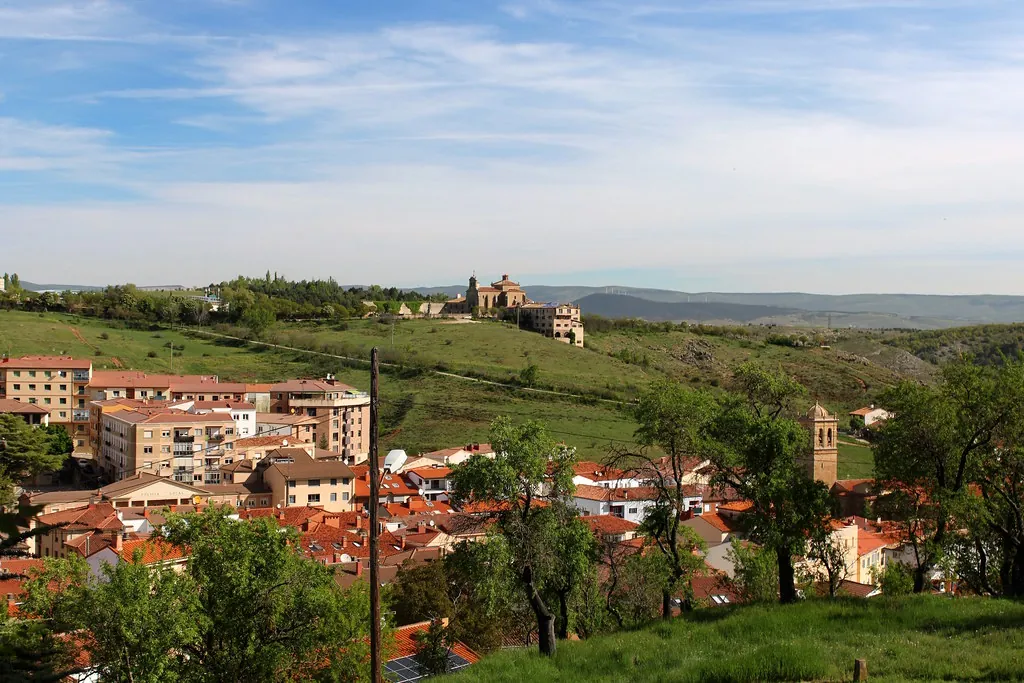
The church bell of San Pedro strikes noon, and the only sound between chimes is a lorry changing gears on the N-111. Three kilometres behind you, Soria's traffic lights flick red. Ahead, wheat fields stretch to the horizon, their colour shifting from silver-green in April to toasted bronze by July. This is Golmayo at 1,041 metres: not quite countryside, not quite suburb, but a place where Castilian farmers and city office workers share the same bakery queue.

A Village That Forgot to Be Photogenic

Forget the stone cottages and flower-filled balconies of tourism brochures. Golmayo's identity sits in the mismatch between its 15th-century core and the 1990s brick estates that swallowed the surrounding farmland. Walk south from the church along Calle Real and you'll pass half-timbered adobe houses with wooden balconies, then suddenly hit a cul-de-sac of identical white villas named after Andalusian flowers. The transition is so abrupt it feels like someone pressed fast-forward on Spanish architectural history.

The original village takes exactly twelve minutes to cross. Stone walls the colour of weathered parchment lean towards narrow lanes just wide enough for a tractor. Many houses still have the family name carved above the door: "Los Martínez, 1928" or simply "El Chato" – local nickname for generations who never bothered with surnames. Some properties stand empty, their wooden doors padlocked, while next door a satellite dish sprouts from a restored facade. It's living evidence of Golmayo's split personality: half museum piece, half commuter dormitory.

Working the Land at Europe's Roof

Open the car door at dawn between October and March and the cold hits like a slap. At this altitude, frost patterns the wheat stubble until 10 am, and the wind carries the smell of damp earth and distant woodsmoke. Local farmers wear padded jackets that wouldn't look out of place on a Yorkshire moor, though their conversations happen over small glasses of anis rather than pints of bitter. They'll tell you – if you ask while leaning against the bar at Mesón Golmayo – that rainfall dictates everything here. Too little and the wheat shrivels. Too much and the clay soil turns to glue, sticking tractor tyres for weeks.

The surrounding landscape refuses to flatter. There are no dramatic peaks or river gorges, just gentle rolls of cereal fields interrupted by islands of holm oak. But the scale impresses. Stand on the small rise east of the village (follow the dirt track past the abandoned threshing floor) and you'll see twenty kilometres in every direction. On clear days, the stone bulk of Soria's medieval cathedral appears as a grey smudge against the southern horizon. The view delivers that particular pleasure of northern Spain: realising how much empty space sits just two hours from Madrid's orbital motorway.

Eating When There's Nothing to Rush For

British visitors expecting tapas trails will find Golmayo's food scene refreshingly honest. The village supports exactly three eating places, and none stay open past 5 pm. Mesón Golmayo occupies a 1970s brick building opposite the petrol station. Inside, fluorescent lights illuminate Formica tables where construction workers demolish three-course lunches. The €12 menú del día starts with garlic soup thick enough to support a spoon upright, followed by roast lamb that falls off the bone in the way British pubs attempt but rarely achieve. Vegetarians get a plate of pimientos de Padrón and an apology.

Weekend mornings bring families for churros and thick drinking chocolate. Children dunk while parents discuss fertilizer prices over newspapers. The ritual feels closer to a Working Men's Club canteen than Spanish café culture, and that's precisely the point. Golmayo feeds its own, not passing trade.

For anything after dark, you'll drive to Soria. The journey takes seven minutes by taxi (€8 fixed price if you call Radio Taxi from the village square). There, Calle Collado's restaurants serve river crab croquettes and local black pudding until midnight, though even city centre kitchens close on Monday evenings. Plan accordingly or risk living on petrol-station sandwiches.

Walking Tracks That End Where They Began

Golmayo makes no pretence about being a walking destination. The tourist office in Soria – when it's open – offers a photocopied map showing three circular routes. Each measures between six and twelve kilometres across farmland, following tractor paths wide enough for two combine harvesters. Waymarking consists of occasional yellow arrows painted on concrete posts, plus the implicit navigation aid of "keep the village in sight".

What the routes lack in drama they compensate for in solitude. During two hours on the twelve-kilometre loop towards Zorralbo, you'll meet more stonechat birds than humans. The path crosses wheat fields, then drops into a shallow valley where abandoned grain stores stand roofless against the sky. Inside, swallows nest in rafters blackened by a century of woodsmoke. It's the sort of quiet that makes a Bedfordshire walker realise how crowded British footpaths have become.

Summer walkers should start early. By 11 am the sun turns the tracks into reflecting ovens, and shade exists only where poplars line dried stream beds. Winter brings the opposite challenge: Atlantic weather systems sweep across the plateau with enough force to make umbrellas redundant. March and October deliver the sweet spot – crisp mornings warming to 18°C by midday, with visibility stretching to the Montes de Aylla fifty kilometres north.

When the Village Wakes Up

For fifty weeks annually, Golmayo sleeps. Then June's fiesta transforms the place. Temporary bars appear in the polideportivo car park, their plastic tables spreading across the tarmac normally reserved for Saturday five-a-side. The village's 3,000 population swells with returning families who left for Madrid or Barcelona jobs. Teenagers who've spent the year perfecting Andalusian accents suddenly rediscover their Sorian drawl.

Processions start at San Pedro church and circle the modern estates, stopping traffic that barely existed anyway. Brass bands play pasodobles until 3 am, competing with fairground rides that occupy the wheat fields. Local women spend three days preparing migas – fried breadcrumbs with bacon and grapes – in pans wide enough to bathe a toddler. The dish tastes like a Spanish version of British stuffing, if stuffing came with a glass of claret and mandatory dancing.

August brings a quieter repeat for summer holidays, but June's celebration carries the real emotion. Watch the Saturday night verbena and you'll witness something British market towns lost decades ago: a community that still produces its own entertainment rather than importing it through satellite TV.

Getting There, Getting Away

Golmayo exists for cars. The hourly ALSA bus from Soria takes seven minutes and drops you beside the church, but Sunday service reduces to three journeys. Without wheels you'll rely on taxis, and the rank closes at midnight even on fiesta weekends.

Drivers from Bilbao airport follow the A1 north, then swing onto the N111 past Logroño's vineyards. The journey clocks two hours fifteen, assuming you ignore the speed camera at km 98. Madrid's route is identical time-wise but duller: A2 across the meseta until Medinaceli's Roman arch appears, then north through endless wheat.

Petrol costs less at the village's Las Camaretas garage than anywhere between here and the French border – useful knowledge when returning hire cars with half-full tanks. The supermarket next door stocks Cathedral City cheddar and Yorkshire tea, presumably for British engineers working at the nearby biomass plant. It's an incongruous sight beside the jamón legs, but then Golmayo specialises in not quite fitting expectations.

Stay if you want somewhere cheap, quiet and ten minutes from proper city amenities. The Noctis Hotel on the Soria ring road offers secure parking and rooms at €65 midweek. Alternatively, rent one of the modernised village houses through Spanish sites – British booking platforms haven't discovered Golmayo yet, which keeps prices below Airbnb averages.

Leave when you need nightlife, museums, or streets that meander rather than grid. Golmayo won't mind. It's too busy being useful.

Key Facts

Region
Castilla y León
District
Soria
INE Code
42095
Coast
Yes
Mountain
No
Season
Year-round

Livability & Services

Key data for living or remote work

2024
ConnectivityFiber + 5G
TransportTrain nearby
HealthcareHospital
EducationHigh school & elementary
Housing~6€/m² rent · Affordable
January Climate3.6°C avg
Sources: INE, CNMC, Ministry of Health, AEMET

Official Data

Institutional records and open data (when available).

  • VALONSADERO. ABRIGO DEL POZO
    bic Arte Rupestre ~5.8 km
  • VALONSADERO. ABRIGO DEL TUBO
    bic Arte Rupestre ~5.9 km
  • VALONSADERO. COVACHO DEL MORRO
    bic Arte Rupestre ~6.2 km
  • VALONSADERO. MURALLON DEL PUNTAL
    bic Arte Rupestre ~5.7 km
  • VALONSADERO. PEÑON DE LA VISERA
    bic Arte Rupestre ~6.3 km
  • VALONSADERO. RISCO DEL PORTON DE LA CAÑADA
    bic Arte Rupestre ~5.9 km
Ver más (41)
  • VALONSADERO. ABRIGO DE LAS MARMITAS
    bic Arte Rupestre
  • VALONSADERO. COVACHON DEL PUNTAL
    bic Arte Rupestre
  • VALONSADERO. PEÑON DEL MAJUELO
    bic Arte Rupestre
  • VALONSADERO. ABRIGO DEL CUBILLEJO
    bic Arte Rupestre
  • VALONSADERO. CAMINO A LA LASTRA
    bic Arte Rupestre
  • VALONSADERO. PEÑA SOMERA
    bic Arte Rupestre
  • ABRIGO DE PONIENTE EN EL PEÑON DE LA SENDILLA
    bic Arte Rupestre
  • ISACES, LOS
    bic Arte Rupestre
  • COVATILLAS, LAS
    bic Arte Rupestre
  • LASTRA, LA
    bic Arte Rupestre

Planning Your Visit?

Discover more villages in the Soria.

View full region →

More villages in Soria

Traveler Reviews