Full Article
about Grijalba
Ocultar artículo Leer artículo completo
The church key hangs behind the bar. Ask for it at Bar Grijalba, hand over a €5 note as deposit, and the landlord will pass you an iron lump the size of a plum. That single transaction tells you most of what you need to know about this village: no ticket desk, no audio guide, just a nod and the expectation you’ll lock up after yourself.
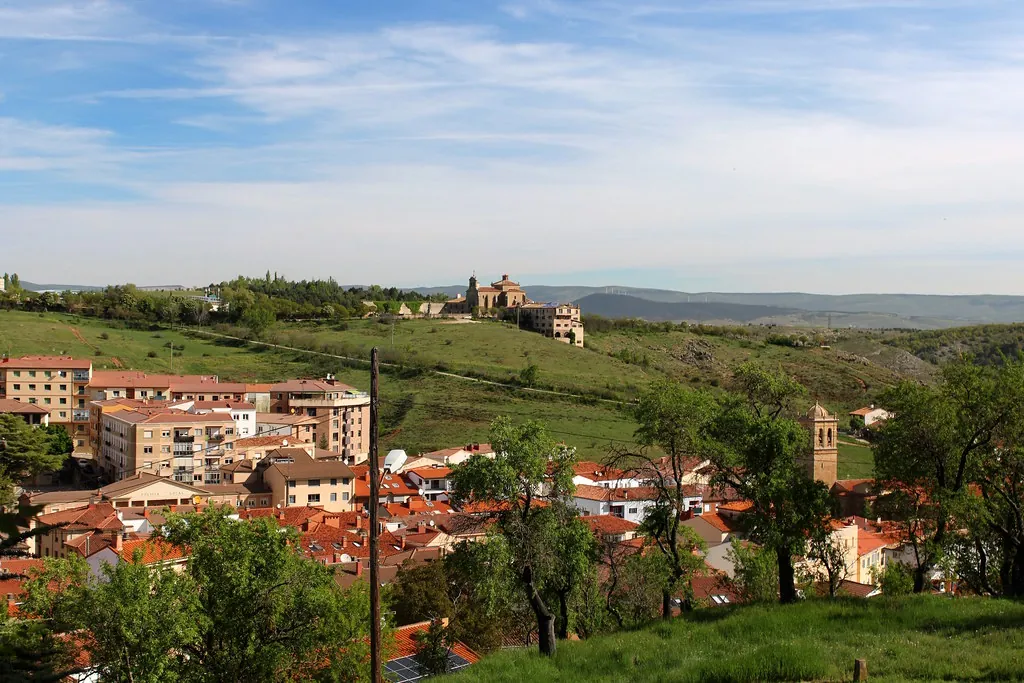
Grijalba sits on a low bluff above the river Odra, forty minutes south-west of Burgos city. The map calls it part of the Arlanza valley, yet the landscape feels more plateau than valley: an ocean of cereal fields that ripples gold in June and turns grey-brown by August. The village interrupts the pattern for barely five streets; beyond the last house the asphalt simply stops and the wheat resumes.
The Meseta in Miniature
Castilla y León’s rural DNA is written in the building stone. Houses are mortared with the same ochre limestone that the plough turns up each season; roofs wear the same clay tiles that were fired in local kilns a century ago. A handful of two-storey homes have been freshly pointed, their wooden balconies painted Basque green, but most walls slump gently towards the lane, accepting gravity as they accept the weather. Between dwellings you glimpse palomares—dovecotes shaped like stubby minarets—now empty, their entrances stopped with rubble to keep out the jackdaws.
There is no centre as such, only a widening in the lane where delivery vans can turn round. The bar occupies the ground floor of a 1950s corner house; its plastic chairs spill onto the tarmac each morning and stay there until the last copa is cleared at midnight. Inside, the television murmues with the sound down, elderly men play mus with cards soft as cloth, and the coffee machine exhales like a small steam engine. Order a café con leche and you are automatically offered a mantecada, the local sponge bun, still in its paper case.
Opposite, the parish church of Santa María de los Reyes surveys the scene with fifteenth-century restraint. The tower is short—money ran out before the intended height was reached—and the portal is plain enough to miss if you blink. Unlock the heavy door and the smell is instantly cool: stone dust, candle wax, a trace of incense from last Sunday’s Mass. Inside, the nave is wider than you expect, the roof timbers blackened by centuries of grain-drying smoke when farmers stored sheaves here during plague years. A single retablo survives, its paint flaking like sun-burnt skin, but the real attraction is acoustic: stand in the crossing, clap once, and the echo returns four heartbeats later.
River, Fields, Silence
Behind the church a farm track drops to the Odra. In April the banks are lush with nettles and young willow; by mid-September the water shrinks to a braid of channels no deeper than a Wellington boot. Walk upstream for twenty minutes and the cereal sea closes behind you; only the steeple remains visible, a stone periscope above the wheat. Herons flap off at your approach, and once—if you are patient—you may see an otter slide under the far bank, though locals swear numbers are down since the upstream irrigation channels were modernised.
Cyclists use the dirt levee as a flat route between villages, but signage is non-existent; GPS or dead-reckoning is essential. The safest plan is to follow the river south for 5 km to Puentedey, whose medieval bridge is still the only crossing for miles. Allow ninety minutes each way, carry water, and expect zero phone signal once the track dips below poplar level.
Eating (and Not Eating)
Grijalba has no shop, no bakery, no cash machine. The nearest supermarket is in Lerma, fifteen minutes by car along the BU-901, itself a lesson in empty Spain: hamlets of four houses, a shuttered railway station, a roadside crucifix with fresh flowers in a jam jar. Stock up before you arrive, or you will eat whatever Bar Grijalba decides to cook that day. The €12 menú del día is honest Castilian fuel: roast lamb shoulder, chips fried in aceite de oliva, iceberg lettuce dressed with salt and vinegar, a quarter-litre of house Rioja. Vegetarians can request judiones—giant butter beans stewed with tomato and paprika—though the kitchen looks faintly baffled by the concept. Finish with queso de Burgos drizzled with local honey; the cheese is mild, almost yoghurt-fresh, nothing like the pungent ewes’ milk affairs further south.
Sunday lunchtime is chaos. Extended families from Burgos descend at 13:00 sharp, toddlers weave between tables, and the single waiter works with the concentration of an air-traffic controller. Arrive before 12:45 or be prepared to wait until 15:30 for a table; they do not take bookings, and no one hurries for tourists.
Seasons of Wind and Wheat
Spring brings colour so brief you can miss it while blinking. For two weeks in late April the edges of the wheat flush purple with lengua de vaca—ox-tongue weed—and the night temperature finally creeps above 5 °C. May can be perfect: skies rinsed clean by Atlantic fronts, poplars still fresh lime-green, and only the bar regulars for company. By July the thermostat stalls at 34 °C; walking is restricted to dawn and the hour before dusk, when the fields glow like toasted brioche. August is simply hot and boring; even the swallows seem hung-over. Autumn arrives overnight, usually during the first week of October, when a cold north wind scours the plateau and combines harvesters work under floodlights until 23:00. Winter is wind, fog and the smell of wood-smoke. Daytime highs hover at 6 °C; nights drop to –6 °C and the Odra ices over at the edges. The village turns inward, doors shut tight, televisions glow behind thick curtains. If you come then, bring boots with grip—footpaths become strips of greasy clay—and do not expect quick roadside assistance.
Getting There, Getting Away
Public transport is theoretical. A weekday bus leaves Burgos at 15:30, reaches Grijalba at 16:45, and departs again at 06:45 next morning. That is the entire timetable. Driving is simpler: fly to Bilbao, collect a hire car, and take the A-68 south then the N-234 west. The journey is 146 km of largely empty dual carriageway; allow two hours including the obligatory coffee stop in Miranda de Ebro. From Madrid, the toll-free option is the A-1 to Aranda de Duero, then cross-country via Lerma; total time 2 h 15 min in light traffic. Petrol stations thin out after Aranda, so fill up.
Accommodation inside the village amounts to one three-bedroom cottage, El Rincón de Grijalba, booked through a Spanish letting site and supervised by a neighbour with the key. Otherwise stay in Lerma: the parador-style Hotel Villa de Lerma has doubles from €85 including underground parking, a pool open June–September, and a restaurant that will serve cordero at 20:30 without blinking. Taxi from Lerma to Grijalba costs a flat €25; book the day before or you will find every driver booked out by vineyard workers.
The Parting Shot
Grijalba will never feature on a regional marketing campaign. It has no castle, no Michelin mention, no craft-beer taproom. What it offers is a calibration point for anyone who thinks Spain has been entirely gentrified. Spend an evening nursing a caña while the sky turns from brass to violet, listen to the wheat rustle like distant surf, and you will understand why half the customers own a house here yet live in Burgos: this is the place they come to remember how slowly time can move. Just hand the church key back before you leave.