Full Article
about Gumiel De Mercado
Ocultar artículo Leer artículo completo
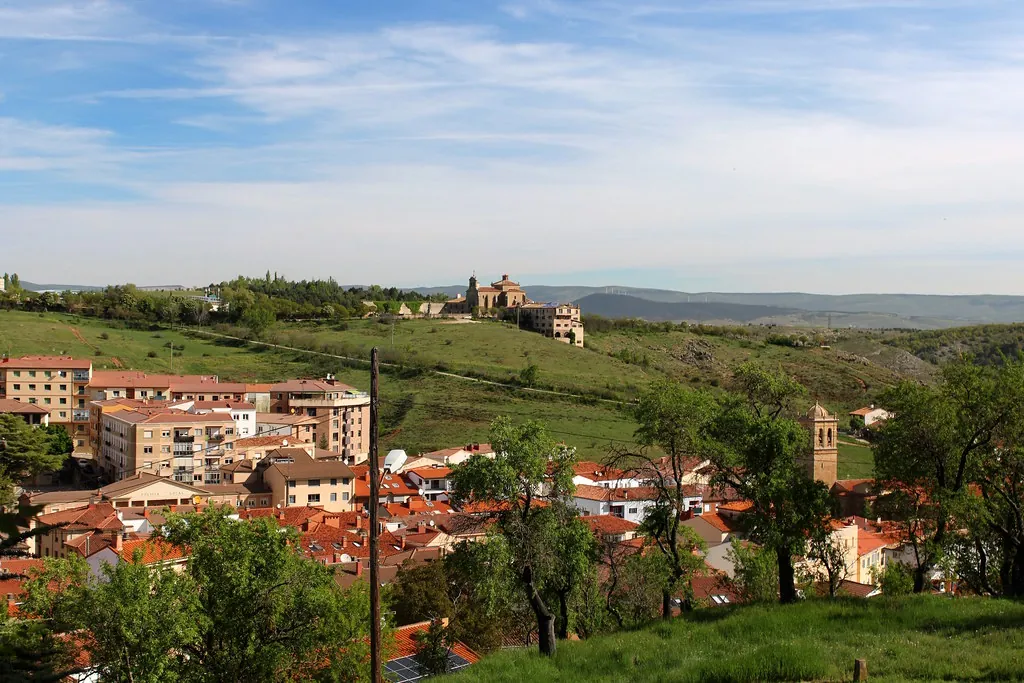
The bell in San Pedro’s tower strikes eleven and a tractor answers back. That is the loudest sound you are likely to hear all morning in Gumiel de Mercado, a single-street village planted at 900 m on the Burgos section of the Ribera del Duero. Above ground, stone houses keep their wooden shutters half-closed against the high-plateau sun; below ground, 102 cellars tunnel into the hill like rabbit warrens, each cradling last year’s tempranillo in American oak. The contrast sums the place up: above, sleepy Castilian routine; below, quiet industry that ends up on London wine lists at £25 a bottle.
A town that traded in wool, then grapes
Gumiel’s name remembers its medieval market charter; merchants once met here to haggle over merino wool before the vineyards took over. Walk the one main road, Calle Real, and you can still see the old staging-post plan: church at the top, grain store half-way down, livestock fountain at the bottom. Most buildings are the colour of dry biscuit, their corners rounded off by centuries of wind-borne dust. Heraldic shields are bolted to several facades, but the paint has flaked away; nobody has rushed to restore them, and the effect is oddly honest—history without the heritage gloss.
The Iglesia de San Pedro is open most mornings until 13:00. Inside, a 16th-century Flemish altarpiece glints with gold leaf that the local bishop acquired during a stint in Brussels. The side chapel smells of candle wax and old stone; if you want music, drop a euro in the electronic box and a recording of the village choir fills the nave. There is no ticket office, no audio guide, just a polite notice asking you to close the door gently so the swifts don’t nest above the pulpit.
Wine under your feet
Every family used to make its own. The cellars—bodegas subterráneas—were dug by hand, the spoil heaped outside to form tiny courtyards where grandparents now sit clipping beans. The tunnels stay at 12 °C year-round, perfect for slow ageing; in August the outside thermometer can read 34 °C, so descending the stone steps feels like walking into a natural fridge. Two or three caves have been swept out, fitted with pine tables and rented to visitors for picnics; PradoRey estate will sell you a hamper (€18) with Manchego, membrillo and a half-bottle of their crianza, then leave you alone among the barrels.
PradoRey itself sits five minutes up the Aranda road. The architecture is stark concrete and glass, a deliberate statement against the old image of dusty bottles in gloomy caves. Tours last 75 minutes, cost €14, and end with four generous pours on a terrace that looks across a sea of vines. British drivers repeatedly warn each other on TripAdvisor to spit—Spanish measures are nearer home-pours than tasting measures. Weekends book up two weeks ahead; send an email in English and you will get a reply within a day.
If you prefer something smaller, family-run Bodegas Valduero offers visits by prior arrangement only. The owner, Yolanda García, will show you the 1890 press her great-grandfather hauled from Bilbao, then pour an unoaked “Joven” that tastes of blackberries and liquorice. Payment is still cash-only; the nearest ATM is back in the village square.
What to eat when you’ve been tasting
Gumiel keeps just two proper restaurants, both on Calle Real. Mesón del Cordero does the local roast suckling lamb: a quarter-carcass arrives bronzed and crackling, already jointed so you don’t have to hack away like Henry VIII. A portion feeds two hungry walkers and costs €24; chips come in a separate terracotta bowl so they stay crisp. House wine is decanted from an anonymous steel vat and tastes better than it should—simple, bright, designed to wash down fat rather than impress critics.
Around the corner, La Tahona bakes bread at dawn and converts the space into a café at eleven. Try the migas—fried breadcrumbs with chorizo and grapes—washed down with a cortado. Service stops at 16:00 sharp; if you arrive at 15:55 they will still feed you, but you will feel guilty about it.
Any other day of the week you might prefer to drive the 15 km to Aranda de Duero, where whole streets are devoted to roast-meat restaurants and somebody stays open after siesta.
Walking it off
The landscape is big-sky plateau, not mountain drama. A signed 7 km loop leaves from the fountain, crosses the railway line and circles through vineyards planted on gravelly clay. Spring brings tiny blue flowers between the rows; mid-October turns everything copper and the air smells of crushed grapes and diesel from the harvest tractors. The route is flat, stony underfoot, and offers no shade—bring water and a hat even in May. You are more likely to meet a lorry driver spraying copper sulphate than another rambler, so solitude is guaranteed.
Serious hikers sometimes aim for the remote Ermita de San Juan, 12 km south, but paths fade into farm tracks and phone signal is patchy; download the GPS before leaving the village.
When to come, and when to stay away
Late April and early May see the vines at “bud burst” and daytime temperatures hover around 18 °C—perfect for cellar visits that finish with lunch on a sunny terrace. September coincides with the vendimia (grape-pick); farmers welcome extra hands but start at 07:00 and expect you to keep pace. Both periods attract Spanish day-trippers, so book accommodation early. There are only three rental cottages in the old centre; after that you are looking at farmhouse B&Bs in the surrounding wheat fields.
Avoid August weekends if you dislike coach parties. Ribera del Duero tour buses use Gumiel as a loo-and-lunch stop; the single bar runs out of coffee cups and the square echoes with mobile-phone ringtones. Sunday afternoons in any season are dead: the bakery shuts, the fountain dries, even the church door is locked. Plan to be elsewhere—Aranda’s tapas strip fills the gap nicely.
Getting here without the hassle
No train station, no regular bus. The nearest AVE (high-speed) halt is at Valladolid, 95 km west; pick up a hire car there and you reach Gumiel in an hour on the A62 and the CL-101. From Madrid the drive is 2 h 15 min, mostly motorway, but remember the 50 km/h limit that suddenly appears at each village radar. Sat-navs sometimes send you down the N122 through Peñafiel—scenic, but lorries crawl uphill and can add 30 minutes. Fill the tank in Aranda; petrol stations in the valley close at 20:00 and do not reopen on Sundays.
A parting glass
Gumiel de Mercado will never compete with San Sebastián for Michelin stars or with Segovia for postcard castles. It offers instead the small satisfactions of an agricultural town that has accidentally found itself on a world-famous wine map: bread that was baked while you slept, a cellar that smells of oak and tannin, a square where the only evening entertainment is watching old men beat teenagers at dominoes. Stay a night, drink the crianza, buy a bottle for the mother-in-law, then leave the tractors to their hush.