Full Article
about Hontanas
Ocultar artículo Leer artículo completo
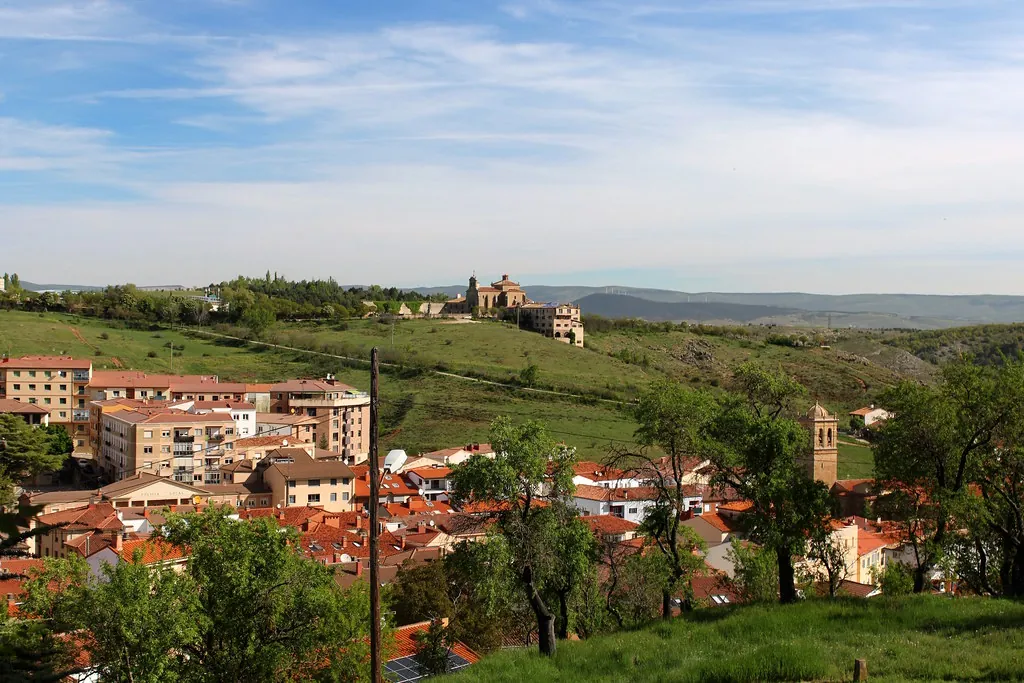
The first sight of Hontanas arrives like a trick of the light. After two hours of dead-straight track across the Burgos plateau, the gravel simply tips over the lip of a shallow fold in the earth and the village is there—rooftops first, then the sandstone tower of the church—tucked eight metres below the cereal line as if someone had pressed the whole place down with a thumb. Pilgrims who left Castrojeriz at dawn usually meet this moment at mid-morning, sweat already crystallising on sun-creamed foreheads, water bottles nearly empty. The reaction is almost always the same: a short laugh of relief, followed by the realisation that the promised café con leche is still a kilometre off.
A village that only the Meseta could invent
Sixty-odd residents, one paved road, no supermarket: Hontanas should feel provisional, yet the stone houses are too substantial, the doorways too precisely carved, for that. Adobe walls a metre thick keep interiors at a steady 19 °C whether the steppe outside is frozen or frying. Many still have the family bodega underneath—cool, bottle-black chambers reached by spiral stairs no wider than a British stairlift. The architecture is practical rather than pretty, the colour palette limited to straw, rust and weather-beaten grey, but the overall effect is oddly calming after the wide-screen glare of the plateau.
The Church of the Immaculate Conception sits at the lowest point, its 14th-century bones patched with later Renaissance brickwork. The door is usually locked unless mass is about to start; knock at the house opposite and the key arrives in the hands of a woman who will accept no tip but will tell you, in rapid Castilian, which retablo was paid for by shepherds and which by wheat merchants. Inside, the air smells of wax and damp stone; outside, the bell still marks the hours as it did when this was a medieval staging post on the sheep-drove to León.
Walking stock and talking stock
Every day is punctuated by the Camino. By ten o’clock the first fit Germans appear, marching poles clicking like cricket stumps. The Spanish school group turns up nearer noon, earbuds in, singing off-key. By three the Korean stragglers arrive, sun-hats enormous, and by four the albergue lists are full. The municipal hostel, recently upgraded with solar panels and gender-segregated dorms, charges 8 €, but most walkers make for the private Albergue Brigida 200 m further on. Housed in a converted farmhouse whose beams were felled in the Sierra de la Demanda, it offers hot showers the size of Surrey wet-rooms and a communal paella at 19:30 sharp for 14 €. Wine flows until it doesn’t; someone always produces a travel guitar; conversation collapses into four languages at once. Lights-out is ten, and the silence afterwards feels almost rural—until the snoring starts.
Day-trippers who are not hiking can still sample the Meseta by walking the 6 km out-and-back to San Antón, the ruined monastery that once gave shelter to plague sufferers. The path follows an old drove road; keep an eye out for the concrete post that marks the 200 m contour—high altitude for central Spain, high enough for winter snow to cut the village off for days. October and April are the comfortable months; July walkers start before sunrise to avoid the thirties heat, while January arrivals may find the fountain frozen and the bar shut.
What you can and can’t buy
There is no cash machine; the nearest is in Castrojeriz, 7 km west. The single grocery-bar stocks tinned tuna, Cow & Gate baby food (past its date, but nobody seems bothered) and frozen spinach croquettes that double as ice packs for swollen knees. Bread arrives in a white van at 11:00 and is usually gone by 11:20. If you need Compeed, sunscreen or a new charger, you are officially out of luck—Burgos city is an hour by infrequent bus, and taxis quote 70 €. Experienced pilgrims therefore shop before they drop: Castrojeriz has two small supermarkets and a pharmacy that sells blister needles without a lecture.
Food without flourish
Evening menus are designed to replace 600 burnt calories, not to dazzle. The house lechazo—milk-fed lamb—emerges from the wood oven only at weekends; the rest of the week you get what the hospitalero can stretch. Expect a metal bowl ofpaella with more mussels than the Mediterranean should allow, followed by pork shoulder, chips and a jug of local tinto that could stain pine. Vegetarians are accommodated if they warn at check-in: the fallback is chickpea stew heavy on pimentón. Pudding is usually supermarket flan, but by then nobody cares; the wine has done its diplomatic work and passports are being passed round the table like trading cards.
Night skies and morning departures
Mobile signal fades in the hollow, so the village opts for older networks. At 22:00 the streetlights dim and the Milky Way switches on. A ten-minute shuffle beyond the last lamppost is enough; take the track towards the abandoned threshing circles and look south. The sky is so clear that you can watch the International Space Station rise without an app. Temperatures drop sharply—carry the fleece you thought you wouldn’t need. By 06:30 the eastern sky is lilac and the first backpacks zip shut; the day’s destination, Frómista, is 31 km off, and nobody wants to cross the treeless plain after ten.
The honest verdict
Hontanas is not a destination in itself; it is an intermission. The village offers just enough comfort to keep you walking, just enough conversation to remind you why you set out. Come without a pack and you will feel, rightly, that you are gate-crashing someone else’s journey. Services are thin, entertainment nil, and the landscape refuses the Instagram filter. Yet if you arrive footsore, order a coffee at the bar, and sit on the wall while the swallows stitch the sky, the place performs its ancient function: it lets you breathe more slowly before the Meseta lifts you back onto its uncompromising stage.