Full Article
about Hontangas
Ocultar artículo Leer artículo completo
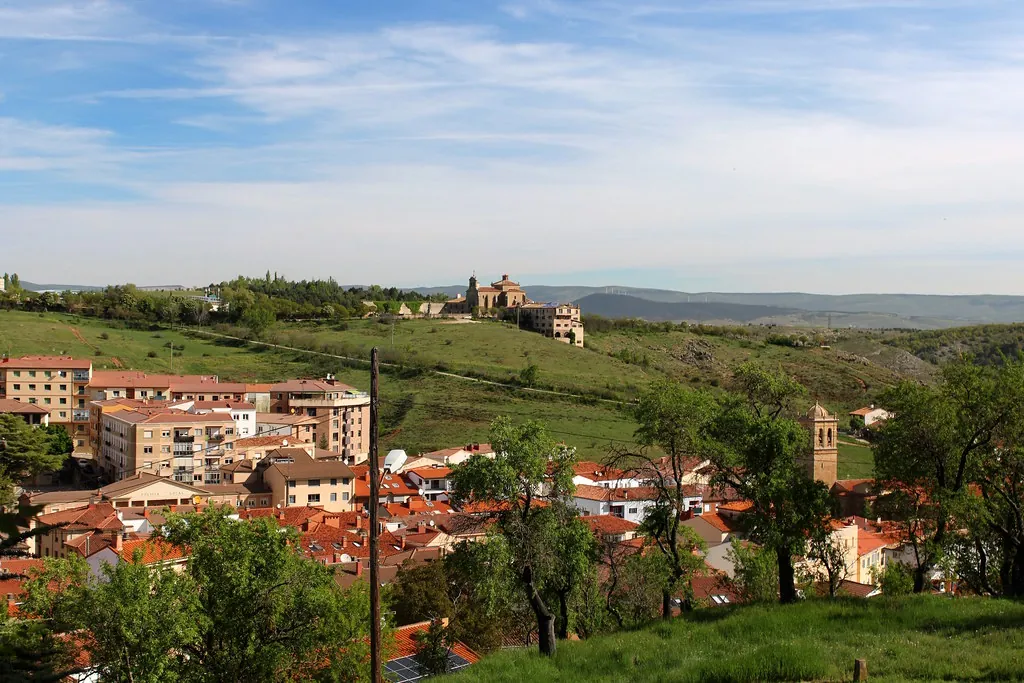
At 920 metres above sea level, Hontangas sits where the endless wheat plains of northern Castilla y León start to ripple into gentle folds. The change is subtle – a slight rise in the road, a cooling of the air, and suddenly the horizon no longer stretches ruler-straight to the edge of vision. This shift in geography is enough to make the village feel removed from the summer heat that bakes the lowlands, yet it remains only 25 minutes' drive from the A-1 motorway, Spain's arterial route between Madrid and the north coast.
The first thing that strikes visitors is the limestone. Every wall, every lintel, every tumble-down outbuilding is hewn from the same honey-coloured stone that glows soft amber in morning light and turns parchment-pale by midday. The effect is monochromatic but never monotonous: textures vary from rough-hewn field boulders to the finely chiselled coat of arms above the 16th-century doorway of the parish church of San Juan Bautista. The tower, visible for kilometres across the cereal fields, served generations of farmers as a landmark long before GPS pins replaced mental maps.
Inside the nave, the air carries a faint whiff of extinguished candles and damp stone. If the church is open – and it usually is on weekend mornings – take five minutes to note the carved misericords and the single Baroque retablo that survived the 1936 fire. There is no charge, no audio guide, and no queue. When the door creaks shut behind you, the silence is complete enough to hear swallows nesting under the eaves.
Silence, in fact, is Hontangas' most abundant commodity. With barely 130 permanent residents, the village soundtrack consists of collared doves, the occasional tractor and the squeak of a rusty weather vane. Mid-afternoon in February can feel almost Arctic: the thermometer may read 5 °C but the wind ripping across the plateau makes it feel colder than a Burgos side street at midnight. Come back in late April and the same wind carries the scent of wet earth and freshly sown barley. By July it is a warm hair-dryer blast that scorches the grasses silver and sends lizards skittering into wall crevices.
Walking options radiate in three directions from the tiny main square. The shortest loop, marked by hand-painted stone cairns, heads south-east along an old drove road to the hamlet of Hontanguillas, 3.5 km away. The path never rises above 150 m, but at 900 m altitude even fit walkers notice their lungs working harder than in Oxford or Edinburgh. The reward is a 360-degree panorama of the Odra-Pisuerga basin, patched brown and green like a tweed jacket. Take water: the only bar between here and the horizon is back in Hontangas, and it keeps erratic hours.
A longer circuit continues past Hontanguillas to the ruined Ermita de la Virgen de la Cueva, wedged beneath a sandstone overhang at the 7 km mark. The hermitage is locked unless you have phoned the ayuntamiento (town hall) first – the key hangs on a bent nail inside the door of number 14, Calle Real. Ask politely and the caretaker, usually found tending tomatoes behind his house, will accompany you for the price of a conversation. Inside, 15th-century frescoes of the Virgin flanked by wheat sheaves remind visitors that around here the calendar has always revolved around sowing and harvest, not tourism seasons.
Back in the village, the single grocery shop opens 9–1, closed Thursday afternoon and all Sunday. Bread arrives from a regional bakery at 10 a.m.; once it is gone, it is gone. There is no cash machine – the nearest is 12 km away in Aranda de Duero, so bring euros. Mobile coverage is patchy inside stone houses; WhatsApp messages sometimes queue until you step into the square. These are not complaints, merely facts that dictate the tempo of a stay.
Eating options within Hontangas itself are limited to one bar serving toasted bocadillos filled with local morcilla (blood sausage surprisingly palatable to British tastes – think black pudding with rice and paprika). For a sit-down meal you will need to drive ten minutes to Villanueva de Gumiel, where Asador de la Villa will roast a quarter-lechazo (milk-fed lamb) in a wood oven while you sip a glass of Ribera del Duero crianza. Expect to pay €22 for the lamb portion, €3 for the wine; portions are designed for sharing, so a table of two can lunch well for under €40.
Accommodation is likewise scarce. Two privately owned casas rurales operate inside the village: both are 19th-century labourers' cottages restored with under-floor heating, oak beams and serviceable Wi-Fi fast enough to stream iPlayer if the wind is in the right direction. Mid-week rates hover around €90 per night for the entire house, making them economical for couples or friends travelling together. Book ahead for the August fiesta weekend, when returning emigrants swell the population fivefold and spontaneous street concerts last until the Guardia Civil politely suggest everyone go to bed.
That fiesta, held around the feast of San Juan on 24 June, is the one time Hontangas abandons its hush. Brass bands parade through streets carpeted with sawdust and verbena blossoms, and the village square hosts a communal paella cooked in a pan two metres wide. Visitors are welcome but not targeted: nobody will try to sell you a sombrero or insist you join a conga. The atmosphere is closer to a modest church fête in rural Norfolk – familiar, slightly chaotic, and over by midnight.
For day trips, the Unesco-listed town of Covarrubias lies 35 minutes north along the Arlanza valley, its half-timbered houses and collegiate church worth a wander before lunch. South-east, the lesser-known Cartuja de Miraflores near Burgos displays intricate late-Gothic tombs carved by Gil de Siloé – a sublime contrast to Hontangas' bare stone simplicity. Either excursion underlines the village's role as a quiet base rather than a checklist of sights.
Autumn brings an abrupt end to the gentle season. By late October the first frost silences crickets and turns the remaining allotments into rows of blackened tomato vines. Daytime temperatures can still reach 18 °C in a sheltered hollow, but once the sun drops the thermometer plummets towards zero. If you come between November and March, pack the same layers you would for a Peak District hike: the dry cold here is sharper than damp British chill, and stone houses take time to warm up.
What Hontangas offers, then, is not spectacle but space – the sort of wide-open, lightly inhabited space that Britain surrendered centuries ago. Walk the lanes at dawn and you might share the view with a single kestrel. Sit on the church steps after dark and the Milky Way appears with a clarity impossible above any UK motorway. The village asks for little: a tolerance for quiet, a willingness to carry cash, and curiosity about how life ticks on when the world stops watching. Bring those, and Hontangas gives back an afternoon – or a week – of breathing room.