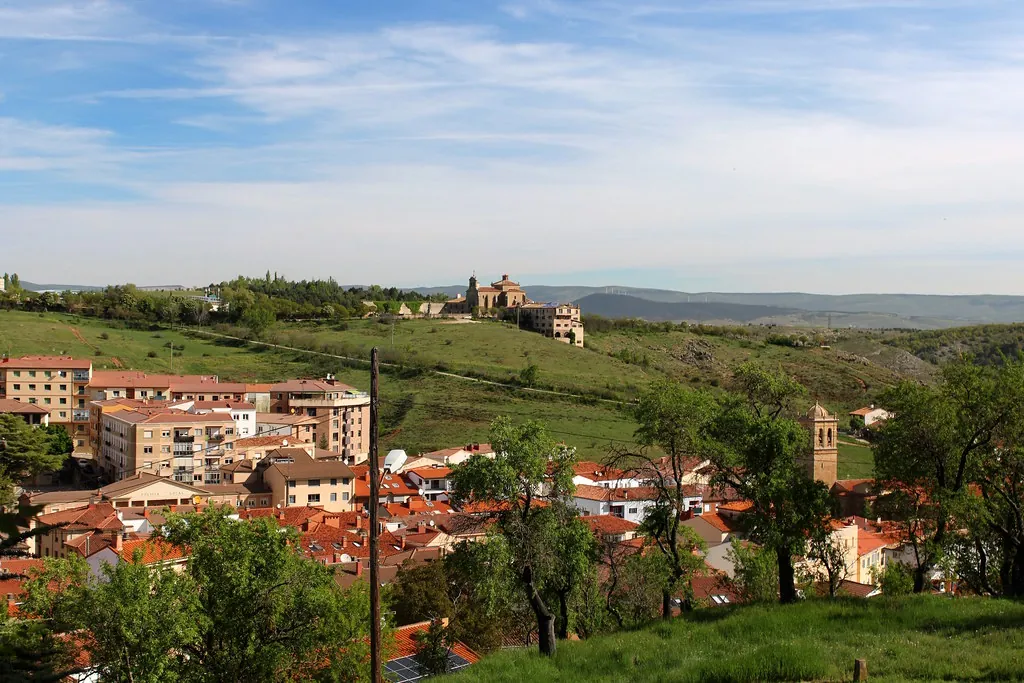
Full Article
about Hontoria De La Cantera
Ocultar artículo Leer artículo completo
The first thing that strikes a visitor is the dust. Not the gentle ochre swirl of a southern Spanish plaza but the pale, mineral grit that hangs in the high-plateau air—proof that the quarries above Hontoria de la Cantera are still alive, still cutting the limestone that built the cathedral spires of Burgos twenty minutes down the N-623. At 945 metres above sea level the village sits a full 200 metres higher than the provincial capital, a difference you feel in the sting of an April wind and in the bright, thin sunshine that makes the stone houses glow almost white at midday.
Stone, Sky and Silence
Hontoria’s layout is dictated less by medieval planners than by the need to shelter from weather that can swing from minus eight in January to thirty-eight in August. Streets are narrow, walls thick, doorways low. Look up and you will see iron rings set into the jambs—mooring points for the canvas sheets once hung each afternoon to keep the sun off grain stores. The architecture is honest rather than ornamental: slabs of local stone laid in irregular courses, timber beams darkened by centuries of wood-smoke, clay tiles weighed down with extra stones against the gales that rake the meseta. Housefronts carry small brass plates—“Cantera 1954”, “Cantera 1971”—family signatures that record which generation last re-dressed the building blocks hewn from their own land.
Walking the single main lane from the church to the last quarry track takes twelve minutes if you dawdle. There are no souvenir shops, no tasting menus, no boutique hotels. What you get instead is an audible hush once the morning freight lorries have gone through, broken only by the clink of a tractor’s tow chain or the soft thud of a pneumatic drill echoing from the upper workings. The quarries themselves lie a ten-minute stroll north-east of the last houses; paths are unsigned but obvious—follow the pale road that grows whiter as limestone chippings replace asphalt. Fences are rudimentary and the temptation is to climb the spoil heaps for the view. Do so with care: the edges crumble and there is no mobile signal in the pit bowl to summon help.
What the Cathedral Borrowed
The parish church of San Pedro looks stocky rather than graceful because its tower was built to double as a watchtower for quarry convoys heading to Burgos. Inside, the stone is the same honey-grey you have been breathing all morning, cut so cleanly that the mason’s chisel marks still show. The font is a repurposed grinding stone from the now-defunct water-powered mill; look closely and the concentric grooves used to sharpen tools are still visible. There is no set timetable: if the wooden doors are locked, knock at the house opposite—Doña Pilar keeps the key and will open for anyone who asks nicely. A small printed card by the altar lists cathedral projects that used Hontoria blocks; the north spire of Burgos began here in 1923.
Beyond the church a lane narrows into a cobbled footpath leading to the “Pozo Caído”, a 30-metre shaft where stone was winched up by steam crane until 1968. The crane is gone but the iron cable remains, coiled like a sleeping snake. Peer over the wire fence and you can see swallows nesting in the groove marks. The surrounding fields rotate between barley and sunflowers; in May the barley is knee-high and whispers like rain even when the sky is clear.
Lunch at Quarry Time
Food options inside the village are limited to one bar, La Piedra Viva, open 07:00-16:00 except Sundays. A plate of roast suckling lamb (€12) appears only if the owner has slaughtered that week; otherwise choose sopa de ajo (€3) and a slab of queso de Burgos so fresh it still holds the imprint of the plastic colander. Beer is served in 200 ml “cañas” because quarry workers needed a quick hit before driving back up the haul road. English is not spoken, but pointing at the clay oven usually does the trick. Bring cash—notes larger than twenty are greeted with a sigh because change is scraped from a tobacco tin under the counter.
If you need a wider menu, drive eight kilometres south to the industrial estate outside Burgos where Asador Mauro opens evenings and does accept cards. The detour is worthwhile for the morcilla de Burgos, a blood-and-rice sausage mild enough for children; ask for it “templada” rather than hot so the fat stays creamy.
Walking the Grain Lines
Three waymarked footpaths leave from the village, though the paint blisters are fading. The easiest is the 5-kilometre “Senda de los Cogollos”, a farm track that loops through two sunflower fields and an abandoned threshing floor. Spring brings red poppies scattered so thickly the farmer no longer bothers to plough them under. Boot soles pick up a pale dust that will still be there when you unpack back in Manchester—an inadvertent souvenir. The mid-section crosses a dry stream bed; after heavy rain the clay sticks like brick mortar, so carry a stick to scrape shoes before re-entering the car.
Cyclists can link Hontoria with the minor BV-3001 that threads towards the Arlanza wine valley; gradients are gentle but the wind is a perpetual opponent. Expect to share the asphalt with combine harvesters whose drivers wave you past with the same two-finger salute used by Yorkshire farmers.
When to Come, When to Stay Away
April and late-September give the kindest light: low sun turns the stone amber and temperatures hover in the high teens. Mid-July is scorching; the quarries fall silent after 14:00 and the village smells of hot diesel and rosemary baked dry. Winter brings sharp frost—water pipes in the bar freeze if the thermometer dips below minus five—and occasional snow that drifts across the N-623, closing the pass for hours. Accommodation is non-existent in the village itself; the nearest beds are in Burgos where the three-star Hotel Cordon has underground parking (essential in July when street thermometers read 42 °C) and staff who will phone ahead to check quarry access.
Arrive mid-week if you want the lanes to yourself. Saturday afternoons see Burgos families visiting grandparents; cars squeeze past the church at walking pace and the single bar runs out of ice by 15:00. Market day in the capital is Tuesday—combine both and you can buy picnic cheese in the covered market before heading up to Hontoria for the quarries at their quietest.
Leave before dusk if you are driving back to Bilbao; the N-623 is unlit and stone lorries still descend after dark, their loads uncovered, windscreens filmed with grey powder. The last proper petrol is at the Burgos ring-road; beyond that only an automated pump with a card reader that rejects most British chips. Fill up, then glance in the rear-view mirror—the village light cluster hangs like a small constellation above the darkening plateau, a reminder that someone is still carving tomorrow’s cathedral stones under the same sky.