Full Article
about Hormazas Las
Ocultar artículo Leer artículo completo
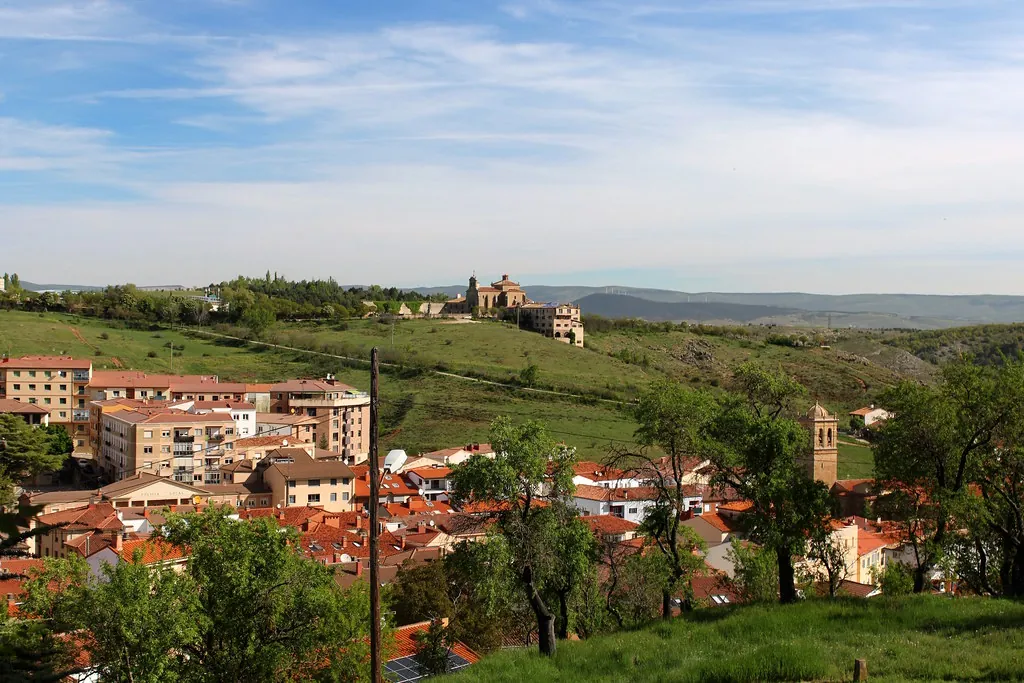
The thermometer reads eight degrees cooler than Burgos city, forty minutes down the road. At 930 metres above sea level, Las Hormazas sits high enough for the air to carry a bite even in late May, and for clouds to drag across the cereal fields like unmade bedsheets. This is Castilla y León's high plateau in its purest form—no Gothic cathedrals, no Parador hotels, just stone houses huddled against a wind that has whipped across the meseta since before the Romans arrived.
The Architecture of Survival
Walk the single main street at 7 am and you'll understand why every doorway here is built for winter. Wooden gates, thick as castle doors, guard interior courtyards where animals once sheltered from January storms. The stone walls—granite quarried from nearby Sierra de la Demanda—are nearly a metre wide, their deep windowsills perfect for storing the morning milk when the fridge was still a distant dream. Adobe appears higher up, a cheaper infill between stone corners, and the whole mixture speaks of making do with what the land provided.
The parish church of San Pedro sits not in a plaza but wedged between houses, as if the village grew around it like moss on a rock. Its bell tower doubles as the town's timepiece—one strike for half past, two for the hour, a system that hasn't changed since the 1700s. Inside, the air smells of beeswax and centuries of frankincense. The altar retablo was carved by a Burgos workshop in 1642; they were paid 2,400 reales, a fortune then, and the villagers still point out the carpenter's mistake in the third panel where a saint's hand has six fingers. "Even the best needed a day off," they say.
What the Fields Remember
Leave the church, follow the concrete track past the last house, and you're into country that remembers medieval field systems. The caminos that link Las Hormazas to neighbouring villages—Hontoria del Pinar 6 km north, Cuevas de San Clemente 8 km south—are sunken lanes, their banks built up by eight centuries of hooves and iron-rimmed wheels. Walk them in early June and the wheat is knee-high, rustling like taffeta. By July the colour has shifted to parchment, and the harvesters work 16-hour days while the dew holds the dust down.
These paths aren't waymarked; you navigate by the grain silos on the horizon and the knowledge that every summit reveals another. The highest point in the municipality hits 1,012 metres, marked only by a concrete trig point and the remains of a Civil War trench. From here you can see the entire watershed of the Arlanza river, a silver thread forty kilometres east. Bring a map, because phone signal vanishes with the first ridge, and the wind can wipe out a GPS as easily as it does footprints.
When the Sky Becomes the Landscape
Night falls fast at this altitude. By 9 pm in midsummer the temperature has dropped twelve degrees from the daytime high, and locals pull on jumpers before stepping out for the paseo. The reward is darkness you simply don't get in southern England. On moonless nights the Milky Way arcs overhead so bright it casts shadows, and satellites outnumber shooting stars. The village switched its streetlights to downward LEDs in 2019; stand by the cemetery wall and you'll see the difference—a dome of ink rather than orange glow.
Astronomy isn't organised here. There's no visitor centre, no red-torch guided tour. Just walk south past the football pitch, past the ruined threshing circles, until the hum of the freezer in the bar social fades. Allow twenty minutes for eyes to adjust. Jupiter rises around 11 pm in late summer; by midnight you've joined the handful of humans who have ever seen their own galaxy from the inside.
Eating What the Day Brought
There are two places to eat within the village boundary, and neither opens before 9 pm. At Bar La Plaza, María Jesús cooks whatever her husband shot that week—partridge in winter, rabbit in spring, the occasional hare if the dogs ran well. A ración of setas (wild mushrooms) costs €6 when they're in season, sautéed in olive oil from Jaén because the altitude here is too harsh for olive groves. The wine is from Aranda del Duero, twenty-five kilometres east; order crianza and you'll get a glass poured from a bottle that has been open since lunchtime. It improves with the air.
Sunday midday is for cordero lechal—milk-fed lamb roasted in a wood oven so tender the bones pull out like corks. A quarter kilo portion runs €18, enough for one hungry walker, and comes with roast potatoes that have absorbed the fat. Vegetarians get patatas a la importancia, potatoes fried then baked in a saffron and wine sauce; it's the same recipe the convento nuns used during Lent in 1890, minus the saffron then because no one could afford it.
The Calendar That Still Matters
Visit during the fiestas de San Pedro in late June and you'll share the village with 3,000 returning hormaceños. The population quadruples overnight. Streets echo with charangas—brass bands that start practising at 2 am—and the single cash machine runs dry by Saturday morning. Book accommodation months ahead; there isn't any. Instead, locals offer habitaciones in their spare bedrooms at €30 a night, cash only, bathroom shared with the family's teenage son who's been turfed out to sleep on the sofa.
Come in February and you'll have the place to yourself, but bring chains if snow is forecast. The road from Burgos climbs 400 metres in the last twelve kilometres, and the council doesn't always grit before 10 am. When blizzards hit, the village can be cut off for 48 hours; the supermarket—open 9 am-1 pm six days a week—sells out of bread by lunchtime. That said, the snow transforms the cereal stubble into a white ocean, and the silence is so complete you can hear your heart beat in your ears.
Leaving the Meseta Behind
The last bus to Burgos leaves at 6 pm, timed for commuters rather than visitors. It costs €4.20 and takes 55 minutes, winding down through pinar forests that smell of resin after rain. Sit on the right-hand side for views back up to the village, stone roofs catching the evening sun like scales on a fish. By the time you reach the provincial capital—streetlights, roundabouts, the cathedral's Gothic spikes—the altitude headache has gone, replaced by the realisation that places like Las Hormazas survive because they refuse to shout about themselves. Turn up, walk the lanes, accept the lamb and the silence. Just don't expect anyone to make a fuss.