Full Article
about Hornillos Del Camino
Ocultar artículo Leer artículo completo
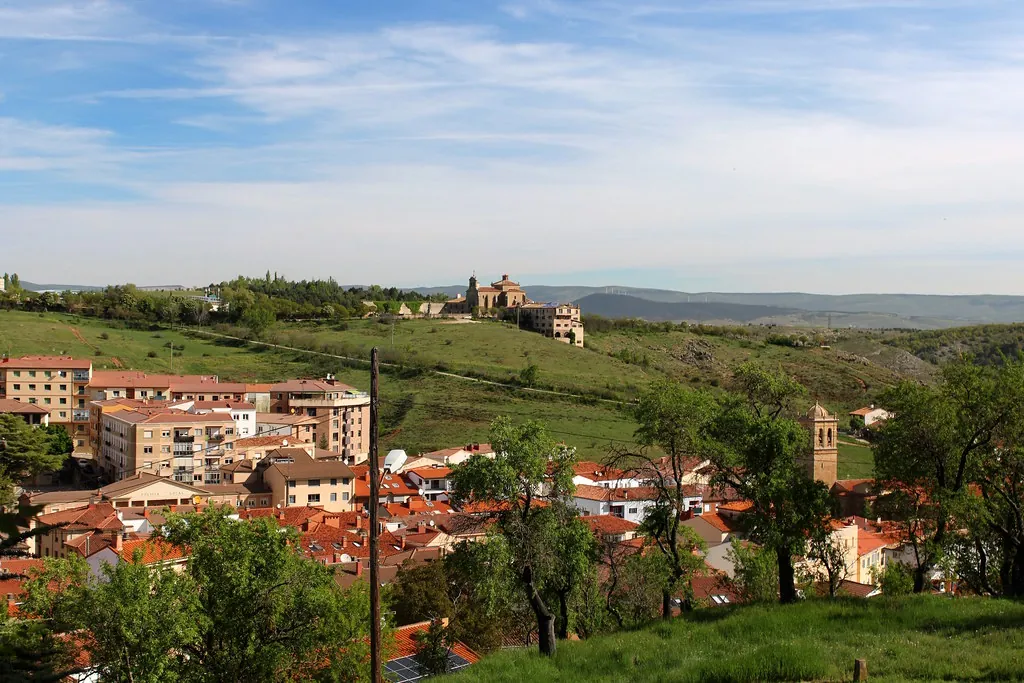
The first thing that strikes you is the silence. Not the hushed, cathedral quiet of tourist Spain, but the blank-canvas silence of the Castilian plateau – a silence so complete you can hear your own blood after the 21-kilometre hike from Burgos. Hornillos del Camino appears on the horizon like a mirage of ochre adobe, its squat church tower the only punctuation between wheat and sky. One street, seventy-odd houses, two bars, and a rhythm dictated entirely by blistered feet.
The Meseta’s halfway house
Hornillos owes its existence to people who never intended to stay. Founded as a staging post on the Camino Francés, the village has been feeding, watering and bandaging walkers since the twelfth century. That function still dictates daily life. By eleven the morning rush is over: rucksacks are stacked against bar walls, boots steam in the sun, and the village’s 70 permanent residents retreat indoors until the next wave limps in at four. If you arrive outside pilgrim hours the place can feel abandoned; shutters stay closed and even the dogs nap in the road.
The architecture reflects this transient past. Houses are built shoulder-to-shoulder, their back walls forming a defensive ring against the wind that scours the plateau at 900 m. Adobe and limestone alternate in thick, windowless courses; roofs pitch steeply to shed the sparse winter snow. Look for the medieval pilgrim shells carved above doorways – some are genuine, others added in the 1990s when the Camino marketing machine cranked up. Either way, they remind you that hospitality here was once a legal obligation, not a business model.
What passes for sights
San Román church stands at the western edge, its Gothic portal cracked by centuries of freeze-thaw cycling. Inside, the air smells of candle wax and dust; the much-trumpeted Black Madonna is actually a dim twelve-inch figure tucked to the right of the main retablo. She’s worth thirty seconds, but the real draw is the view from the tower: 360 degrees of unbroken cereal fields, the path you’ve just walked a pale scar across the stubble.
The rest of the village can be paced in ten minutes. Head east past the stone cattle trough repurposed as a flowerbed; peer into the ruined grain store whose roof collapsed in the 1970s migration; note the heraldic shield above number 24, belonging to a family who left for Argentina in 1948 and never returned. That’s it. Hornillos does not do museums, interpretation boards or souvenir tat. The Camino itself is the exhibit, and you’re already walking on it.
Food, drink and the cash problem
By late afternoon the terrace of Bar Casa Manolo fills with multilingual chatter about shin splints and bedbug strategy. The menu is laminated, short and unapologetically Castilian: sopa castellana (garlic broth with ham and egg), morcilla de Burgos, tortilla thicker than a paperback. Vegetarians get the egg-and-potato option or go hungry. A tortilla bocadillo and caña of beer costs €4.50 – bring cash because the card machine fails when the temperature tops 35 °C and there’s no ATM for 18 km.
If you’re staying the night, book dinner at De Sol a Sol hostel across the street. Their €15 pilgrim menu (soup, chicken, yoghurt) won’t win Michelin stars, but it arrives on proper plates and the wine is refillable. The attached Origen restaurant offers a smarter three-course dinner for the same price after 7 pm; locals recommend the cordero al horno if you’ve burned through 4 000 calories already.
Stock up before you arrive. Hornillos’ only shop closed in 2018; the nearest supermarket is back in Tardajos, 11 km east. If you need Compeed, sunscreen or a replacement phone charger, hope another walker is feeling charitable.
Walking on – or escaping
Most visitors leave at dawn, chasing the 10 km slog to Hontanas across treeless plains. The path is arrow-straight; medieval pilgrims used the church tower as a sighting point, and you still can. Carry two litres of water – there’s no fountain until the ruined monastery of San Antón halfway, and the stream beside it dries up in July. If the Meseta wind is against you, the walk feels twice as far.
Not everyone walks. A taxi from Burgos costs €35 if you phone before 3 pm (after that Manolo shuts and nobody answers). Drivers will collect from the bar terrace; arrange a time because mobile reception vanishes five minutes outside the village. Cyclists use the parallel gravel farm tracks – permitted, but the surface is corrugated by tractors and thorn punctures are common.
When to come – and when not to
April and May turn the surrounding wheat emerald; temperatures sit in the low twenties and the village smells of wet earth after overnight showers. September offers similar mercy, plus stubble fires glowing on the horizon at dusk. July and August are brutal: 38 °C by noon, no shade, and flies that follow you like a personal cloud. In winter the wind chill can drop to –8 °C; albergues close and the single heated hostel charges €25 for a dorm bed. Unless you’re committed to a winter Camino, stay away between November and March.
The honest verdict
Hornillos del Camino is not a destination; it’s a comma in a longer sentence. Stay if you need rest, silence, or simply want to watch the sun set over a sea of grain. Expect no epiphanies, no craft markets, no Instagram moments beyond the predictable yellow-arrow selfie. The village does its job, has done for 800 years, then sends you on your way. If that sounds bleak, keep walking – you’ll reach the wine region of La Rioja in three days. If it sounds like relief, book a second night; the Meseta wind is free and the stars, on a clear plateau night, cost nothing.